
The Women Who Kept Our House Breathing
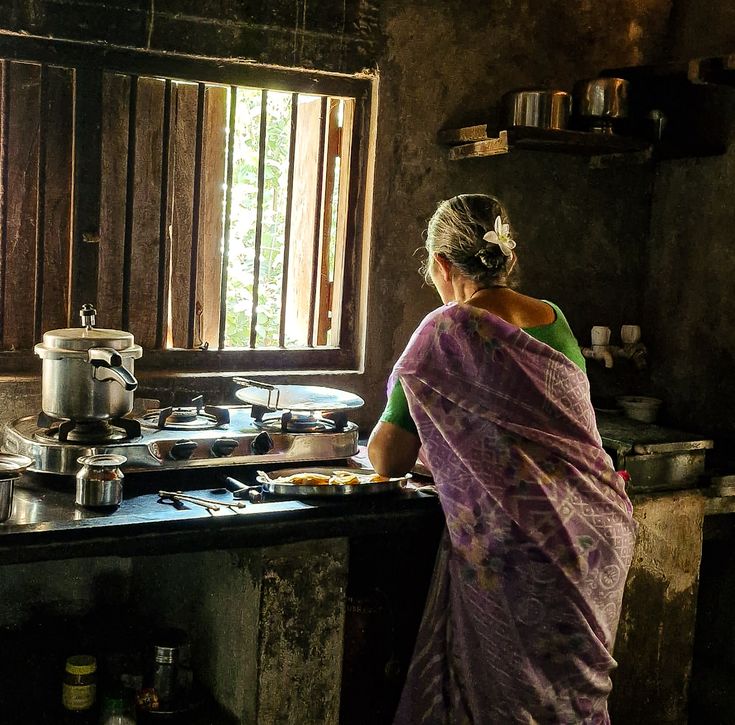
The streets of Chennai were unusually silent.
It was during the COVID-19 lockdown, when buses had disappeared, shops remained half-closed, and people watched one another with fear from behind their doors. Even the roads between Ayanavaram and Egmore, normally crowded with vehicles, vendors and impatient pedestrians, seemed abandoned.
Yet, every morning, Jayanthi walked through them.
She walked nearly four kilometres to reach our house. Her back was bent by a spinal condition, and pain often travelled down her legs. Some days, when she finally entered our kitchen, tears stood in her eyes.
“Why did you walk all this way?” my wife Saraswati once asked her.
“What else can I do, Amma?” she replied. “You need someone to cook.”
Then she placed her bag on the kitchen counter, washed her hands and began preparing breakfast as though her journey had been nothing extraordinary.
Jayanthi had joined our household in late 2019, shortly before the pandemic changed the rhythm of the world. She came from a modest family but always carried herself with dignity. She arrived neatly dressed, spoke gently and worked with remarkable care. Within a few weeks, she learned what each of us preferred to eat, how much spice Saraswati could tolerate and which dishes our daughter Priya enjoyed most.
Our family consisted of three people: my wife Saraswati, our daughter Priya and me, Ramesh.
Saraswati suffered from rheumatoid arthritis. Standing in the kitchen for more than ten minutes caused her severe pain. I had a physical disability and later retired from service in August 2023. Priya had completed her degree in biotechnology and was preparing for higher studies.
Cooking was, therefore, not a small matter in our home. It determined whether the day began peacefully or with confusion. We depended upon Jayanthi more than we initially realised.
She normally arrived by 8.30 in the morning and prepared breakfast, lunch and dinner. Her vegetarian dishes were comforting, and her non-vegetarian dishes filled the house with aromas that made even an ordinary afternoon feel festive. She also purchased vegetables, fruits and flowers from the market near her home. Sometimes she collected Saraswati’s medicines from a nearby clinic or carried clothes to her youngest daughter, Sophia, for alteration.
But during the lockdown, these simple routines became acts of courage.
One rainy morning, dark clouds covered Chennai. Water flowed along the edges of the road, and the wind pushed rain beneath umbrellas. We assumed Jayanthi would not come.
A little after nine, we heard a knock.
She stood outside, soaked from the rain. Her sari clung to her shoulders, and drops of water ran from her hair.
“You should have stayed at home,” I told her.
She smiled.
“And what would all of you eat?”
She entered, changed into a dry cloth that Saraswati gave her and went directly to the kitchen. Soon, the sound of mustard seeds crackling in hot oil replaced the noise of the rain. The smell of sambar spread through the house, and the kitchen, which had seemed cold and empty, came alive again.
Jayanthi’s family had struggles of its own. Her husband, John, worked as a sweeper with the Greater Chennai Corporation. His income was not enough to meet all the family’s expenses. They had three daughters: Prasanna, Christina and Sophia.
Prasanna, the eldest, was married and had a young daughter named Pritika. On some weekends, Jayanthi brought Pritika to our house. The little girl would sit on the floor with her toys, arranging them carefully and inventing stories for each one. Her laughter often travelled from the hall to the kitchen, where her grandmother worked.
Christina, Jayanthi’s second daughter, was pursuing a degree in computer science at Women’s Christian College. She was serious about her studies and determined to build a better future. Sophia, the youngest, had studied up to Class 10 and joined a tailoring course. She possessed a natural skill for stitching and alteration.
Jayanthi often spoke about her daughters while cutting vegetables.
“They should not struggle as I did,” she would say.
Her knife would move quickly across the cutting board while she described Christina’s examination results or Sophia’s progress in tailoring. Pride changed her face when she spoke about them. For a few moments, the tiredness disappeared.
Then, in June 2025, misunderstandings between Jayanthi and John became unbearable. They separated.
She said very little about it. She continued arriving for work, preparing food and asking us whether the salt was sufficient. But there was a new silence in her. She now carried the responsibility of holding her family together almost entirely on her own.
A few months later, she made an unexpected announcement.
“I am going to start a canteen,” she said.
“A canteen?” Saraswati asked.
“At Women’s Christian College.”
There was excitement in her voice, but also uncertainty. Starting a canteen meant waking earlier, purchasing more ingredients, cooking larger quantities and managing money. It also meant that her culinary skills, which had long remained inside private homes, could finally become the foundation of something she owned.
Her day began at four in the morning.
Before sunrise, she prepared vegetable soup, chicken soup and horse gram soup. She packed the containers and travelled to the college with Christina. After reaching the canteen, mother and daughter arranged the food and prepared for the arrival of students.
Christina helped until ten o’clock and then went to class. At that time, Prasanna arrived to take her place. Leaving her eldest daughter in charge, Jayanthi travelled to our house and began cooking for us.
The canteen served idlis, dosas, sambar, chutney, bread omelettes, vegetable biryani and chicken fried rice. Students began recognising her food. Some returned regularly. The small business slowly gathered life.
There were days when I wondered how her body endured such a schedule. She moved from her home to the college, from the college to our house and then back again, carrying the needs of several families with her.
But Jayanthi was not the only woman who kept our household running.
Every morning at around 7.30, Sheeba arrived in a neatly arranged cotton sari. She was our home worker. She washed the vessels, hung clothes from the washing machine, swept the rooms and mopped the floors. Her movements were quiet and precise. She did not rush, yet the work seemed to disappear beneath her hands.
Sheeba was a widow. Her family consisted of her daughter Anitha, her son-in-law Praveen and two grandchildren, Presita and Alexander.
Every afternoon, she collected the children from school. She took them to tuition, brought them home and prepared dinner. Later in the evening, Anitha and Praveen returned from work and came to Sheeba’s house to eat with their children before leaving for their own home nearby.
On Sundays, the family attended morning prayers at Erudhi Andavar Church in Egmore. After Mass, Sheeba came to our house for work.
Her faith appeared not only in prayer but also in the way she cared for others.
Once, when Priya became unwell, Sheeba accompanied her to a nearby gynaecologist. When Saraswati suffered from pain, Sheeba gently applied ointment to the affected area. Whenever we travelled, she helped Saraswati pack clothes and arrange the necessary items. She also carried wheat and dried red chillies to a nearby flour mill and brought them back after grinding.
None of these actions formed part of a written job description. They grew from familiarity, compassion and trust.
One day, Sheeba invited us to the First Holy Communion of Presita and Alexander at Erudhi Andavar Church.
Saraswati, Priya and I attended. Jayanthi came with Christina and Sophia. The children stood inside the church in their ceremonial clothes, surrounded by family members and the soft glow of candles. The prayers were solemn, but the gathering was filled with joy.
We presented clothes to Presita and Alexander. Jayanthi brought them a small gift.
After the ceremony, lunch was served in a nearby community hall. We sat together, not as employers and workers but as families sharing an important moment. The children moved between the tables, relatives exchanged greetings, and laughter rose above the sound of plates and spoons.
Watching Jayanthi and Sheeba that afternoon, I understood how deeply their lives had become woven into ours.
They had also stood beside us in the most difficult moments.
In February 2023, I suffered severe fractures in both hands and underwent major surgery. I remained at Prashant Hospital in Velachery for three weeks. With both hands injured, even the smallest movement became painful. Every day felt like a test of patience.
Jayanthi came to visit me with Christina and Sophia.
She stood near the hospital bed, looked at the bandages around my hands and shook her head with concern.
“Do not worry, Sir,” she said softly. “You will recover.”
Her words were simple, but in that sterile hospital room, they carried warmth.
Two years later, in February 2025, Saraswati was admitted to Apollo First Med Hospital in Kilpauk because of a kidney stone. She underwent surgery and remained weak afterwards.
Jayanthi visited her there, too.
She sat beside Saraswati, offered words of encouragement and prayed for her recovery. At that moment, she was not merely the woman who cooked in our house. She was someone who had shared our anxieties, illnesses and ordinary days.
Whenever Jayanthi took leave, Sheeba handled the cooking along with her regular duties. Whenever Sheeba was absent, Jayanthi washed the vessels, hung the clothes, swept the rooms and mopped the floor.
They rarely needed detailed instructions. Each understood the other’s work.
Before Pongal, Jayanthi helped clean the house for the festival. She dusted the shelves, windows and furniture and arranged the kitchen before the celebrations began. At Christmas, Saraswati gave presents to both women. They received the gifts with gratitude, and for a moment, the divisions created by employment seemed less important than the affection that had grown among us.
During the summer holidays, Jayanthi travelled to Nellore with Christina and Sophia to visit relatives. She returned with stories of parks filled with children, evening visits to the cinema and a family journey to Hyderabad.
She described the Charminar surrounded by colourful markets, the ancient walls of Golconda Fort and the peaceful waters of Hussain Sagar. As she spoke, the kitchen seemed to expand beyond Egmore, carrying within it roads, railway stations, cities and memories.
Then she would laugh and return to the stove.
“Enough stories,” she would say. “The curry will burn.”
Life continued through such ordinary moments.
The pressure cooker whistled. Clothes dried on the terrace. Priya prepared for her examinations. Saraswati arranged her medicines. I adjusted to retirement. Pritika played with her toys. Christina attended college. Sophia practised tailoring. Presita and Alexander returned from school holding Sheeba’s hands.
And every morning, before much of Chennai had awakened, Jayanthi and Sheeba were already working.
People often describe domestic workers only through the tasks they perform: cooking, cleaning, washing and shopping. But tasks do not tell the whole story.
A meal prepared during a lockdown is not merely food.
A hospital visit is not merely a courtesy.
A hand applying ointment to another person’s aching body is not merely assistance.
These acts carry responsibility, affection and human dignity.
One evening, after completing her work, Jayanthi stood near the door, ready to leave for the canteen. She looked exhausted. Yet when Saraswati asked about the business, her eyes brightened.
“The students are coming,” she said. “They like the food.”
There was quiet pride in her voice.
Outside, the evening traffic of Egmore had begun. Buses groaned at the junction. Auto-rickshaws moved impatiently between vehicles. Vendors called out from the roadside. The city, indifferent and enormous, hurried towards another night.
Jayanthi stepped into it, carrying an empty food container in one hand and her handbag in the other.
A few minutes later, Sheeba finished arranging the last of the washed vessels. She closed the kitchen window, checked whether Saraswati needed anything and left to collect her grandchildren.
The house became silent after they were gone.
But their presence remained everywhere: in the food on the dining table, the clean floor beneath our feet, the medicines on the shelf and the order of the rooms.
Our house stood not merely because it had walls and a roof.
It stood because two women entered it every day and quietly kept it breathing.