
Justice Demands Action Now : Exclusive Interview with Sreereshmi Udayakumar
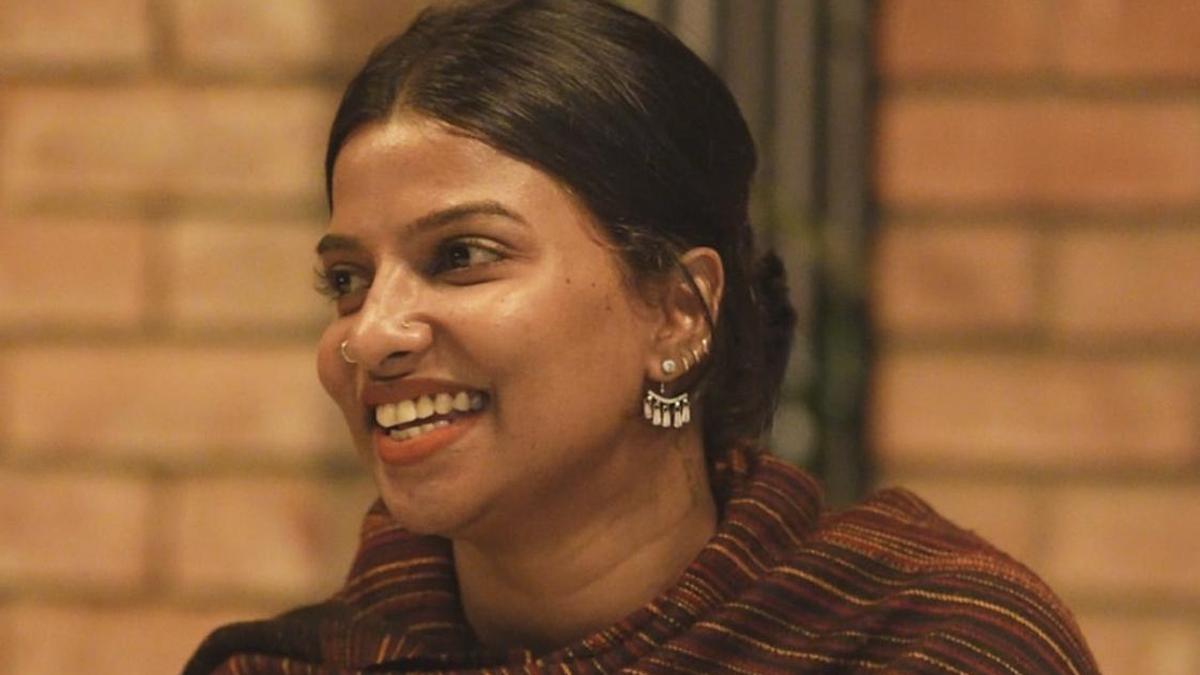
An exclusive interview with Kerala activist Sreereshmi Udayakumar, who helped deliver clean drinking water to Gaza. She speaks on justice, solidarity, and standing against genocide.Our magazine spoke with Sreereshmi Udayakumar, an activist from Kayamkulam, Kerala, whose efforts brought crucial humanitarian aid—clean drinking water—to families in war-torn Gaza. Sreereshmi’s mission was born from the emotional turning point of witnessing the genocide, stating that "Each one who lost their lives... is a heartbeat that was stopped by the machinery of war."
She clarified that her work involved complex remote coordination, supporting local Gaza-based initiatives to fund water truck deliveries, rather than personal travel. She acknowledged the immense challenges, particularly the legal restrictions, noting that "In india, also many other countries restricted sending financial help to gaza."
Facing questions on India’s official stance, Sreereshmi declared her personal position, stating, "I stand as a human being who refuses to be neutral in the face of genocide. Because neutrality is a privilege the oppressed cannot afford." Her story is one of defiant faith and practical action, embodying the spirit of solidarity across geographical and political boundaries, a beacon of hope for all people, demonstrating compassion in the face of conflict.
Q: What was the emotional turning point that motivated you to undertake such a dangerous mission?
A: Palestine is currently facing one of the most devastating, systematic genocides of our time. The sheer scale of the horror is my motivation. According to the Palestinian Health Authority, nearly 77,000 identified bodies have been recovered, with over 19,000 of these being children. This is not a war of soldiers; it is a genocide disproportionately targeting women and children, unlike anything we have previously witnessed.
This catastrophe is happening live on our screens, streamed in real-time. No one can claim ignorance; no one can deny they have seen the footage or heard the cries. We are witnessing the erasure of a people, broadcast to our phones.
The reality on the ground is one of constant displacement. Families are being forced to move 15 to 20 times, chasing a "safe zone" that does not exist. No person with humanity can ignore such suffering. We had close connections with Palestinian families who shared the harsh realities they were experiencing—voice notes of bombings, photos of empty food bowls, and the terrifying silence when communication lines were cut. Listening was no longer enough. We began asking ourselves what action was possible from our side, thousands of miles away. When someone truly feels the weight of such injustice, they cannot remain silent.
Our support is an attempt to ensure that the names of those who lost their lives are not lost in the silence. We are standing for humanity, truth, and resistance. What is happening in Gaza is a political crime, a colonial genocide. Since 1948, the people of Palestine have been denied basic human rights and have been turned into refugees on the soil of their ancestors.
They were brutally killed, displaced, their homes bulldozed, and their history rewritten by power. And yet, even in the ruins, they resist. Every young person who dares to dream beyond the blockade is a declaration that humanity cannot be erased. I have seen how their hope survives in the midst of devastation. Supporting them is not charity; it is justice. Standing with Gaza is about defending the last traces of our collective conscience.
Q: You must have faced several challenges during the process of supplying water. What were the major logistical barriers?
A: There are two major misconceptions: first, that I personally travelled to Palestine to supply water, and second, that I physically transported water trucks from outside. Both are untrue. The reality of the blockade makes direct external intervention nearly impossible. What we actually did was support grassroots initiatives carried out by families inside Palestine, who coordinated everything themselves.
The initiative began with a desperate plea: “Reshmi, please do something. We have no clean water left; whatever remains is polluted from the war.” The sewage systems were destroyed, mixing with groundwater, forcing people to drink contaminated water.
I had no direct logistics contacts initially. It was a daunting moment. I reached out to my friend in the UK, Lesley Howsley, who helped connect us to small, agile grassroots groups, like Water of Hope, rather than massive international organizations bogged down by bureaucracy.
Through them, we attempted to locate private water trucks inside Gaza. The first major barrier was fear. Driving a water truck made you a target for airstrikes. When a truck owner finally agreed, he demanded 300 USD (approx. ₹26,000) for a single delivery—astronomically unaffordable for refugees who had lost their livelihoods.
This is where Palestinian women’s resilience shone. Hadeel Al-Kafarna, a refugee representing 580 families, stepped forward to coordinate the effort on the ground. She became our eyes and ears. With her help, we managed to arrange the financial support securely. The first 3,000-litre water truck successfully reached the Jamil Wadi camp in northern Hamad City. It was a message that they had not been abandoned.
Q: India’s official stance on Palestine is neutral. What is your perspective on this?
A: I must be careful not to comment too deeply on political matters. As citizens, we must abide by international law. India has maintained a diplomatic balance, and we are allowed to donate to recognized organizations like UNRWA and UNICEF.
However, the stance of a government does not always reflect the raw emotions of its people. I stand as a human being who refuses to be neutral in the face of genocide. Because neutrality is a privilege the oppressed cannot afford. Silence is complicity.
Mahmoud Darwish once wrote, "We suffer from an incurable disease called hope." That defiant faith is what keeps Gaza alive. We are living in a time where technology connects us, but empathy divides us.
I prefer to focus on what is permissible: humanitarian support within the limits of the law. The Ambassador of Palestine to India acknowledged the specific political context of India, understanding that while official stances may be diplomatic, the heart of the Indian people often beats for humanity.
Q: As a woman, how do you view the participation of young women in Palestine and India in this humanitarian effort?
A: Gender and religion should not be the primary basis for discussion when it comes to suffering. Humanitarian aid must be viewed purely through the lens of humanity. However, one cannot ignore the specific burden placed on women. In Palestine, countless women have been killed, widowed, or forced to give birth in rubble without anesthesia. Yet, they continue to fight with a courage that shames the world.
Take Hadeel, a Muslim woman who took it upon herself to represent 580 families. She was not just a coordinator; she was a victim who lost her family in the war and fell ill. Yet, she overcame personal grief to become a key part of this journey. Her strength is the backbone of our success.
This solidarity extends across borders. Indian women reached out, offering whatever they could. The most touching offers were from mothers willing to donate breast milk for the starving infants in Gaza.
We also saw support from artists like Mosheera Mansour and her husband, who facilitated aid. Young women like Ola, an artist from Palestine, initiated education projects for children. Even Greta Thunberg has taken on a Herculean task in advocating for Palestine.
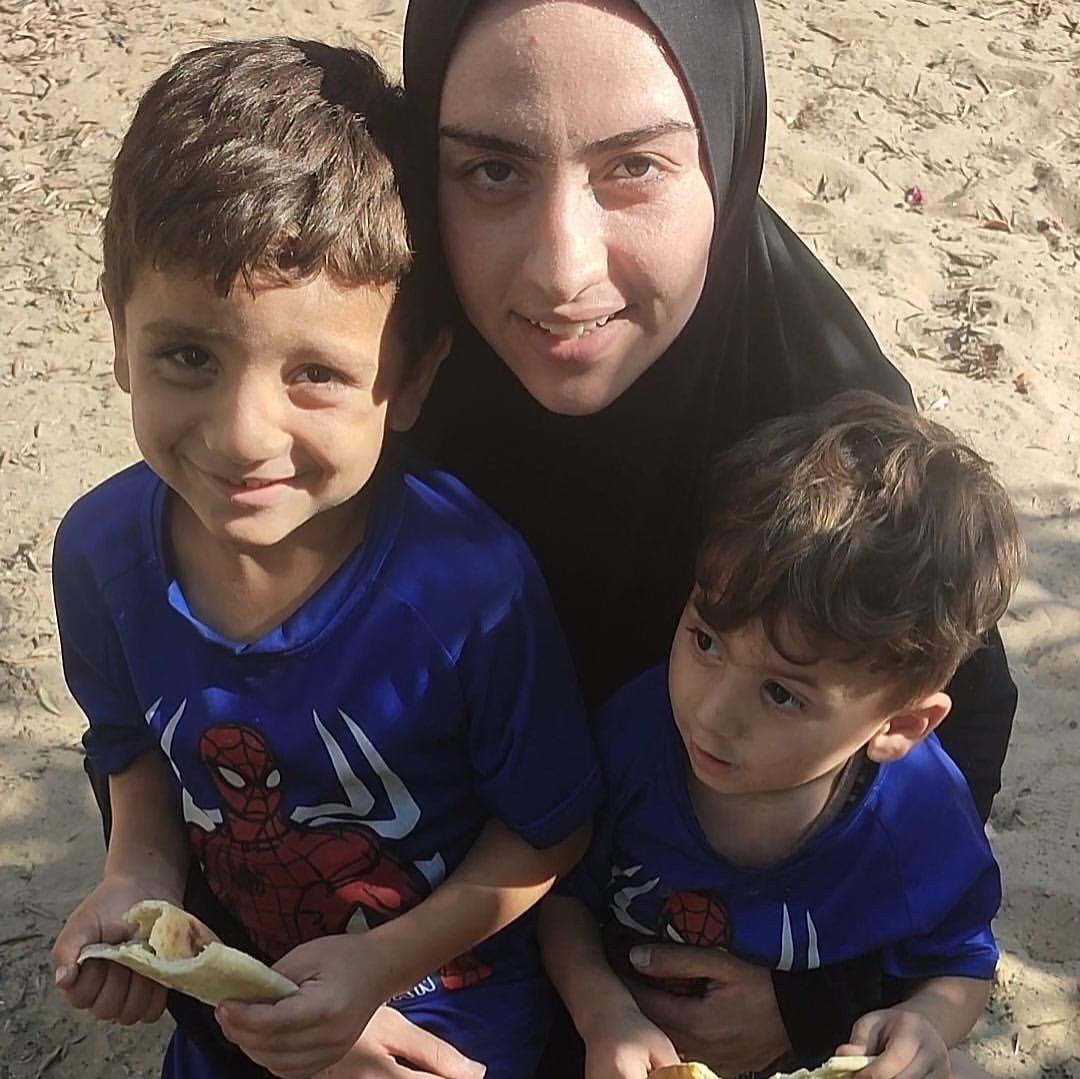
Women everywhere have shown immense strength. The truth is, this is a network of women—from Kerala to Gaza—holding the fabric of society together.
Q: Our magazine focuses on decolonization. The concept of "humanitarianism" is often seen as Eurocentric. Do you think this term needs decolonization?
A: I do not have enough academic knowledge on this specific theoretical topic to comment meaningfully. However, when aid is coordinated by the refugees themselves, like Hadeel, rather than imposed by foreign saviors, it feels more like justice than charity
Q: We often see attacks during aid distribution, with civilians running for their lives. Can you share incidents parallel to this?
A: These attacks are heartbreaking and constitute a profound violation of human rights. The cruelty lies in the deception: people are warned to relocate to "safe zones," yet the Israeli forces attack the very areas where displaced civilians gather. It is a deliberate strategy to instill terror and make every location feel dangerous, eliminating any perceived refuge. There is no sanctuary.
Israel often drops leaflets instructing people to move to southern Gaza, warning of imminent attacks. Desperate families move, only to find those southern areas are attacked as well. The pattern is clear: forced displacement followed swiftly by attacks, betraying the initial promise of safety. Currently, about 1 to 1.5 million people remain displaced, trapped in a shrinking cage of violence.
One tragic incident that haunts me is that of Hind Rajab, a 6-year-old girl. She was trapped in a car with her dead relatives, calling for help. When paramedics tried to reach her, they were targeted. Hind was found days later, shot 355 times. The Israeli military claimed she was a "terrorist." The sheer number of bullets used against a child reveals a horrific disregard for life and a willingness to manufacture justification. This justification—labeling children as "growing terrorists"—is a stain on humanity that can never be washed away.
There is also a complex internal struggle. War breeds exploitation. While we strive to provide aid, local actors sometimes exploit the poor, doubling prices of food and water. This internal corruption adds another layer of suffering, preying on the most vulnerable who are already desperate for basic needs. Many Palestinian families are caught between the bombardment from the sky and the internal political struggles on the ground.
Q: Having provided significant aid, do you plan to continue or expand your support?
A: We face significant limitations. In India, direct financial transfers to individuals in Palestine are not permitted. Crowdfunding for foreign causes is strictly prohibited without specific government clearances. The official channels restrict how everyday citizens can offer help, funneling aid through large, regulated entities. We can only donate through legitimate, recognized organizations like UNICEF, UNRWA, or the Red Crescent.
Individual initiatives carry huge risks. I participated through safe methods, but I cannot offer alternative channels to others because it opens a portal for scams and fraud. We must prioritize the safety of donors and ensure that all funds reach the intended recipients without being compromised by illegal schemes. Legally, it is a minefield.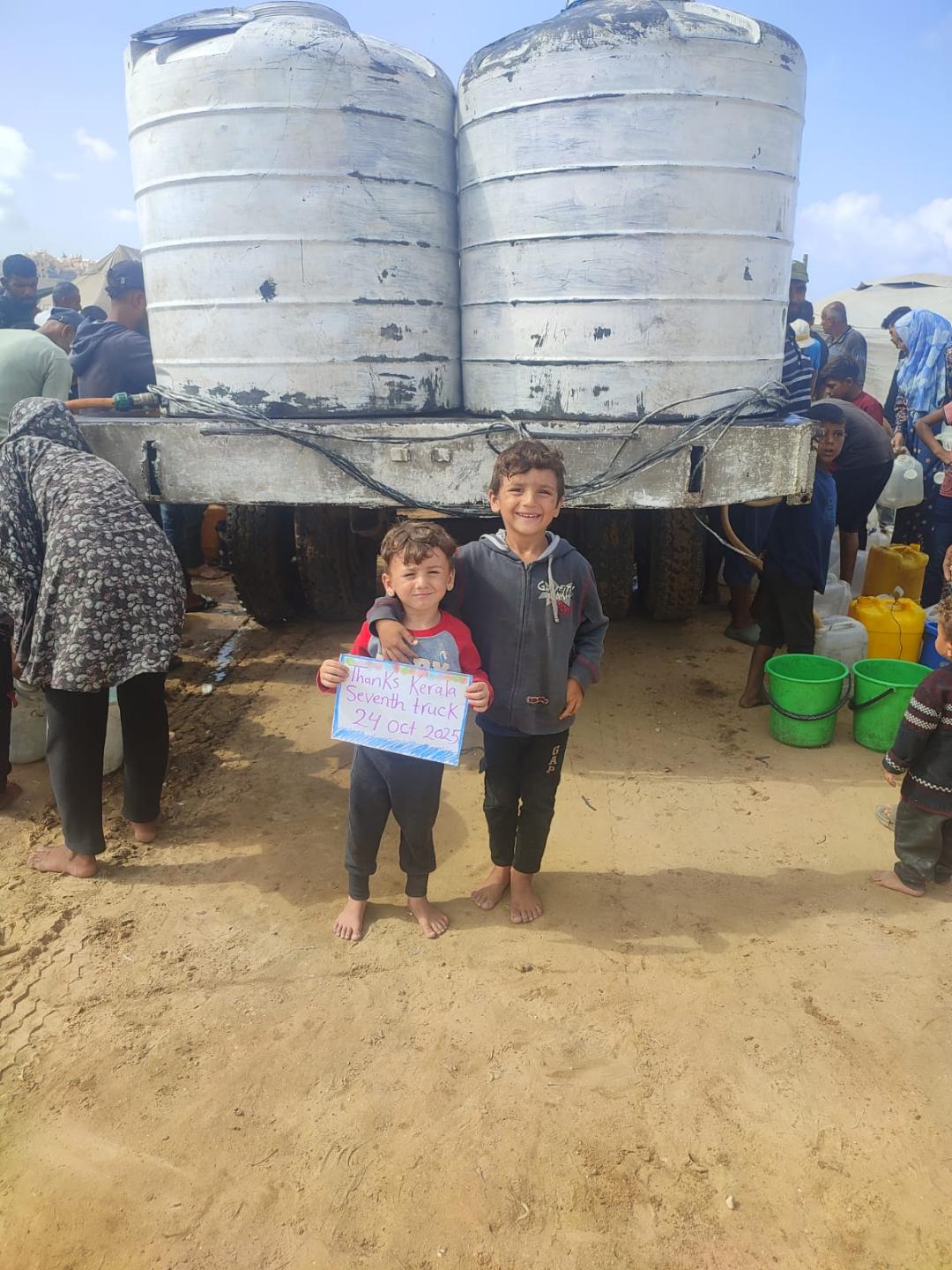
However, the need will not end with a ceasefire. Looking ahead, individual support will still be crucial for the day-to-day survival of families, even after major organizations begin rebuilding. The restoration of civil society—schools, clinics, and clean water access—requires long-term, sustained attention far beyond the initial crisis period.
I was honored to meet the Palestinian Ambassador to India, His Excellency Mr. Abdulla Abu Shawesh. He appreciated my efforts and educated me further on international regulations. The Ambassador’s guidance was invaluable in navigating the complex geopolitical landscape surrounding humanitarian work in the region. He was deeply moved, not just as a diplomat, but as a man born in a refugee camp who understands the visceral pain of displacemen.
He told me, "Reshmi, apart from financial help, please talk about Palestine. Please make people aware of the unfiltered truth. Never let them be misled by the media." He noted that official Palestinian social media handles are often banned, silencing their voice. This censorship means the narrative is overwhelmingly controlled, making personal testimony and grassroots awareness campaigns essential to counter misinformation.
Every action of ours must become a promise we will not stop until justice lives again. I truly hope peace returns to the streets of Gaza. My husband supports me in this, and we have decided that if speaking out helps even one person like Hadeel, we will move forward. We understand the risks involved but feel a moral obligation to use our platform, however small, to amplify the voices of the oppressed. We won't let fear silence us.