
Muraqaba's Architecture of Transformation
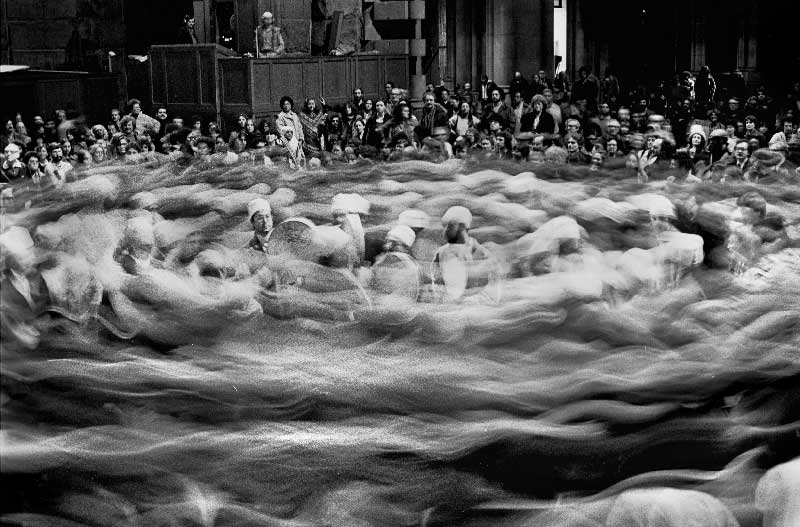
In the Sufi tradition, Muraqaba transforms surveillance from a tool of oppression into a path of liberation. Where the colonial Panopticon breaks the spirit through imposed observation, Islamic mysticism cultivates self-observation as spiritual discipline and the perpetual awareness that Allah is Ever Watchful. This essay explores how Sufi masters systematized the practice of Muraqaba through eleven Naqshbandi principles, including Conscious Breathing, Watch Your Step, and Awareness of the Heart. The Sheikh-disciple bond of Rabita functions as spiritual grafting, where the master's illuminated heart transmits Divine Light to the seeker's unpolished vessel. From the very ecstatic mirror of Abu Yazid al-Bistami' that wounded his own disciples to Rumi's transformation through Shams Tabrizi's devastating gaze, Muraqaba reveals a profound revelation that true freedom emerges not from escaping observation, but from surrendering completely to Divine sight. Unlike the biometric panopticon that reduces humans to monitored data, Muraqaba dissolves the ego itself as the watched becomes the watcher, until only God remains.
The term Muraqaba means not only observation; it has different dimensions. The Arabic word has its own specialties, including small words with long meanings. We can only say its meaning partially is self-observation. The prophetic Hadith mentions that when Angel Jibraeel (Gabriel) asked him about Ihsan, the Prophet replied that it is to worship God with the intention that He is seeing you, even if you cannot see Him. This verse has many meanings regarding Muraqaba. The Sufi Saints keep it as the core subject of their lives. Allah says in His Quran that the Lord is Ever Watchful. Ibn Abbas said He hears and He sees. This means that He watches over His creation in that which they do, and He will reward them in this life and in the Hereafter based upon what each of them strove for. He will bring all of the creation before Him and He will judge them with justice. He will requite each of them with that which he deserves, for He is far removed from injustice and tyranny. This interpretation includes the connection between the human and his Creator.
Imam Ghazali (RA) defines it in his masterpiece work Ihya Ulum al-Din in the chapter on Meditation and Introspection. He affirms six stages of spiritual efforts. The first stage he defines is "Musharata," which means to bind oneself in a firm tie by setting up conditions with passion, and the second stage is Muraqaba, to guard oneself and examine passion with good thoughts. Imam Ghazali gave its word meaning as deep meditation to examine whether the action done was over the divine laws; in every action, is he able to make his intention good in divine service? In the world, many Sufi saints spent their lives with this concept; Sufi stories in different Kitabs (books) have mentioned it. In the psychological area, a Muslim with this intention has a lot of benefits in his meditation, like the increasing of concentration and the decrease of his sinful acts. So in the Islamic world, scholars' interpretation about Muraqaba is high; it will assure its importance.
In contrast to these meanings, the most stated meaning of Muraqaba may be the connection between Sufi saints and their Murids (disciples). A Sufi scholar leads his life in the trait of his Murid's life. The Murid considers him his guardian. In the worldly sector, it can be classified as the connection between a teacher and a student. So firstly, if we examine Muraqaba in Sufi terms, we define it as the disciple seeing their Sheikh not merely as a teacher of information, but besides that, he is a conduit. They also argue that Divine Light (Nur) is too immersed for the heart of beginners. So the Sheikh will perform as a transformer or a lens. The Sheikh will be ready for that code of conduct.
The two major practices which were related to the disciple and his Sheikh can be defined as Rabita (The bond) or Tasawwur-e-Sheikh, which means visualization of the Sheikh. So this is the practical version of getting spiritual enrichment. If we examine its technique, the disciple sits in a very quiet place which does not have any intrusions or interventions. They focus their attention on the heart of their Sheikh by closing their eyes. In his mind, he visualizes the Sheikh's face, which can also be referred to as spiritual presence; like the imagination of a flow from the mind of the Sheikh to the disciple, like a river. The Nisbat concept also creates a spiritual affinity or connection. So the disciple's heart must touch the heart of the Sheikh who gave attention to the disciple.
In mystical theory, there are three stages of Annihilation which were the fuel of Muraqaba: Fana-fi-Sheikh, Fana-fi-Rasool, and Fana-fi-Allah are the concepts. When we examine the frameworks of Muraqaba, we can find eleven principles which were the standard operating procedures of the Naqshbandi Sufi order. They are not just abstract beliefs but are a practical realm for how the disciple wants to maintain his body, spirituality, and heart when he is sitting in meditation or walking in a busy market. The first eight procedures were established by Khwaja Abdul Khaliq Ghujdawani and the last three were added by Khwaja Baha-ud-Din Naqshband.
So the first stage is Conscious Breathing (Hosh dar Dam). If the breath is awful, the heart may not work. So the disciple must take care of his air intake, like taking in white smoke and exhaling it as black smoke, which is the analogy of taking Allah into the mind and outing evil from the mind. This technique was also used in yogas. The second stage is Watch Your Step (Nazar bar Qadam). The disciple must keep their sight on the top of their feet when they are walking. There are other stages like Journey in the Homeland (Safar dar Watan), which means traveling internally from human qualities to angelic qualities, Solitude in the Crowd (Khulwat dar Anjuman), Remembrance, Returning, Attentiveness, Recollection, Awareness of Time, and Awareness of Number. The most core thing of this is Awareness of the Heart (Wuquf-e-Qalbi), which was considered the core subject of Muraqaba. The disciple can see his physical heart opening for entering the Divine Light. So the disciple saw their source of light was the Sheikh's heart, which was lightened early.
If we examine the historical context of the Sufi order, we can see the Naqshbandi emphasis is most famous for systematizing the link between disciple and master. Imam Rabbani (Ahmed Sirhindi) emphasized that the Sheikh must be a perfect and capable person. If he is not perfect, the Muraqaba will lead to failure, just as a broken wire does not conduct electricity. Another example is Khwaja Ahrar, a great Naqshbandi master, who emphasized that connection with the Sheikh was often more effective for the beginner than chanting.
Abu Yazid al-Bistami and Connection with his Disciples
The specialty of Abu Yazid's teaching was that it had no framework in a set curriculum but is more experiential, confrontational, and psychological. Sheikh Bistami totally discouraged the disciple's trait of idolization of the Sheikh when they feel like the Sheikh does some things which will distract the connection. In his disciples' lives, he was like a mirror who corrected all faults of the disciple. The strange incident happened in the life of Bistami's disciple. When the Sheikh was in spiritual ecstasy, Bistami proclaimed, "Subhani, Ma A'dhama Sha'ni," which means "Glory be to me, How great is My Majesty." The disciples were horrified and they asked the Sheikh when he came out of spirituality about that. He said to the disciples that if I repeat this word any other time, all of you want to stab a knife on my body. When this happened next time, the disciples started to stab him, but the strange thing that happened was the wounds were forming on the body of the disciples with every stab. In this history, we can find the connection of a Sheikh and a disciple. The Sheikh ordered the disciple to stab him when the Sheikh is doing a mistake. They were connected very closely, which is like the reflection of disciples. Rumi later explained in his Masnavi that in that moment Abu Yazid was gone. The disciples were striking at a mirror reflecting God. By attacking the empty vessel of the saint, they were only hurting themselves. It taught them that the saint is Fana (annihilated) and has no "self" to be killed.
The Sufi response is more pragmatic rather than dogmatic. They proclaim that God is indeed close to His servant, but the servant is farther from God, as we mentioned in the Hadith. So the Nafs (ego), imparted with layers of worldly attachment, love, evil, and distraction, acts as a closed door. A raw, unpolished heart cannot reach the Divine Light (Nur) any more than a brick can reflect the sun. When we examine love and worship, it is crucial to differentiate this bond from worship. The relationship is built on Ishq (Love) and Adab (Etiquette). Just as a child learns language by mimicking the mother, the disciple learns the "Divine Language" by mimicking the Sheikh. The Sheikh is not the destination; he is the map. One does not worship the map; otherwise, he might not find the treasure which he was searching for. The Sheikh is like a door for the disciple. Once a disciple reaches the Sheikh, the Sheikh steps aside spiritually because the Sheikh is the first copy of the Prophet (PBUH). This Muraqaba can be found in Tariqas like Qadiri, Chishti, and Shadhili. The Naqshbandi order is unique.
The relation between Rumi and Shams Tabrizi was a famous example of Muraqaba because Rumi was a rigid scholar until he met Shams. The Muraqaba was more intensive. Shams didn't let Rumi sit in a corner; he threw Rumi's books into the water. He forced Rumi to see God through the heart. After that, Rumi wrote his book Masnavi, which was related to Fana-fi-Sheikh. This relation between Rumi and Shams made Rumi the poetic Sufi and allowed him to find the taste of spirituality. This type of connection leads the Sufi saints to taste spirituality and change their life settings. Previously mentioned Abu Yazid al-Bistami had a connection with an old woman who practiced like a teacher of his spirituality.
Many types of analogies are mentioned in the connection between a Sheikh and a disciple. One of them was: a wild fruit tree in the forest. It is alive but its fruit is bitter and small. To make it sweet, a gardener does not uproot it; he performs a graft. He takes a branch from a high-quality, cultivated tree and binds it to the wild tree. After the time is over, the sap from the cultivated branch flows into the wild stock and it transforms into a fruit. So here the wild tree is a disciple (Murid), the cultivated branch is the Master (Sheikh), the sap is the Spiritual Energy (Faiz), and the binding is Muraqaba/Rabita. There is a chance that the disciple may grow tall without this grafting process.
The Sufis are in a different world when they reach their peak level. They do not see anything in their surroundings except Allah. Their blood, veins, and skins are fully encrypted for God. They might react like a drunk person. The Imam Ghazali story mentioned here is suitable. When Imam Ghazali started his writing of the famous Kitab Al-Munqidh min al-Dalal (Deliverance from Error), he spent his life through this world and the Hereafter together. At last, he understood that this world is full of waste; it is only for making a package for the Hereafter. In the lives of Sufi saints, they might utter some words which lead to Kufr (disbelief), like Hallaj. This is not a sin, but it is a psychological effect when their sight is processing through spirituality, where he can control anything, he can see anything, he can do anything. He was in a situation from which he cannot recover without the decision from Allah.
There are 5 things that come below the term Muraqaba: 1) Spirit, 2) Desire, 3) Intelligence, 4) Learning or Will, 5) Developing Spiritual Authority. So the Spirit authorized all of our body just as the President is the supreme over his nation. Other parts of our body are just like assistants who obey the orders of the Spirit. So the Spirit's primary developer is Intelligence. The authority of the Spirit over the body works well if all other parts and qualities are under control. The second thing is Desire. Carnal lust and fury are the body's advisory board, while the Spirit protects it. God grants supremacy to all those who battle with their security and safety while those who pray. The third one is Intelligence; it is like a horse, Desire is its mount, and fury is his hunting prey. Whenever the rider is skillful and his movement is well, victims can be readily controlled. It is simple to achieve accomplishment. The voyage does not attempt to operate when the person is not skillful. The fourth one is Learning or Will. These two are the qualities which can enable a soul to seek Allah and be respected. Learning also helps us to understand physical and metaphysical worlds. The process of gaining information is divided into two parts. The first level focuses on understanding the essential requirements as well as knowing what is legal and what is illegal. The last one, Developing Spiritual Authority, focuses on Ilham or the inspirational phase. Certain individuals gain spirituality via study and devotion. Some individuals gain spirituality rapidly, while others take more time.
So when our mind gets association with the divine feelings, each division of the body is at ease and no more friction of thoughts remains. Then every problem and trouble seems enjoyable. It gives a sense of taste and entertainment. The kinship and peer group are neglected when they enter this stage. It never means that they never meet friends or relatives, but it is a situation where a man is connected to God. Nobody can retake him from that stage. For example, once when Shibli (RA) went to meet one of his favorite masters, he was so involved in Muraqaba that he could not notice anybody's presence around him. On inquiring, he told he learnt this by looking at a cat; it is so focused while catching her prey that she does not lose a single moment.
Meditation is diversified into two: one is to be taken care of before taking any action, whereas the second is while doing it. So firstly, when we mention the Hadith of the Prophet that intentions should be pure, it means intentions should be pure before doing any actions. When using the approach of mindfulness before something, you want the intention that this is available to you only. So "WH" questions are prominent to take care of the mind. The example is when the Holy Prophet said: A man will be asked even about his raising of earth by his fingers or of his touching the cloth of his brother. So everyone kept their intentions (Niyyah) pure.
The famous narrative of Zulaikha and Hazrat Yusuf. When Zulaikha wants to satisfy her desire from Yusuf in a solitary room, Yusuf warns her by saying that you do not uncover yourself in front of your god's idol, but be ready with me. Shouldn't I respect and fear my God who is Omnipresent and looking all the time at me? This statement made a turnover in the mind of Zulaikha and she brings Iman (faith) in Allah. This story speaks about the fear of Allah. He who is Omnipresent is looking at everything, so how can a man dare to do anything ignoring His presence? The orders He makes are to be obeyed and come forward unsinfully.
The man is viewed from two perspectives: his physical self and his spiritual self. So everyone appears to be more or less equal in terms of material being. As a result, generic law should be applied to humanity in this case. Each person is unique in his spiritual development which is veiled by his outward coverings. His goal is to completely reach near to Allah, and the only way to get there is to know the Truth (Haqiqa). According to general laws, man may return to his origin by completing particular measures. So if he has the desire to take these measures, he wants to obey religious ordinances totally. He advances by following them. Allah states through His Prophet (PBUH) that "My secret is man and his secret is Me, a secret of My secrets is inner understanding of the spiritual essence (Ilm al-Batin)." Only I can place it in the heart of a true follower and no one else can know his condition save Me.
In light of everything that has been mentioned so far, the only method to fulfill one's desire is through Muraqaba, a form of knowledge path that the average person rarely seeks. That is why Prophet Muhammad remarked that a single instant of contemplation is worth more than a year, seventy years, or a thousand years of worship. When Muhammad returned home from a major fight, he told his followers, "We have returned from a little battle to conduct the Great War." The meaning of confessions of Unity is to indicate a conflict with one's own ego. Your deadliest enemy, he warned, is hiding behind your rib cage: your opponent, your earthly cravings will not perish and vanish till righteousness lights up in you.
The suggesting method of Muraqaba is Devotion. It is considered the foundation stone of Sufism and Muraqaba. Sufi belief is based on the principle that Divine Wisdom is delivered by God to a select few for the benefit of humanity. They believe that you contain God. The definition highlights the ethical and spiritual goals of the Sufis as well as how they might be used as teaching tools to highlight the soul's potential. Early Sufi practice included intensive and prolonged prayer and meditation on the meaning of the Quran. To bring a man to spiritual consciousness and so realize the reality of self and God, one must kill his evil spirit Nafs or ego. This is accomplished through control over one's anger, lust, and materialistic greed. To know the Ultimate Reality, the seeker must have great courage and practice on a regular basis.
There are different aspects of Muraqaba. First is deciding a fixed time and place where you will not be disturbed; this is considered to be a good start for Muraqaba. The second aspect is performing Ablution. Like our intention, Wudu (ablution) is an essential thing for our good work. The third aspect is Making Intention, which means as I mentioned before. The fourth and last stage is very important, which is sitting position. The sitting posture should be in a position that is comfortable. The spine should be kept straight, erect, so as to not diminish the flow of internal energy within. As the spiritual energy is cultivated during Zikr, an obstruction in flow can result in making one feel sleepy. Falling asleep can be avoided by maintaining an erect posture. There are three main positions that one can sit in. Any of the three can be chosen as per the feeling of appropriateness and comfort.
In another aspect, one of the most important spiritual activities which is often given little attention or awareness is eating. Being present and conscious, in a state of Zikr, awareness, and remembrance during eating is not only one of the best ways to cultivate spiritual development and growth, but also one of the best things you can do for your health. When you eat slowly and consciously, light and energy, grace and Barakah infuse every bit of food. The food will be processed far better by the body, and you will feel satisfied. This will improve health in every way.
So through Muraqaba, fear and anxiety will diminish significantly. By developing a good connection with God, you will begin to discover the life of your eternal reality which cannot die. And as your identification shifts from the body to the soul, you become less attached to the world. Thus stress diminishes and ultimately dissipates, and you live in a state of persistent joy and happiness.
Al-Hujwiri described in his book named Kashf al-Mahjub: A Sufi is one who has firmly regulated his moral, spiritual, and religious character in harmony with the Divine Love and commandments of God. On the one hand, he must provide selfless service to humanity without discrimination, and on the other hand, he must purify his worldly life through renunciation, self-mortification, and absolute dedication to God until his heart is crystal clear and devoid of all wicked impulses and biases. Muraqaba also conveys the same message, but the way is a little twisted. At every step, it reminds of the life after death, the questioning of deeds. It focuses on belief of Iman in religious commandments which has to be followed strictly to achieve real happiness in this world as well as the Afterworld.
The Living Practice: How Muraqaba Transforms Daily Life
What makes Muraqaba truly remarkable is not just its theoretical framework, but how it seeps into every moment of a practitioner's existence. The beauty of this practice lies in its accessibility—you don't need to retreat to a mountaintop or abandon your family to experience its benefits. A shopkeeper in Kozhikode, a mother in Thalassery nursing her child, a student in Kannur preparing for exams—all can practice Muraqaba if they understand its essence.
In the mosques and dargahs of North Malabar, you can still find this tradition alive. The old Juma Masjid in Kasaragod, the Qadiriya tariqa centers in Vadakara, the small tekkes tucked away in the bylanes of Koyilandy—these places hold the memory of generations who practiced Muraqaba. The practice transcends formal meditation sessions and becomes a way of being. A teacher in Malappuram once explained that when he corrects his students' homework, he does so with the awareness that Allah is watching his fairness. This consciousness transforms a mundane task into an act of worship.
The psychological benefits of Muraqaba are particularly relevant in our modern world, drowning as we are in distractions and anxiety. When a person begins to practice self-observation with the awareness of Divine presence, something shifts in their mental landscape. The constant chatter of worries about future and regrets about the past starts to quiet down. There's a Hadith where the Prophet Muhammad (PBUH) said that anxiety is removed when a believer remembers that Allah is with him. Muraqaba operationalizes this remembrance, making it not just a belief but a lived experience.
This brings us to an essential understanding: Muraqaba is not about passivity or fatalism. Some people misunderstand it and think, "If Allah is watching and in control, why should I do anything?" This completely misses the point. The practice actually increases your sense of responsibility because you become acutely aware that every action, every thought, every intention is significant. You can't brush things off as meaningless when you're conscious that the Creator of the universe is observing you. This awareness naturally leads to ihsan—excellence in everything you do.
There's a beautiful account from the life of Bayazid Bistami that illustrates this. Once, his disciples found him carefully picking up tiny pieces of broken pottery from a pathway. When asked why he was doing such a menial task, he replied, "Someone might step on these and get hurt. How can I leave them here when I know that Allah sees my neglect?" This is Muraqaba in action—not in a meditation pose, but in practical service motivated by Divine awareness.
The Challenge of Modern Practice
Practicing Muraqaba in the 21st century presents unique challenges. Our minds have been trained by technology to constantly jump from one stimulus to another. Social media, emails, notifications—everything conspires to fragment our attention. When someone sits down to practice Muraqaba, they might find their mind wandering every few seconds, planning dinner, replaying a conversation, checking imaginary notifications.
But this is exactly why the practice is more needed now than ever. The ancient masters knew better. The practice is in the returning, not in never having left. You will think about groceries during Muraqaba. You will remember that argument from last week. You will plan tomorrow's meetings. This is normal. The transformation happens each time you notice this and return to awareness of the Divine presence.
In the quiet corners of North Malabar, in small rooms after Fajr prayer, in the peaceful moments before Maghrib, people still sit in Muraqaba. The practice continues not because it promises mystical experiences, but because it offers something more precious—a way to live consciously, to act with intention, to move through the world with the awareness that we are never truly alone.
The Ethical Dimension: Muraqaba as Moral Compass
One aspect of Muraqaba that deserves deeper exploration is its role as an ethical compass. When you truly internalize the awareness that Allah sees everything—not as a threatening surveillance but as the loving attention of your Creator—your relationship with morality fundamentally changes. Right and wrong stop being about external rules you have to follow and become about internal alignment with truth.
There's a story about Rabia al-Basri, one of the great female Sufi saints, that captures this beautifully. Someone asked her why she never sinned. She replied, "If I thought I could hide from Allah, I would sin constantly. But since I know He sees me, and He is more beloved to me than anything, I would be ashamed to do what displeases Him in His presence." This is not fear-based morality; it's love-based awareness.
In practical terms, this plays out in countless small moments. When you're at work and could easily take credit for a colleague's idea—but the awareness of Divine observation stops you. When you're angry at your spouse and about to say something hurtful—but you pause because you remember Allah is listening. When you're alone at home and could indulge in something harmful—but the consciousness of His presence makes you choose differently.
This isn't about becoming self-righteous or perfect. Even those who practice Muraqaba regularly still struggle with temptation, still make mistakes. But the practice gives a framework for constant self-correction. Each day becomes an opportunity to align actions more closely with values. The fishermen of Beypore who practice Muraqaba before setting out to sea, the traders in the spice markets of Tellicherry who remember Divine presence during business transactions, the autorickshaw drivers in Payyannur who treat passengers with dignity—all these represent Muraqaba lived in everyday life.
The Communal Aspect: Beyond Individual Practice
While much of Muraqaba is described as an individual practice, there's a communal dimension that often gets overlooked. When a group of people practice Muraqaba together, whether in a zawiya or informally, something remarkable can happen. The collective intention and focus can create what some describe as a spiritual field that makes individual practice deeper and easier.
In the Qadiriya and Naqshbandi centers scattered across North Malabar, group Muraqaba sessions have been held for generations. After Isha prayer, disciples gather in circles, their collective focus creating an atmosphere of concentration. Scientists might explain this through mirror neurons and collective psychology. Sufis would say it's the Faiz—spiritual energy or blessings—that accumulate when hearts turn together toward Allah.
This communal aspect also provides support and accountability. When you know your fellow seekers are practicing, it encourages you to maintain your own practice. When you struggle, you can seek guidance from those further along the path. The relationship with a Sheikh in traditional Sufi orders isn't meant to create dependency but to provide a tested framework for navigating the psychological and spiritual challenges that arise in practice.
Integration: The Ultimate Goal
The ultimate aim of Muraqaba is not to have powerful experiences during meditation sessions. It's to integrate that awareness into every moment until there's no separation between "spiritual practice" and "regular life." Everything becomes practice. Washing dishes becomes Muraqaba. Commuting becomes Muraqaba. Difficult conversations become Muraqaba. This is what the Naqshbandi principle "Solitude in the Crowd" points toward—the ability to maintain inner awareness of Divine presence even while engaged in worldly activities. You're in the marketplace, negotiating deals, talking with friends, cooking—and simultaneously, there's an undercurrent of awareness: Allah is here, Allah sees, I am not alone, I am not the ultimate doer. When this integration happens, life stops feeling like a burden to escape from and starts feeling like an opportunity for constant connection. The mundane becomes sacred. The ordinary reveals its extraordinary nature. This isn't about becoming otherworldly or losing touch with practical reality. Rather, it's about bringing spiritual awareness into practical reality, so that the two are no longer separate domains but one unified existence. The natural spaces of North Malabar have always invited contemplation. But Muraqaba teaches that you don't need to escape to nature to find God's presence. You can find it in the middle of a busy street, in a crowded bus, in the noise and chaos of daily life. The Divine is not somewhere else; it is here, now, always watching with love and mercy. May Allah grant us the sincerity, patience, and perseverance to walk this path of Muraqaba transforming not just our meditation sessions but our entire lives into acts of conscious worship and Divine remembrance.