
The Contribution of Hadith in Kerala: 'Sihahu Shaikhain' by Abdul Bari Musliyar, Valakulam and it’s long-lasting impact upon Keralite Hadith Scholarship
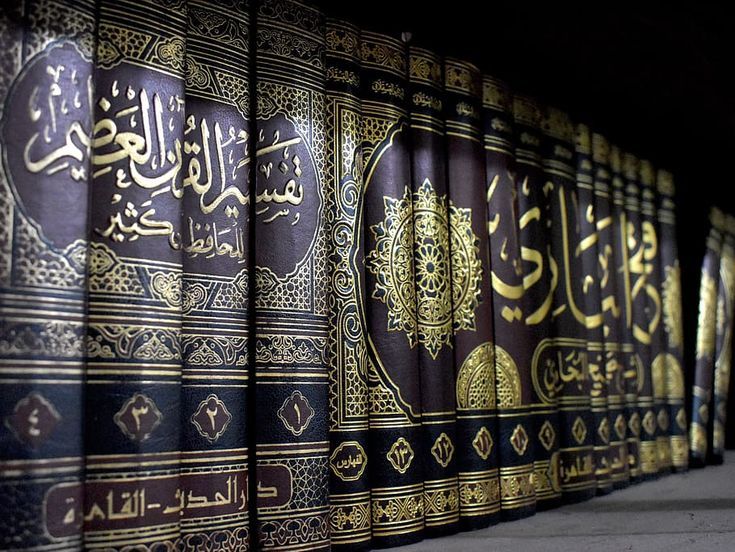
The role of the Quran and the Hadith in shaping the cultural and social histories of the Muslim Ummah, and in nurturing them, is not insignificant. If we examine the history of the origin of Hadith in Kerala, Arabs used to come to Kerala from the time of the Prophet (PBUH) for trade and for the purpose of preaching. Malik bin Dinar (RA) and his companions not only built the first mosque in Kerala but also played a very important role in the spread of Hadith. Subsequently, the 20 mosques built by the scholars as part of the early Islamic propagation and the dissemination of Dars (classes) in them led to the growth of the Quran, Hadith, and other branches of knowledge in Kerala. One of these was the Ponnani Great Juma Mosque, built under the leadership of Sheikh Zainuddin Makhdoom Al Kabir Al Ma'bari. The arrival of Ibn Battuta, as well as students and teachers from Syria, Baghdad, Yemen, Mecca, Medina, Malaysia, Singapore, Sri Lanka, and other countries, led to the name "Mecca of Kerala" being given to Ponnani. The tradition of Hadith blended with Kerala society during the reign of Abdullah bin Abdurrahman, who ruled in the late 12th and early 13th centuries. By the second half of the 20th century, Hadith was widely propagated in Dars institutions and Arabic colleges.
Abdul Haq Muhammad Abdul Bari Musliyar
Many scholars who proved their expertise in the field of Hadith have passed through Kerala and Malabar. Chief among them was Sheikh Abul Haq Muhammad Abdul Bari Valakulam Musliyar. On the 22nd of Jumadul Akhir, 1298 AH (1881 AD), he was born in Valakulam, Malappuram district, as the son of Koyamuti Muslim. The real name of the Scholar was Muhammad. When he was studying at Vellore Baqiyat Salihat, Sheikh Adam Hazrat gave him the name Abdul Bari. He was a founder of the Samastha Kerala Jamiyyathul Ulama, and he earned the name "Abdul Haq" in recognition of the efforts he made to uphold the truth and eliminate Batil (falsehoods). His father had a strong sense that nothing should go against his character. Once, when the Scholar was young, his father angrily asked, "Is this why I gave you the name Muhammad?" Hearing this, the Scholar felt remorse, and from that day on, the Scholar completely abandoned theft. The Scholar passed away on Sunday, August 29, 1965 (1385 AH). Just before his death, he said: “I do not remember committing any other mistake except a lie I told in my youth. If I have committed any other mistake, I pray for forgiveness.” The Scholar was laid to rest in front of the mosque called 'Masjidul Bari', which he built himself.
Journeys of Knowledge
From his childhood, the Scholar used to visit many Sufi scholars for the sake of beneficial knowledge. Like other scholars, his first teacher was his father; then he joined the Dars in the Nadapuram area of Kozhikode and accepted the teachings of Sheikh Ahmad Shirazi. After reaching Tirurangadi, he accepted the teachings of Ahmad Kutty Musliyar. After this, the Scholar joined the Dars in Ponnani. From there, he acquired knowledge from Ponnani Abdur Rahman (Avaran) Kutty Musliyar. Only after studying in the Dars in Ponnani for a long time did the Scholar go to Baqiyat for further studies. He studied in Vellore for five years from 1316 to 1321 AH and was a disciple of Shamsul Ulama Shah Abdul Wahab, the founder of Baqiyat, Sheikh Muhammad Abdul Jabbar, and Sheikh Abdur Rahim Hazrat. The second Baqavi of Kerala was Abdul Bari Musliyar. He was the founding leader of the great movement called Samastha Kerala Jamiyyathul Ulama, which laid the foundation for the religious services of Keralites. In 1926, when Samastha was established, Varakkal Mullakoya Thangal took the helm of all affairs, and the Scholar served as the vice president of Samastha along with Pangil Ahmad Kutty Musliyar until 1945. After the death of Varakkal Mullakoya Thangal, Pangil Ahmad Kutty Musliyar took over the post of president, and later in 1945, the Scholar was appointed as the president of Samastha. He devoted his entire life to the Samastha Kerala Jamiyyathul Ulama, served in many lectures, acquired extensive knowledge in the fields of Hadith and Fiqh, and subsequently wrote many works. He constantly wrote many revolutionary articles in the famous magazine of that time, Al-Bayan. In addition to all these, he wrote the books Al-Mawlid Al-Manqus, Fi al-Mustafa Mawlid al-Shafi al-Mushaffa, Sirat al-Islam, Al-Wasilat al-Uzma, Al-Mutafarrid fi al-Fiqh, Jam' al-Bari, Sihahu Shaikhain, and Al-Mushawwash.
Sihahu Shaikhain: Kerala's Contribution to Hadith
The last book written by Abdul Haq Muhammad Abdul Bari Musliyar was Sihahu Shaikhain. The Scholar wrote this book in the style of the book Mishkat al-Masabih by Imam Khatib al-Tabrizi. This book was published on November 15, 1964. The inspiration for writing it is explained in the book by the Scholar: "The inspiration for this book is clear from the Hadith on its first page. The Prophet (peace be upon him) says: 'Convey from me, even if it is just one verse...' The main goal of a scholar who is knowledgeable about the Prophet (peace be upon him) is to compile Hadiths because people need Hadiths in all the things they do in their daily lives. Therefore, compiling Hadiths is better than voluntary (Sunnah) prayers and fasting."
This book by the Scholar is an abridged version of the book Mishkat al-Masabih by Imam Khatib al-Tabrizi, which has greatly influenced the culture of the Muslim Ummah of Kerala. However, although Imam Tabrizi included hadiths of the Shaikhain (Bukhari and Muslim) and other scholars in his Mishkat, this Scholar only included the hadiths of Imam Bukhari and Imam Muslim. The Scholar has organized this book into three parts. In the first part, the Scholar has included only the hadiths agreed upon by Imam Bukhari and Imam Muslim; in the second chapter, only the hadiths of Imam Bukhari; and in the third chapter, only the hadiths of Imam Muslim have been included. While there are 6285 hadiths in Mishkat al-Masabih, this book contains 2647 hadiths. Like other major Hadith books, this book also begins with the famous Hadith: Innamal a'malu bin-niyyat (Actions are but by intentions). Although many chapters included in Mishkat have been included in this book, he has also included his own chapters. Dr. Bahauddin Muhammad Nadwi has also written a commentary titled Qitaf Thimar al- Malkhain fi Sharh Sihahi Shaikhain.
This invaluable book, written by Valakulam Abdul Bari Musliyar, is a very authoritative reference not only for Keralites but also for Hadith scholars all over the world. The said book, written by acquiring knowledge from the lamp of Ponnani and the light of Baqiyat, will be considered the best contribution of all time from Kerala to the world of Hadith