
The Babri Masjid: A Question Mark on Indian Secularism
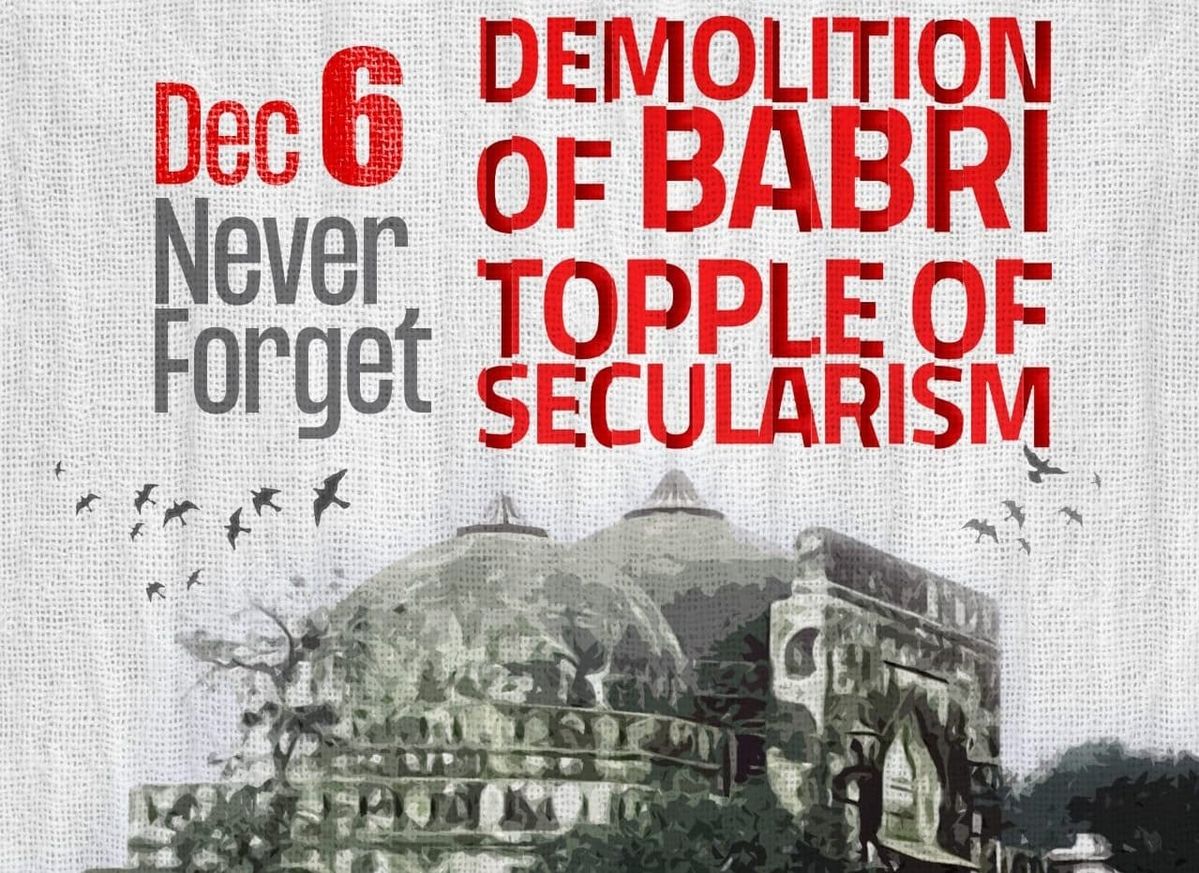
The Babri Masjid was more than just a structure; it stood as a significant icon of religious coexistence and the syncretic culture of India. Commissioned by Babur, the first Mughal Emperor, the mosque was constructed in Ayodhya, Uttar Pradesh, in 1528–29. Following the Emperor’s orders, the commander Mir Baqi oversaw its construction. As a place of Islamic worship, it stood for centuries as a testament to Muslim heritage in the subcontinent.
Historically, the structure reflected the interfaith relations of North India. Although it was an Islamic mosque, it was part of a shared cultural landscape. Local traditions suggest that the call to prayer (adhan) was respected by the community, and for generations, people of different backgrounds co-operated in the area's development. It was a symbol of how diverse faiths could exist side-by-side.
However, the seeds of discord were sown in the mid-20th century. A significant turning point occurred on the night of December 22, 1949, when idols of Lord Rama and Sita were surreptitiously placed inside the mosque. Following this act, claims were solidified that the site was the Ram Janmabhoomi (birthplace of Lord Rama). This illegal placement of idols effectively converted a functional mosque into a disputed site, marking the beginning of a long and contentious chapter.
The situation reached a tragic climax on December 6, 1992. A mob including activists from the RSS and Sangh Parivar breached police barricades and demolished the Babri Masjid, despite assurances given to the Supreme Court that the structure would be protected. This act was not just the destruction of a building but an assault on the rule of law. It triggered widespread communal riots across India, resulting in the tragic loss of an estimated 2,000 to 3,000 lives, tearing at the secular fabric of the nation.
After decades of legal battles, the Supreme Court of India delivered a final judgment in 2019. While the Court handed the disputed land over for the construction of a Hindu temple, it notably admitted two crucial facts: first, that the placing of idols in 1949 was an illegal act, and second, that the demolition of the mosque in 1992 was an "egregious violation of the rule of law." Yet, paradoxically, the judgment awarded the land to the very side that benefited from these illegal acts, while allotting five acres of alternative land to Muslims elsewhere.
The subsequent construction of the Ram Mandir and its inauguration saw the active participation of Prime Minister Narendra Modi and Home Minister Amit Shah. Critics argue that the state machinery’s involvement in inaugurating a temple built on the ruins of a demolished mosque blurs the line between religion and the state. It suggests an official endorsement of the majoritarian politics that led to the mosque's destruction, rather than the neutrality expected of a secular government.
The Indian Constitution, under Article 25, grants every citizen the right to practice and propagate their religion. Based on these principles, the Muslim community had the constitutional right to protect their place of worship. Historical evidence and the lack of proof regarding the demolition of a specific temple to build the mosque suggest that the transfer of this land was a blow to minority rights.
This creates a glaring inequality: a land where a mosque stood since the era of Babur was handed over to build a temple, legitimizing the demolition. This is a profound social and political problem. When the right of a minority community to worship is violated and their religious sites are not protected, it weakens the democracy of India. For true justice to prevail, the principles of equality and human rights must be implemented without bias, ensuring that the secular spirit of the Constitution is not just written in law, but practiced in reality.