
Spiritual Leadership in Anti-Colonial Struggles
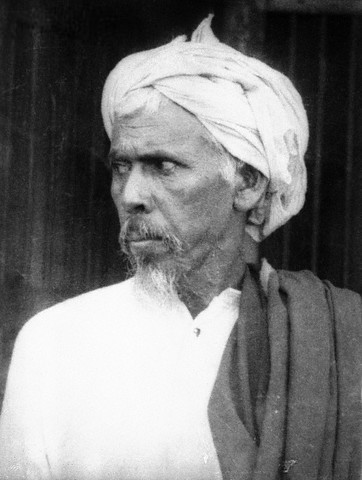
Foreign invasions in Kerala began towards the end of the 15th century. Initially, the invaders were seen merely as trade groups, but gradually they began to interfere actively in the internal politics of the region and eventually gained administrative control. The Mappila community, which had been engaged in active trade along the Kerala coast until the 15th century, was forced to retreat into the interior regions due to foreign domination.
Standing unflinchingly against the colonial powers, the Muslims succeeded to a great extent in resisting them. When Vasco da Gama arrived at Kappad, Kozhikode in 1498, the Portuguese led by him, and later the Dutch and the English, strengthened colonial dominance along the Kerala coast. In resisting the invaders and protecting their homeland, the Mappilas sacrificed their lives and remained at the forefront. As a result of these wars, they were compelled to migrate into the interior regions. Even there, they did not end their spirit of unity. Absorbed into the Hindu cultural environment inland, various cultural and religious distortions gradually took shape among the Muslims, causing a loss of identity. It was the intellectual atmosphere created by scholars of that time that guided the community back to the right path and united them against the colonial attacks.
To eradicate internal weaknesses and cultivate a strong self-identity, these scholars played a crucial role. They made people understand that politics and spirituality are not two separate entities, but two sides of the same coin. Therefore, it is essential that we discuss the scholars who gave direction to the Mappila community and the contributions they made.
As mentioned earlier, when Muslims migrated to inland regions, many cultural distortions entered their societal structure. Many Hindus dissatisfied with the caste hierarchy converted to Islam, but they brought along certain practices and traditions which eventually spread into the Muslim community as well. These distortions were effectively confronted, and the people were mobilized under one banner against foreign aggression by these scholars—this was their great contribution.
Shaykh Zainuddin Makhdum I
Zainuddin Makhdum, I was the grandson of Shaykh Ahmad Mahbar, the founder of the Makhdum family, originally from Arabia. From Arabia, they first reached Tamil Nadu and spread across Kilakkara, Kayalpatnam, Madurai, Tiruchirappalli, Nagore etc. His grandfather later moved to Kochi. Makhdum’s father was Ali bin Ahmad. After his father’s death, he lived with his uncle Ibrahim Mahbari at Ponnani, where they established Dars institutions and worked for social upliftment.
The ideas he represented reflected spirituality and renunciation. He believed that the Portuguese attacked Kerala Muslims because of the internal weaknesses within the community. He urged that every Muslim had a responsibility to resist foreign invasion. He also advised that the struggle against colonialism should be a collective effort under the Zamorin, including all oppressed classes.
Makhdum authored the book “Tahrir”, which justified his practical stance against colonial domination. The first part contains the history of the Portuguese and the second part is a call to fight against foreign invasion. Other books he wrote include Tahridu Ahl-e Iman Alaa Jihad-e Abdati Sulban, Murshid Al-Tullab, Siraj Al-Quloob, Shams Al-Huda etc. He passed away in 1522.
Zainuddin Makhdum II
Zainuddin Makhdum II was the grandson of Makhdum I’s son Muhammad Ghazzali. Born in 1531 at Chombal near Mahe in North Malabar, he later studied at Ponnani and pursued higher studies in Makkah, where Shaykh Ibn Hajar was his teacher. He lived through the intense socio-political changes caused by colonial invasions.
He argued that Muslims surrendered to Portuguese power because they lacked purpose, dignity, noble values, and morality. In his famous historical work “Tuhfatul Mujahideen”, he criticized the Muslim rulers who refused to unite under the Zamorin against the invaders. He strongly called for organized resistance under the Zamorin. Beyond writing against colonial rule, he was also a great social reformer.
Qazi Muhammad
Qazi Muhammad belonged to the Qazi lineage of Kozhikode under the Zamorin. His grandfather, Abu Bakr Shaliyathi, was the spiritual and ritual teacher of Makhdum I. Qazi Muhammad made significant contributions in religious, literary, and social fields and actively participated in the Chaliyam war against the Portuguese. He was a Sufi master of the Qadiriya order and a fierce fighter against colonial forces. Kunjali Marakkar III and IV were his spiritual disciples.
His famous work “Muhiyuddin Mala” was completed in 1607. Although it is known as a devotional praise to Shaykh Abdul Qadir Jilani, it also contains political messages stressing unity among different orders to resist colonial oppression. He actively participated in the Chaliyam war of 1571 and praised the Zamorins for fighting the Portuguese. His writings ignited the spirit of freedom within the people.
Mampuram Thangal
Born in 1753 in Hadramaut, Yemen, Sayyid Alavi Thangal migrated to Kerala in 1769. He settled in Tirurangadi and became a major spiritual and social leader. He prepared the people against British rule while fighting internal religious distortions. By strong adherence to Quran and Sunnah, he reformulated the community’s identity and converted spiritual awakening into political resistance.
He authored “Saif-ul-Bathar” to commemorate the martyrdom of the eleven Mappilas killed at Muttiyara in their struggle against the British. He also composed the famous Cherur Battle narrative, representing resistance sparked by the humiliation of a woman named Chirutha. Through immense contributions, he helped shape anti-colonial resistance and saw colonialism as a direct challenge to Divine sovereignty.
Fazal Pookoya Thangal
The son of Mampuram Thangal, Fazal Pookoya Thangal, gave practical form to his father’s ideology. After studying in Makkah, he returned in 1849 and constantly encouraged people through sermons and writings to fight for freedom. His work “Uddathul Umara” urged Mappilas to rise against British rule. Aligning with Zainuddin Makhdum’s belief, he argued that internal decay enabled Portuguese invasion. Because of his activities, the British exiled him. He later lived in Oman and then Turkey, where he served in the Ottoman cabinet.
Veliyankode Umar Qazi
Born in 1765, Umar Qazi was a contemporary and disciple of Mampuram Thangal. He spearheaded anti-tax protests against British rule and confronted harmful cultural distortions. He refused to pay taxes and motivated others to do the same, which led to his arrest. He maintained ideological contact with Mampuram Thangal even from prison. He believed that the British had no right to levy taxes on God’s land. He is credited as the first to adopt tax refusal as a form of resistance in India.
Ali Musliyar
Ali Musliyar was one of the strongest spiritual forces behind the 1921 Malabar Rebellion. Born in 1864 near Pandikkad, he received religious training and worked as Qazi in Lakshadweep until the 1891 Mappila uprising in Mannarkkad, where his brother died. After returning home, he focused on intellectual and religious revival and established several madrassas and Dars. After the exile of Fazal Thangal, he became a central religious leader in Tirurangadi and played a decisive role in building resistance against colonial rule.
Pangil Ahmad Kutty Musliyar
At the peak of the 1921 Malabar rebellion, when a group was heading to loot the British office in Tirurangadi, Ahmad Kutty Musliyar intervened, saying:
“Friends, we are Khilafat supporters. Britain is our enemy. We must fight through non-violence until they leave India. Do not engage in violence or robbery—prepare for peaceful struggle.”
A founder of Samastha Kerala Jam’iyyathul Ulama, he played a crucial role in the Khilafat movement. The British marked him as one of the 18 most dangerous leaders and issued arrest warrants. However, when the movement lost control, he tried to restore peace, fell ill, and was secretly treated by colleagues. His arrest warrant was later withdrawn through intervention.
Conclusion
The spiritual leaders of the Mappila community played a remarkable role in resisting foreign domination. They fought both cultural decay and colonial oppression, united communities under one banner and turned spiritual awakening into a forceful political movement. Their contributions, though often neglected by biased history, remain invaluable.
Sources / References
- Tuhfatul Mujahideen – Sheikh Zainuddin Makhdum II
- Tahrir – Sheikh Zainuddin Makhdum I
- Mappila Muslims of Kerala: A Study in Society and Anti-Colonial Struggle – K. K. Muhammed Abdul Kareem
- Malabar and the Portuguese – K. M. Panikkar
- A History of Kerala – A. Sreedhara Menon
- The Moplah Rebellion 1921 – C. Gopalan Nair
- Kerala Muslims: The Long Struggle – Ibrahim Kunju
- Studies in the History of Early Mappila Muslims of Kerala – S. Muhammad
- Kunjali Marakkars: The Admirals of Calicut – Shankar S. Sharma
- Malabar Kalapam (1921) – M. Gangadharan
- Mappila Heritage – Stephen Dale
- Muslim Revivalism in Modern Kerala – Roland E. Miller