
SĪRAH STUDIES IN ISLAM: FROM EARLY COMPILATION TO ORIENTALIST CRITIQUE
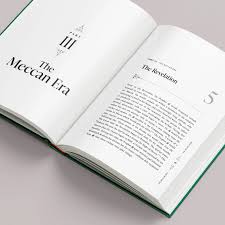
Prophet Mohammed (PBUH) is the beacon of illumination, an unequivocal ideal for the Ummah. Many scholars devoted their lives to delving into the depths of an ocean of knowledge, piling up scattered pearls of unwavering lessons transcended through him. The Prophet of Mercy, the Prophet of Kindness, is the savior of humanity. He is not only the founder of Islam but a beacon of moral guidance and leadership. His early life reflected humility, honesty, and compassion, earning him the titles "Al-Amin" (the trustworthy) and "Al-Sadiq" (the truthful).
Each moment of his life has an indivisible pattern in history. The historians illustrated him in their books enthusiastically, even if his hair was greying. His walking, sitting, talking, and smiling—even a small moment of his individual life—were also elaborated in prophetic history. He was neither a mere reformist nor a typical person but a supreme leader of all the prophets, indeed a savior of humanity. Historians didn’t turn their backs on researching and assimilating information, methods, and characters in different ways related to the history of Prophet Muhammad (PBUH), whose spiritual power is beyond rational human thinking. Therefore, the study of the routine of Prophet Muhammad (PBUH) has transformed into an independent branch in the discipline of Islamic studies.
RELEVANCE OF SĪRAH
Apart from perusing the chronicles about continents and rulers or regaling ourselves with the occurrences in the Prophet’s life, a novice must comprehend that the Prophet’s life was a hands-on, systematic structure of an ideal Muslim life. Hence, Sīrah al-Nabi is a decisive yardstick to apprehend norms and standards, particularly Islamic adjudication. In reference to his wonts and habits, the Quran asserts that he is a typical paragon in every field associated with our lives. It is mandatory to study the verses of the Quran by perceiving and accruing them with an intention to realize the life of the Prophet (PBUH) because the Prophet himself was a walking Quran. When Aisha (R.A.) was asked about the Prophet's approach and behavior, she replied, "The Quran itself was his behavior." Despite the doctrine and jurisprudence, he was indeed an interdisciplinary foundation. Therefore, scrutinizing the Prophet’s history plays a vital role in exploring knowledge from the base itself.
The renowned scholar Sultanul Ulama Izz al-Din bin Abdul Salam (R) says definitely the Prophet's method of life can’t be overturned by any others, and his behaviors can’t be compatible or comparable with any of us. Those who were able to absorb and explore the prophetic way of living were literally blessed. "Whoever worships the Almighty shall follow me. Thenceforth, the Almighty shall be satisfied with him" (Al-Imran: 31). "Those who have been keen to follow the path of the Prophet shall be righteous and virtuous" (Al-Noor: 54). "Those who follow the path of the Almighty and His Prophet shall be offered a great triumph" (Al-Ahzab: 71). The aforementioned verses speak out the significance of the matter.
(Qawaid al-Ahkam: 125) Neutrals who have entered Islam all the way through the prophets were myriad. The words of the Oman King, Ibn al-Julanda, had been recorded in narrations: "If the Prophet directs people to commend them for virtues, he would be the one to do them first. And if he directs them to restrict sinful actions, he would be the first person to avert them. He wasn’t arrogant in his success nor despondent in his failure. He fulfills his promises. Therefore, I witness that he is a prophet."
HISTORY OF SĪRAH COMPILATION
According to the statement of Ibn Sa'd in his book Tabaqat, the compilation of prophetic history had started in the early prophetic period. Ibn Abbas would comprehend the Prophet's activities through the Prophet's servant, Abu Rafi, and record it in his own writings. Some early scholars who gave more importance to the compilation of prophetic history were Urwah bin Zubair, Wahb bin Munabbih, Shurahbil bin Sa'd, and Ibn Shihab al-Zuhri. A renowned classical scholar, Urwah bin Zubair, had compiled a book called Al-Maghazi, and he states, "I took some points of this book to my book Al-I’tiqad." The aforementioned three scholars, including Ibn Shihab al-Zuhri, were great disciples of Urwah bin Zubair. They had also compiled books on Prophetic Sīrah like their teacher.
Even though the compilation of prophetic life started in the prophetic period, its completed version came into existence in the period of Muhammed bin Ishaq, whose book Al-Maghazi has been considered the original resource on describing prophetic history among later scholars. Then his follower Ibn Hisham abridged and revised a new edition of his book called Sirah Ibn Hisham, which is counted as the first and authorized book in Prophetic Sīrah. Another prominent scholar who played a vital role in the compilation of prophetic history was Muhammed bin Umar al-Waqidi; his contribution, Kitab al-Maghazi, is a remarkable and precious reference for later historians on prophetic study. Then his famous disciple Muhammad Sa’d compiled a thumping ten-volume book called Tabaqat; the first two volumes consist of prophetic history and his anatomy.
Historians illustrated the Prophet's history in different aspects of his life using various languages and methods; they compiled books by giving importance to prophethood, some to his anatomy, some to his behavior, and his attitude. It also spanned to his spiritual life, his companions, relatives, wars, and even his Medina. Muhammed bin Yousef al-Shami produced a massive historical book called Subul al-Huda (Tarikh al-Sham) with a thumping 15 volumes, constituting thousands of chapters in a huge 6,500 pages. Early modern Indian intellectuals also served in this discipline as well as they could. Shah Waliullah Al-Dahlawi, who lived in the late 10th and early 11th century, is one of them. He researched prophetic history with a different style. His masterpiece Persian compilation, Madarij al-Nubuwwah, kept a different style in illustrating prophetic history.
Mohammed is not just a historical figure; he has reached a peak that no one can ever reach. Therefore, the study of the biographical structure and anatomy of Prophet Mohammed had also transformed into independent sub-branches named Shamail in the discipline of prophetic studies. So, many scholars authored on this topic; Shamail al-Tirmidhi of Imam Tirmidhi and Akhlaq al-Nabiyyi wa Adabuhu of Abu Shaykh Al-Isfahani were momentous and unforgettable works in this discipline. Besides this, some other books participated as famous and remarkable regarding the definition of prophetic anatomy. His companions and historians were highly interested and motivated in this recording of prophetic anatomy. His companions deeply apprehended every part of his body and passed it down to the upcoming generation. They studied even the distance between his two eyebrows, which hasn't been held yet by another king or leader.
ORIENTALIST VIEW
According to the most recent data, orientalists all over the world mainly interrogate the authenticity of Hadith and Sīrah. Nearly, they interrogated the authenticity of Imam Ibn Ishaq’s Maghazi and Ibn Hisham’s Sirah al-Nabawiyyah. In the past, they had also started to come forward to spread untrustworthy rumors about those Imams who had gathered Hadith and Sīrah. An Imam named Ibn Shihab was one of the orientalists’ victims. They tried to make him an untrustworthy personality because, by oppressing him, they could easily oppress Sunnah and Sīrah at once. But his biography, filled with honesty in his entire life, stood like a villain in front of them. He had once said in his life, "If an order came from the sky to tell a lie, I will never tell a lie."
A prominent ideology and trick of orientalists to oppress Hadith and Sīrah was creating more unanswerable questions in Hadith and Sīrah; also, they started to argue against Islam by selecting "unreliable Hadith" which were appropriate for their ideologies. We can find this movement of orientalists in their contributions. We have defined that orientalists try to oppress Islam by selecting some Hadith that are more appropriate for their arguments. An example of it was one of Imam Bukhari’s Hadiths. In that Hadith, he included a figure of the revelation of God’s messages to the Prophet (PBUH). He mentioned that sometimes revelation will be in a bell-ringing sound and prophets hardly survive it, and this type of revelation is very short. In spite of such an intensive situation, prophets studied everything. But in some cases, Gabriel appears in a human figure.
By analyzing this Hadith, one of the prominent orientalists named Henry recorded in his book that the remaining part of this Hadith of Bukhari mentioned that a scholar named Waraqah bin Nawfal, at the Prophet's century, had said that Gabriel’s figure appeared in front of the Prophet (PBUH) and had also appeared in front of remaining prophets, especially in front of Moses. One of the orientalist ideologies is to refuse acceptable Hadiths. An example was Henri Lammens' argument. He argued that the Prophet was born in 580 and received prophecy at 30 years old. But the remaining prophets got it at the age of 40; but the Prophet was born in 571, and he received prophecy at his 40th year—this was an unbreakable opinion, and it is accepted by all prominent scholars. And they also tried to establish whether the Prophet's (PBUH) prophecy was true or not in the right manner.
Another means for orientalists to oppress Islam was interrogating the authenticity of Islam’s main books. So, they started it, but later they realized that they couldn’t do it, and it wasn’t easy to break the authenticity of those books. So, they determined to take "unreliable Hadith" which was more appropriate for their arguments and started to do it. The events like Gharaniq were examples. In that, they oppressed Imam Razi and argued that this type of event can’t be added to a human. So, we shouldn’t believe it was true. Those who didn’t believe the Quran and reliable Hadith, how then do they refer to "unreliable Hadith"? So, it’s clear that they tried their best to break Sīrah's authenticity. But the Sīrah was made according to the six Sihah; by opposing anyone, they can abolish the entire branch of Sīrah.
CONCLUSION
Prophet Muhammad’s life serves as an enduring example of integrity, leadership, and mercy. In this article, I want to remember the quote of a prominent modern research scholar named Goethe, who says, "I have studied him many times, but rather than being called an antichrist, he should be called the savior of humanity." Not because of his proficiency, but because of his mercy and good lifestyle among all people. The aforementioned books are well-known books in this discipline. There are still many more books on defining prophetic history that you should read. Loving the Prophet and following him is the best way to get great triumph and victory in both these days and the hereafter.
REFERENCES
Humphreys, R. Stephen (1991). Islamic History: A Framework for Inquiry (Revised ed.). Princeton University Press. ISBN 0-691-00856-6.
Donner, Fred McGraw (May 1998). Narratives of Islamic Origins: The Beginnings of Islamic Historical Writing. Darwin Press, Incorporated. ISBN 0878501274.
Berg, Herbert; Sarah Rollins (2008). "The Historical Muhammad and the Historical Jesus: A Comparison of Scholarly Reinventions and Reinterpretations". Studies in Religion/Sciences Religieuses. 37 (2): 271–292. doi:10.1177/000842980803700205. S2CID 144445914.
Cook, Michael (2000). The Koran: A Very Short Introduction. Oxford University Press. ISBN 0192853449.
Crone, Patricia; Cook, Michael (1977). Hagarism: The Making of the Islamic World. Cambridge University Press. ISBN 0-521-29754-0.