
Ramparts of Sovereignty Under Terrorist Attack: A Critical Analysis
An analytical look at the Red Fort terror attack in Delhi, examining its impact on national sovereignty, public safety policies, and India’s fight against extremism.
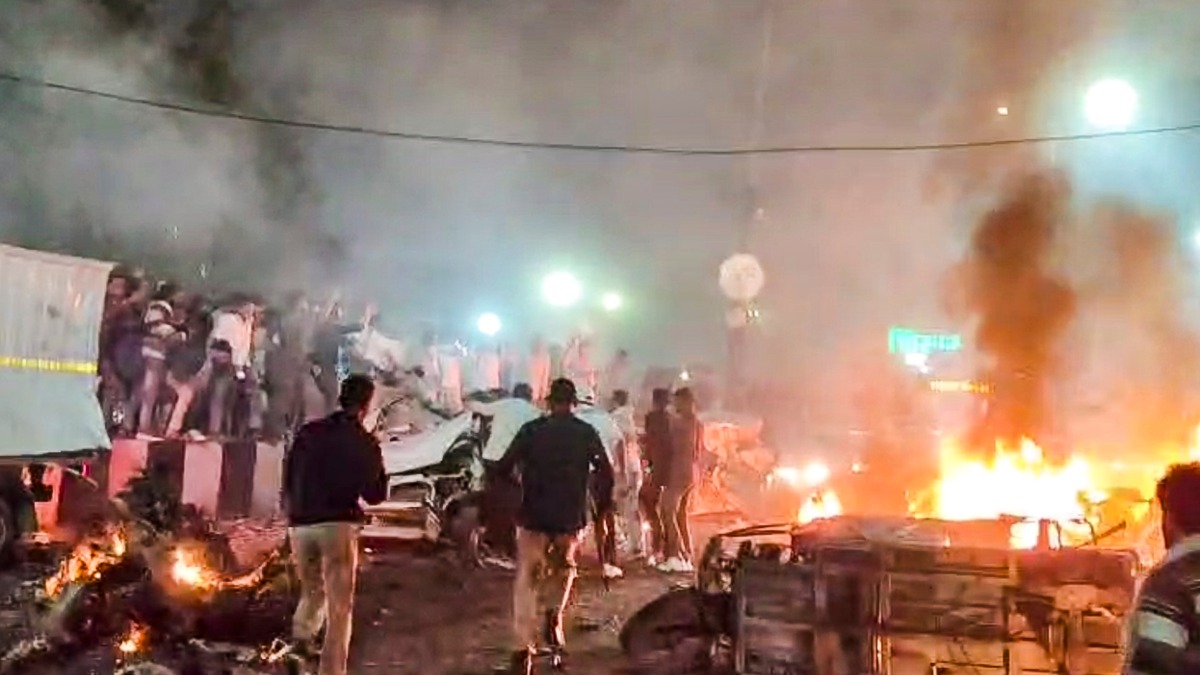
In an evening hour, each and every policeman was exhausted after their tourism duties; most of them were ready, and some of them were on the way to their homes. A phone rang at almost 6:59 at the police station; the frightened voice said to an officer that at Ravidas Bagh there occurred a deadly blast. In no time, the road near the high-security area filled with fire officers, ambulances, and police vehicles. There were scattered glass pieces, wrecked cars, and unrecognisable body parts; tremendous droplets all over the surroundings of the road leading to the Mugalsarai sandstone structure, the historical landmark of the Red Fort.
Shocking statements recorded by witnesses at Chandni Chowk reveal the intimidation of the subversive blast: the traffic was moving really slowly; suddenly the sky lit up and there was a loud noise. Those around the car did not even get a chance to attempt an escape. After the blast, “we dragged out some lab drivers from the area and placed them in rickshaws; all I noticed was that the vehicle which had blown up had a Haryana number plate,” a 55-year-old resident of Noida said. He happened to be at the site; the light had just turned green when the blast occurred. “I rolled out my vehicle, and the market area on the opposite side was in chaos,” said this witness who had fled as ambulances carried injured people from the blast site to Lok Nayak Hospital. He was just some metres away from the car laden with explosive substances.
Samay, a toilet keeper in the area, defined the cruelty of the blast; as he was standing still, by the sudden blast, a disembodied head landed in front of him, the limb falling near where he was.
WHAT HAPPENED IN DELHI:
In the evening of November 13, almost 6:52 p.m., a powerful high-intensity blast tore through the crowded neighbourhood during the evening rush hour. According to the statements and investigations of police officers, the origin of the massive deadly explosion was a moving i20 car. Commissioner Satish Golcha informed the press: a slow-moving vehicle stopped at the red light, an explosion happened in that vehicle, and due to the explosion, nearby vehicles were also damaged. Images from the site show shattered windows, mangled vehicles, fire, and smoke rising from partially burnt cars.
Delhi Police invoked India’s primary counterterrorism law, registering a case under Section 16 and 18 of the Unlawful Activities (Prevention) Act, or UAPA, along with provisions of the Explosives Act. But in my point of view, I have to ask that though officials have yet to confirm the cause of the blast or name suspects, in the very early hours, self appeared to be treating the explosion as an act of terrorism; why should it not be a criminal or accidental blast?
Actually, clearly the explosion occurred in a densely populated part of Old Delhi near the Red Fort Metro Station. The blast originated at a traffic signal close to the entrance of the metro station serving Red Fort. The site where the massive blast occurred lies between the busy intersection linking the Red Fort with the bustling Chandni Chowk market.
WHAT ABOUT PROBE VICTIMS:
After the deadly blast, police intensified security checks across the city; stations, especially the particular railway station, where incoming vehicles are thoroughly inspected. According to Delhi’s Deputy Chief of Fire, the explosion ignited six vehicles and three auto-rickshaws. But last week, soon after the blast, the security agencies demolished the house of Umar Nabi, who was accused of keeping explosive substances. Directly after the explosion, Jammu and Kashmir Chief Minister Omar Abdullah questioned the move of authorities to blast the house of the accused; he stated, “After the Pahalgam attack, how many houses were blown up? Did terrorism stop? I fear instead such actions fuel anger.”
In my way of thinking, I am literally with Omar Abdullah; to stop or uproot terrorism from India, we should find its origin and find the right solution for it. Instead, our government should take more effective solutions. The victims’ list is growing day by day; however, Ashok Kumar, a bus conductor; Noman and Aman, two salesmen; Danish Mitra, a worker in a printing press; and Mohsin, a rickshaw driver, were dead by the blast. There were so many in the emergency departments of hospitals.