
From Halqa to Classroom
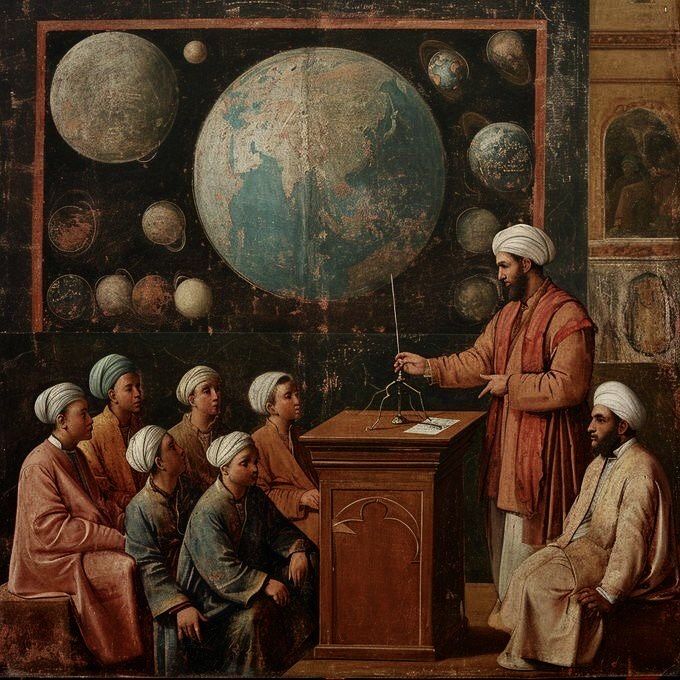
Historically, the Islamic education system has played a vital role in creating and shaping spiritual Muslim communities. In the contemporary world, we can classify Islamic education into the traditional madrasa system and modern Islamic education. Each has its own objectives, aims, and methods, but both face challenges in the modern world. The major difference is that the traditional madrasa system provides text-based education, while the modern system is based on a combination of Islamic studies and modern subjects.
The traditional madrasa system mainly focuses on primary religious subjects, such as the Quran, Tafsir (exegesis), Fiqh (jurisprudence), and Arabic grammar. This system provides text-based and memorization-oriented education. The main aim of these educational institutions is to produce religious scholars, leaders, and teachers. The major strength of the madrasa is that it preserves Islamic tradition and scholarship; by providing ethical and moral guidelines, it protects Islamic ideologies and values related to Aqeedah (creed). While the traditional madrasa system maintains the continuity of Islamic intellectual heritage, it also faces many challenges, such as limited exposure to modern subjects and scientific topics, a lack of employment opportunities outside of religious roles, and teaching methods that may not align with modern pedagogical standards.
The traditional madrasa system has spread its influence throughout various regions, most notably through the Dars-e-Nizami. This is an important curriculum originally associated with Farangi Mahal in Lucknow. Developed in the 18th century, it is a classical curriculum of Islamic education used mainly in the traditional madrasas of South Asia, including India, Pakistan, Bangladesh, and Afghanistan. Dars-e-Nizami was named after Mulla Nizamuddin Sihalvi. The major aim of this curriculum was to develop scholars proficient in religious sciences, logic, philosophy, and language. The duration of this educational system typically ranges from six to eight years.
Modern Islamic education integrates Islamic studies with modern subjects such as science, technology, mathematics, social sciences, languages, and vocational skills. This system utilizes modern teaching methods and aims to prepare scholars for both religious and professional life. It possesses many strengths, such as providing employability and social mobility while supporting engagement in discussions and debates related to contemporary issues. Despite these advantages, it also faces challenges, such as the risk of diluting traditional scholarship. Additionally, this system can be difficult for the lower socioeconomic classes to access, as high costs and fees create a significant barrier. Another challenge is the lack of trained professional teachers who are proficient in both Islamic and scientific fields.
Both Islamic educational systems play a crucial role in shaping an educated society. While traditional madrasas focus on developing religious depth, modern institutions prepare students by combining Islamic values with the requirements of the contemporary world.