
Breathing Life into the Margins
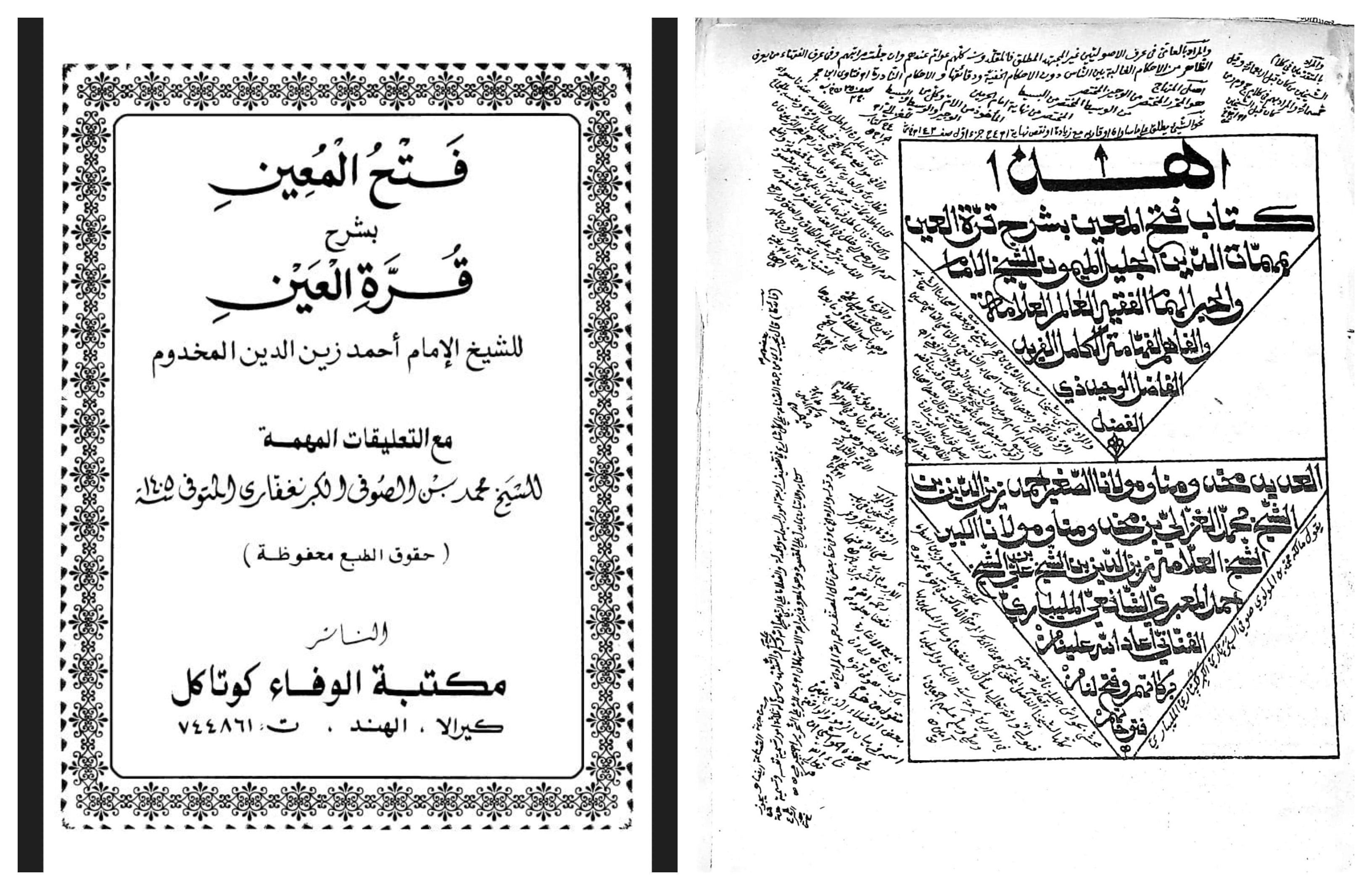
Through the lens of Kitābization, the Islamic intellectual tradition is revealed not as a library of static monographs, but as a living, generative dialogue between past and present thinkers. By transforming marginal jottings into authoritative volumes, this process ensures that the "margin" remains the primary site of intellectual renewal and pedagogical growth.
Islamic classical texts have immense significance in Islamic history; they refer to the foundational writings produced during the early and medieval periods of Islamic civilization, around the 7th to 15th centuries. These texts were written mainly in Arabic, but also in Persian, Turkish, and other languages. These scholars shaped Islamic thought, law, theology, philosophy, science, and literature.
At the core are the Quran, considered the holy book of Islam, and Hadith collections, which record the sayings and actions of the Prophet Muḥammad (PBUH); they are the primary sources for Islamic belief and practice. Beyond these, further works include Tafsīr (Quranic Exegesis), deep analytical commentaries of the Quran focusing on unpacking linguistic nuances, historical contexts, and legal implications of the revelation. Fiqh (Islamic jurisprudence) refers to texts that codify Islamic law. Foundational manuals drawn from the four major schools of thought, which are Ḥanafī, Shāfiʿī, Mālikī, and Ḥanbalī, provide a framework for ethics as well as worship. Kalām (theology) addresses the intellectual defense of faith; scholars blended logic with revelation to face complex questions regarding the nature of God and free will, in which the religious teachings were explained. Scholars like al-Ghazālī and Ibn Rushd contributed influential writings on philosophy and spirituality, blending logic with reason. Tasawwuf (Sufism) focuses on the inner dimension of Islam; Rumi's poetry and al-Ghazālī's work Iḥyāʾ ʿUlūm al-Dīn are the main examples of this tradition.
The term also covers the texts in other fields such as medicine, astronomy, mathematics, and literature, reflecting the intellectual richness of the Islamic Golden Age. Among those works that reached beyond the Muslim world are those of Ibn Sīnā (Avicenna) in medicine and al-Khwārazmī in mathematics, which were eventually translated into Latin, profoundly influencing the European Renaissance in the medieval era, characterized by a perfect system of isnād (chain of transmission) in which the texts prioritize authenticity and continuity thereby ensuring that knowledge remains tethered to its historical and spiritual origins. as the texts are considered the intellectual backbone of Muslim civilization.
The early Muslim scholars studied the texts within a living tradition in which the understanding is not focused on the texts but on the layers of engagement that accumulated around them. These texts formed the backbone of Muslim civilization and of Islamic intellectual life for many centuries. Their authority did not accrue from their contents but from the methods of engagement during teaching and reinterpreting across generations. Among the most significant of these methods was the practice of Taʿlīqāt.
The word Taʿlīqāt is derived from the Arabic root ʿalaqa (علق), which means to hang, to suspend, and to attach. Here, the word refers to the thoughts and annotations that attach to a text; the scholars attached to it with a specific intellectual purpose.
In the classical Islamic scholarly tradition, it referred to the scholar's marginal notes and annotations related to the texts, in the margins of their books, alongside the texts they studied, taught, and transmitted. They put forward a wide range of explanations for clarifying the texts, which are found across the broad fields of Islamic classical scholarship.
Historically, Taʿlīqāt developed as a manuscript culture, a part of Islamic civilization, a method of understanding, and of intellectual development. The early students and scholars read foundational works as active rather than passive readers, engaging in clarifying ambiguities, discussing alternative arguments, raising objections, analyzing critically if it was wrong, rewriting the unclear area, reinterpreting to a new aspect, and connecting the context to new dealings with confusions, negotiating the terms and words, etc. Over time, these marginal notes formed intellectual layers around the original texts. In many situations, the margins gained a specific intellectual importance as the central texts had, preserving the traces of how knowledge was questioned, refined, and transmitted. So in fact, the practice of Taʿlīqāt ensured that the classical texts were dynamic by engaging different minds while studying and teaching it properly.
What made Taʿlīqāt all the more important in the classical Islamic scholarly tradition is that it requires active participation, disciplined reasoning, and intellectual honesty. It trained the students not only to understand what the text says explicitly but to ask how it says it, why it says it, how to reinterpret it today, what the reasons for it are, and how its principle reaches beyond its own context etc. Through this, realities can be changed, misunderstandings will be clarified, ideas will be critically analyzed or supported, and what matters are related to universal truth and reality.
It is evident that the intellectual tradition of Taʿlīqāt (marginalia and commentary) represents a method of thinking that illuminates how scholars read, question, and extend classical authoritative texts. It defined how Taʿlīqāt functioned as a space for clarification, critique, alternative reasoning, and contextual reflection. Consequently, Taʿlīqāt played a vital role in making Islamic classical texts more fruitful and distinct compared to other traditions. It allowed individuals to participate actively in the life of this tradition and cultivated a highly specific mode of learning. Through these methods of learning and understanding, Muslim society experienced a golden age, reaching the peak of its intellectual scholarly tradition, which fostered a society deeply engaged with its authoritative texts. Early scholars considered this practice an integral part of their lives and engaged closely with it. Islamic classical texts are not limited to religious scripture; rather, they represent broad intellectual traditions that have preserved, developed, and transmitted knowledge across generations. These texts are studied for their historical, religious, and cultural significance, and the Taʿlīqāt tradition functioned historically as a central mechanism for their scholarly development.
In contemporary Islamic educational culture, a shift has taken place such that the act of learning has been replaced by the mere act of recording. Students attend lectures and fill their notebooks without sensing that something essential is missing: true understanding, rather than just the accumulation of information. They do not critically engage with the lectures, nor do they analyze, question, nor reasoning. Instead, they merely absorb what the authoritative texts state on the surface, including what they explicitly include or exclude. Consequently, intellectual growth stagnates, and the capacity for independent thought is increasingly reduced. This condition is not merely superficial; it reflects a deeper rupture in the intellectual habits that once animated the Islamic scholarly tradition. Among these lost practices, the most overlooked is the tradition of Taʿlīqāt, which was founded on active engagement through clarification and questioning. Historically, it was considered a primary site of intellectual production where students became thinkers, and the texts became living discourses through them. Reviving this practice offers a framework to recover a mode of learning that is generative and responsive to changing realities. Moreover, it effectively addresses the critical gap between merely knowing and actively thinking.
The neglect of this practice of Taʿlīqāt in modern contexts has great significant disadvantages. the relationship between students and text becomes passive, transmission of knowledge replaces internalization, classical works are studied without engagement, conclusions are memorized, and reason has no role; thus, it leads to stagnation in the education field, a lack of resources, backwardness in the economy, and no further social development. In fact, modern scholars have not prioritized marginal annotation, not analyzing and interpreting, but neglecting the tradition, unlike the classical Islamic scholars, who contributed many influential works, including Taʿlīqāt, thus ensuring the tradition continued for centuries across generations.
It is worth noting that passive reading and learning allow no room to introduce new thoughts and ideologies, intellectual development, or critical analysis. In fact, there are many mechanisms through which engagement and active reading can be sustained through generations, and one of the key ones is the practice of Taʿlīqāt. So, recovering Taʿlīqāt as a method of study is therefore not merely a return to an old habit but a reactivation of a central intellectual discipline within the Islamic scholarly tradition.
Intellectual functions of Taʿlīqāt
Scholars of the tradition identified five major, distinct intellectual functions of Taʿlīqāt that a valid annotation must perform and activate.
The first is clarification of ambiguity (Izālat al-Ibhām). An area that is unclear due to grammatical ambiguity, hidden ideas, terminological contestation, or abstracted content thereby becomes explicit. This is the primary function. It requires that the annotator have understood not only what the author wrote but what the author assumed the reader would already know. that also extends the meanings and expands the scholar's arguments and nuances, these all are completed by understanding and engagement, these are all widely seen in Islamic classical texts, the most important of them is the work of Muḥammad Jābir ʿAlī al-Ḥūdawī. So, by analyzing an authoritative text with engaging to its taʿlīqāt, a person can understand it properly.
The second function is the provision of alternative reasoning (Iqāmat al-Dalīl al-Badīl). Classical jurists and theologians often stated a ruling or a position without fully arguing it. Sometimes the proofs and evidence will not be correct; the ways of extracting evidence may be imperfect. A Taʿlīqāt scholar might write "The author argues X for reason Y, but the stronger proof is Z. So, there is a corrective aim; it assumes the author was right, while not assuming the author was exhaustive. In some cases, the scholar may introduce stronger reasons supporting the rulings. Such alternative reasoning is performed as well.
In such cases, the Taʿlīqāt scholar will demonstrate that it is better to say otherwise, using expressions such as wa-l-Aḥsan (والأحسن), etc. Such a saying is most suitable and better; the author has to say it. The author's opinion is unclear or has no value; I did not accept it. His proof has no strength or power. Such a type of alternative
The third function is critical engagement (al-Naqd wa-l-Tashkīk), where Taʿlīqāt becomes genuinely intellectual rather than merely scholarly. Here, the annotator identifies a weakness in the author's reasoning, such as an unconsidered area, a logical gap, or an analogy that does not hold. It is known that critical engagement is ongoing even with our primary sources, the Quran and Hadith collections; here, the annotator writes it in the margin as a question or challenge.
In such cases, Taʿlīqāt scholars will demonstrate that it is better to say otherwise, using expressions such as wa-l-Aḥsan (والأحسن) wa-l-Aẓhar (والأظهر): that such a formulation is more suitable and that the author ought to have said it; the author’s opinion is unclear or has no value; I do not accept it; his proof has no strength. Such critical engagement is also performed. Crucially, this is done within the framework of ʾadāb, scholarly courtesy. The intention is not to demolish but to refine and revive.
The fourth function is contextual re-reading (al-Taʾwīl al-Siyāqī), a text written in one century for one audience, under one set of social conditions, does not cease to be authoritative when these conditions change, but may require a different reading. So, the scholars will ask, what does this text mean now, in this context It helps to deal with it in any period. So, it can be fit to the new context, thus it will be more creative.
The fifth function is internalization and personal witness (al-Ishkāl al-Dhātī), which is the most intimate of the five. It refers to a personal struggle with the text, not a learned correction or a contextual re-reading, as in saying "I find myself unable to reconcile what the author says with what he says two chapters later, the principle introduced contradicts the Maqāṣid” — these do not come from a failure of understanding, but are intellectual acts of which a scholar is capable.
These all show active engagement, disciplined and personal analysis, not passive acceptance. Beyond these, there are a large number of functions in which Taʿlīqāt is operative; the most important and distinct five are those described above.
The scholars & their margins: What the Tradition valued
Taʿlīqāt has immense value as an intellectual and scholarly development in Islamic civilization. It becomes clear from history, and many incidents indicate, what the tradition valued. Two stories from Islamic intellectual history illuminate this with particular force.
The first concerns Abū Ḥanīfa and his student Qāḍī Abū Yūsuf. When Abū Yūsuf fell ill, the teacher visited him; sensing it might be their last meeting, Abū Ḥanīfa said: “I have hope in you.” Later, Abū Yūsuf recovered and, unwilling to continue in his teacher’s circle, established one of his own, as the result, the teacher, as a way of testing, sent a student to ask about a tailor to whom a piece of cloth is given to make a garment who opposed the case, is the tailor liable? he was entrusted with the cloth and returned it damaged. But he pressed further, replied: “You are wrong.” What if the damage arose from a flaw in the cloth that only became apparent during the sewing? What if the client had specified a method of stitching that caused the damage?
The point of the story is that no single correct answer can be reached without asking a series of particular questions about context & intention. Abu Yousuf's education consisted not in memorising his teacher's rulings but in learning to sit long enough to articulate all the relevant questions before reaching an answer.
The second concerns Imam al-Ghazālī. On his journey from Khurāsān, all his accumulated Taʿlīqāt of years of study were stolen. The thief said: How can you argue to be a man of knowledge, it is stolen, which became a turning point in his life. Al-Ghazālī later wrote that it prompted him to memorise everything — a movement of knowledge from paper to heart. What al-Ghazālī understood was that Taʿlīqāt that has not been processed, held in the mind long enough to change how one thinks, is not really knowledge at all. It is considered a form of understanding; the notes must be written after understanding, not instead of it. This all points to what educational psychologists call the 'generation effect'.
The living text: Re-contextualisation as scholarly Duty
A text in this tradition is not a monument; it is a conversation partner. Its meanings are not exhausted by the moment of its composition. Moreover, they are activated, refined, and often overturned by generations who bring their own context to it. The Soviet educational psychologist Lev Vygotsky describes the "Zone of Proximal Development" as the intellectual space between what a learner can do independently and what they can do with the guidance of a more capable interlocutor. The Taʿlīqāt tradition can be considered an embodiment of this zone. At this point, the student's independent understanding reaches its limit. The dynamic relationship between text and reader is an epistemological commitment. The tradition holds that a ruling is a response to a question posed by reality. When reality changes, the question changes and vice versa.
A compelling example concerns women's literacy. Classical jurists, writing in a context where literacy itself was rare, recorded as karāha women's learning to write certain kinds of texts.
The Taʿlīqāt scholar, looking at twenty-first-century contexts where women pursue advanced degrees in Islamic jurisprudence and medicine, is not asking whether the classical jurist was wrong. They put forward many questions: Does the ʿilla (legal cause) still obtain?
The second example is around Fatḥ al-Muʿīn, composed by Shaykh Zayn al-Dīn al-Malabārī in the sixteenth century, which represented this kind of contextualised Taʿlīqāt. The author was not merely translating Shāfiʿiī jurisprudence into a Malayali context, but was re-reading the tradition through the specific lens of Malabar's maritime trade culture, matrilineal social structures, and its particular relationships of intercommunal coexistence — as seen in works like Iʿānat al-Ṭālibīn (إعانة الطالبين) in which the contents are about how a global legal tradition was made to speak to local reality without abandoning its principles.
Such re-contextualization can be seen in the primary source, the Quran; the verse "So that wealth does not circulate only among the rich among you (59:7) was understood by classical commentators, it is about rules governing war booty and the distribution of communal resources. In a modern context, it applies to Thomas Piketty's documentation of accelerating wealth concentration in market societies with debates about interest-bearing banking. They are thereby performing the classical task of Taṭbīq, application of Quranic principle to modern reality. The principle does not change; its implications are worked out in a new context.
The "And then what" principle
For analyzing the principle, it is helpful to understand through the story of a fisherman that a tourist finds a fisherman sitting on a bench, relaxed, watching the water. The tourist asks why he is not working. The fisherman replied, “I have caught what I need,” the fisherman says. "If you worked more," the tourist suggests, "you could buy a second boat, then a fleet; then you could sell the business and sit on a bench watching water." The fisherman said, "That is exactly what I am doing."
The tourist never asks the final question. He has mistaken the means for the end. The French philosopher Michel Foucault wrote about how knowledge systems produce & reproduce structures of power. The Brazilian educator Paulo Freire called the "banking model" of education, identifying the core pathology of passive learning: the student is to receive, retain, and reproduce. So, there is always a next question, and the next question is always more important than the last answer.
The Ijtīhād Question: Stagnation as Historical wound
The Taʿlīqāt tradition cannot avoid the question of Ijtīhād; the Sunnī legal schools collectively decided that the work of original legal reasoning had been completed, and scholars need only follow (taqlīd). The "gates of Ijtīhād" were closed. The historian Wael Hallaq argued that the gates were never formally closed, but the tradition of sub-commentary, super commentary, and Taʿlīqāt practice was the mechanism by which legal reasoning continued to develop even when the formal claim was that it had stopped. The decolonial theorist Walter Mignolo argued a form of "epistemic imprisonment"; by this logic, the revival of Taʿlīqāt as a living practice is considered an intellectual development — the reclamation of the right to think within one's own tradition in one's own terms.
Guided thinking: Neither stagnation nor Drift.
The Taʿlīqāt tradition is not a tradition of free association but of guided thinking, creative with constraints, questioning within a framework, innovative with uṣūl. The Taʿlīqāt scholar does so with full awareness of what they are engaging with. They know the history of how questions have been asked & answered.
The core difference between renewal (Tajdīd) and distortion (Taḥrīf) is a matter of how deeply rooted the questioner is. A scholar who has sat for years with a text, who knows its commentaries and sub-commentaries, and who has traced its arguments forward and backward through the tradition, is the one capable of genuine Tajdīd.
This is why the story of Abū Yūsuf and the tailor is important as a model of scholarly formation. Abū Yūsuf arrived at his answers not by bypassing the questions but by working through them, with his teacher and understanding them completely.
Conclusion
In sum, the shift taken in the contemporary era toward passive engagement must be changed; classical Islamic texts must be re-engaged by reviving Taʿlīqāt. Due to the richness of its functions, it offers a model of intellectual engagement that is simultaneously rigorous and generative, rooted and responsive, and thereby restores its significance within contemporary Islamic educational culture.