
A Remarkable Day in New York’s Political History: The Rise of Zohran Mamdani
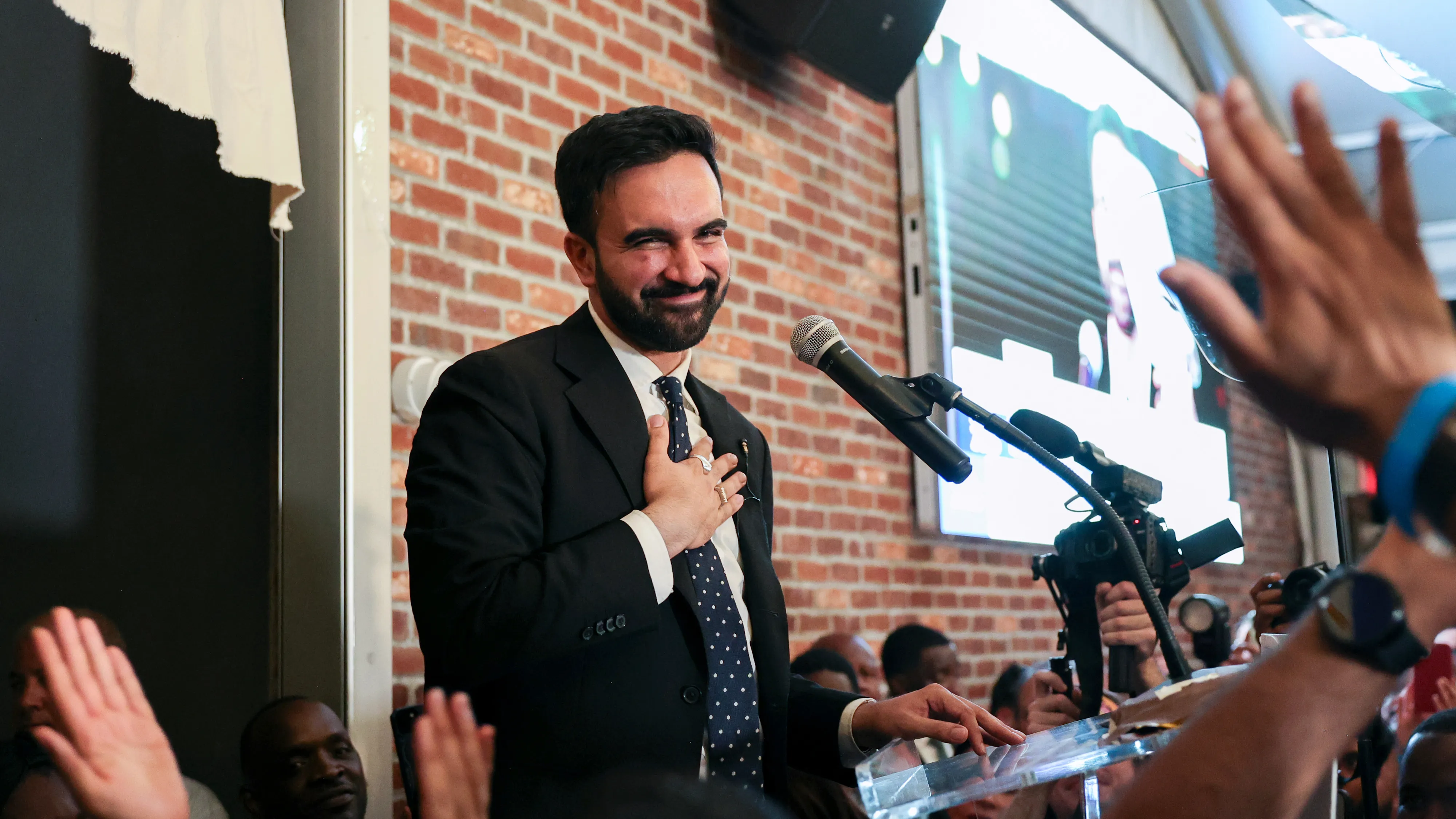
Zohran Mamdani becomes New York City’s first Muslim and South Asian mayor, marking a groundbreaking shift in the city’s political history. Explore his journey, campaign, and historic victory.
On November 4, 2025, it was a historic day for New York City, in which it witnessed one of its unforgettable political moments. Zohran Mamdani, as the city’s first Muslim and South Asian mayor, won the mayoral election. New York citizens not only looked at it as a personal achievement but also saw it as a symbol of bold change in the political climate of New York City.
EARLY LIFE AND BACKGROUND:
Zohran Kwame Mamdani was born on October 18, 1991, in Kampala, Uganda, to Indian-origin parents Mira Nair and Mahmood Mamdani. Then his family moved to New York City when he was 7, and he grew up there. He completed his elementary education at Bank Street School for Children in Manhattan. Then he moved to Bronx High School of Science for high school studies. After that, he attended Bowdoin College in Maine, and he graduated in 2014 with a degree in African Studies.
After college studies, Zohran became a foreclosure prevention counsellor by helping low-income people, and in this way, he made connections with people who were struggling with financial disturbances, and it helped him to study politics very seriously.
Becoming a Politician:
Zohran started his political life as a campaign manager, and he worked for progressive leaders like Khader El-Yateem and Ross Barkan. Later in 2020, he contested for the New York State Assembly and made a legacy by defeating a five-term incumbent. It strengthened his courage in New York politics, and thus he was re-elected in 2022 and again in 2024.
Throughout his years in the Assembly, Mamdani proposed many progressive policies such as working to make bus fares free, pushing for rent protections, and debating for debt relief for taxi drivers. This also paved the way for his victory.
MAYORAL CAMPAIGN: Golden Feather in the Cap
In October 2024, Zohran Mamdani proclaimed that he would run for mayor of New York City. From the beginning of his election campaign, it was built on big and bold promises such as free public buses, rent freeze for many tenants, city-owned grocery stores, and a goal to raise the minimum wage to $30 per hour by 2030.
These policies helped him showcase his identity as a democratic socialist. He also planned programmes like public safety reform, high taxes for wealthy persons to invest in social programs, and support for LGBTQ rights.
His campaign was very focused and deeply grassroots. He also used social media platforms like Instagram and TikTok very effectively, showcasing his popularity among citizens. He also prepared a huge volunteer force, and by election night, he had set up a field operation of more than 100,000 volunteers, which many others called an unstoppable force.
A HISTORIC VICTORY:
Mamdani had many historic victories in his political life. He first won the Democratic primary over former New York Governor Andrew Cuomo and then the general election on November 9, 2020. He again defeated Cuomo and Republican Curtis Sliwa, securing a high percentage of votes.
With his win, he became not only the first Muslim mayor of New York City but also the first South Asian mayor and the youngest one. His victory also means a shift in New York politics, empowerment of grassroots movements, representation that matters, and challenges ahead.
IN CONCLUSION:
Broadly, Zohran Mamdani achieved his victories in many ways. He made history as the first Muslim and South Asian mayor, but more than this, he proved that progressive ideas and grassroots activism can win in a big, complex city. His victory also showcases a journey from a housing counsellor to mayor, a powerful example of how ordinary people, when they organise and believe in change, can reach the highest level of power.
His success marks a new shift in New York’s political imagination. It inspires future leaders to trust community power and moral conviction. And it reminds citizens that democracy grows stronger when every voice is valued.