
Feasting on Famine: The Imperial Starvation Strategy
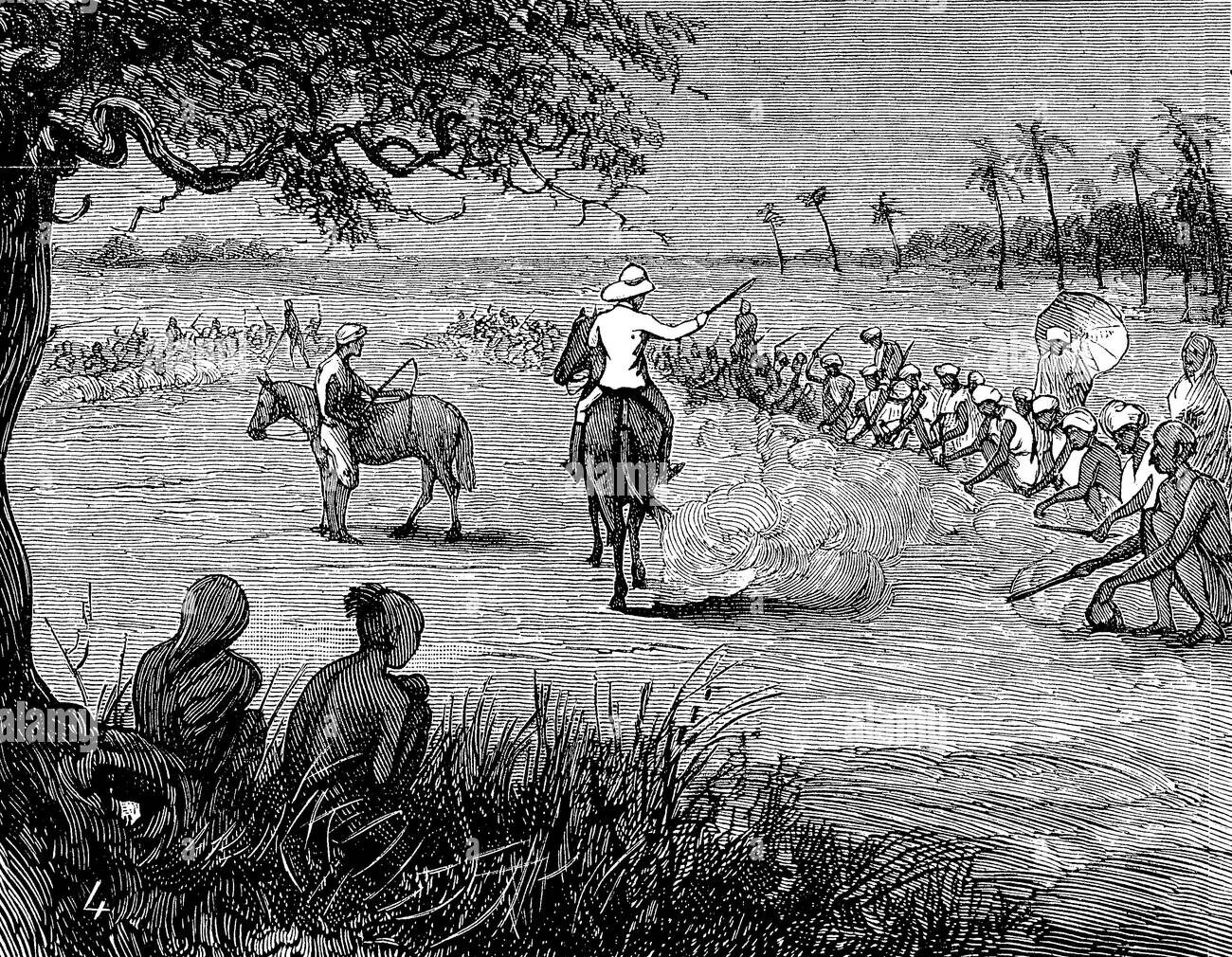
Discover how starvation is designed, not destined. From British India to Gaza, this essay uncovers famine as a weapon of control and conquest.
Famine is often depicted in the West as a sad, inevitable tragedy. We are told it is a Malthusian nightmare caused by too many mouths to feed, too little rain, or "backward" farming methods in the Global South. Through newsreels and NGO appeals, we are trained to look at a skeletal child with a distended belly and see a victim of bad geography, a prisoner of a harsh climate, or a casualty of their own government’s incompetence.
This narrative serves a distinct, absolving purpose. It naturalizes death. It turns murder into mere tragedy. It convinces us that hunger is a passive state of nature rather than an active weapon of power.
But let’s be clear: starvation is rarely passive. As Alex de Waal argues in *Mass Starvation*, starvation is a "transitive verb." It is something one group of people does to another. It is a crime of commission, not omission. From the granaries of British India to the bombed-out bakeries of Gaza, the history of the last three centuries proves that mass hunger is not a failure of food production. It is a terrifying success of political and economic engineering. It is the logical conclusion of systems designed to extract value at the cost of human life. The history of the modern world is, in many ways, the history of the West feeding itself by snatching bread from the mouths of the Rest.
The Laboratory of Laissez-Faire: Ireland
Before the British Empire starved India, they practiced on Ireland. The Great Famine (1845–1852) was the grim prologue to the colonial history of hunger, the laboratory where the ideological tools of starvation were sharpened. When the potato blight struck, it turned the subsistence crop of the poor Catholic peasantry into a black, putrid slime. But here is the crucial fact: the blight did not touch the wheat, the oats, the beef, or the pork. The land was still fertile; it was simply owned by the wrong people.
Throughout those years of death, Ireland remained a net exporter of food. Under the protection of British dragoons, ships left Irish ports heavy with livestock, butter, and grain, bound for English markets. Behind the soldiers stood the starving multitudes, watching their own harvests sail away while their children died in ditches, their mouths stained green from trying to eat grass.
Sir Charles Trevelyan, the British administrator in charge, famously described the famine as the "judgement of God" sent to teach the Irish a lesson. But it was not God who set the policy. It was a rigid, fanatic adherence to the free market. To feed the starving by stopping exports would have been to interfere with "market forces."
This was the first clear articulation of a deadly Western ideology that would become the moral bedrock of empire: the idea that a merchant's right to profit supersedes a human being's right to eat. The British press, specifically Punch magazine, dehumanized the victims, depicting the Irish not as dying humans but as ape-like monsters to justify their extinction and absolve the English public of any complicity in the slaughter. This racialization of hunger, the idea that some bodies are just fuel for the economic engine, would soon be exported to the tropics on an industrial scale.
Imperial Theft and the Victorian Holocausts
The connection between colonialism and the destruction of food security is a continuous thread. Before European powers arrived, many societies in Asia and Africa possessed robust systems of food security. Granaries were maintained for bad harvests, and mixed-cropping ensured biodiversity. Colonialism dismantled these safety nets to build a global extraction machine.
The blueprint for modern administrative famine was perfected in Bengal. Following the Battle of Plassey in 1757, the British East India Company transformed from a trading business into a sovereign power. Their primary interest was revenue extraction to fund wars and pay dividends to shareholders in London. They systematically dismantled the "moral economy" of the Indian village. The infamous "Permanent Settlement" of 1793 in Bengal imposed fixed tax obligations on land regardless of the harvest. In the past, Mughal rulers had allowed for leniency during droughts. The British did not.
The result was the Bengal Famine of 1770, which killed nearly ten million people—one-third of the population. Yet the true horror lies in the market response. As millions died, the East India Company continued to enforce tax collection and actually increased the export of grain and opium.
This was not an accident. It was the system working as intended. Historian Mike Davis, in his seminal work *Late Victorian Holocausts*, documents how this repeated itself globally in the late 19th century. Davis connects the "Golden Age" of liberal capitalism directly to the death of tens of millions in India, China, and Brazil. He argues that these were not merely "natural disasters" triggered by droughts, but the result of violently incorporating peasants into the global market.
During the Great Famine of 1876–1878 in Madras, the British Viceroy, Lord Lytton, strictly adhered to the principles of Adam Smith. He forbade reductions in grain prices and opposed government interference, arguing it would encourage "shirking." The cruelty was bureaucratic and precise. Lytton established "relief camps" far from the victims' homes to discourage people from seeking help. Inside these camps, the caloric ration was lower than that of the Buchenwald concentration camp. The "Temple Wage," named after British official Sir Richard Temple, provided less food than was required to sustain basic bodily functions while demanding heavy labor on railroads. This infrastructure was built not to feed Indians, but to rush grain out of the hinterland and onto ships bound for London.
Davis paints a harrowing picture of telegraph wires humming with grain prices and market data above the heads of starving families who were eating dirt to soothe the pangs of hunger. Londoners were eating bread made from Indian wheat while India starved. This was the "secret history" of the Victorian era. The wealth of the West was built on the corpses of the Global South.
The Extraction Engine in Africa
While India starved, Africa was being carved up. Walter Rodney, in *How Europe Underdeveloped Africa*, provides the essential framework for understanding how colonial agriculture destroyed African self-sufficiency. The colonial powers did not just steal land. They stole labor and time.
In the Belgian Congo, King Leopold II’s regime turned the entire population into forced laborers for rubber extraction. If a village failed to meet its quota, food stores were seized, livestock slaughtered, and human hands chopped off. Agriculture collapsed because people were too busy dying for rubber to grow cassava.
Throughout the continent, the imposition of the "hut tax" or "poll tax" forced African farmers into the cash economy. To pay the tax and avoid prison, a farmer could no longer grow the millet or yams his family needed. He had to grow what the European market wanted: cotton in Sudan, groundnuts in Gambia, cocoa in Ghana, and sisal in Tanganyika.
Rodney illustrates the tragedy of this shift. The African farmer was forced to grow crops he could not eat, to sell at prices he could not control, and to buy imported food he could not afford. Mono-cropping depleted the soil and left entire nations vulnerable to global price fluctuations. When the price of cotton dropped in Liverpool, families starved in Sudan. This was not "underdevelopment"; it was active "de-development," the deliberate destruction of indigenous capacity to survive.
American Pacification: Philippines and Vietnam
While European powers starved Africa and India, the United States was refining its own brand of imperial hunger in the Pacific. Following the annexation of the Philippines, the US Bell Trade Act of 1946 cemented the archipelago’s status as an agricultural vassal. The Philippines was forced to export sugar and copra to the US at prices set by Washington while its own peasantry went hungry. The land was concentrated in the hands of a US-backed oligarchy, creating a feudal system that persists today.
This logic reached its violent zenith during the Vietnam War. Under the guise of "denying the enemy," the US military engaged in the deliberate destruction of the Vietnamese food system. Operation Ranch Hand saw the spraying of 20 million gallons of herbicides, including Agent Orange, over Vietnam, Laos, and Cambodia. The slogan was "Only We Can Prevent Forests," but the targets were often rice paddies. By destroying crops, the US sought to drive the rural population into "Strategic Hamlets"—a euphemism for concentration camps. They destroyed the food to control the people and poisoned the soil for generations. This was ecocide as a tool of counter-insurgency, viewing the very biology of the Vietnamese people as an enemy to be subdued.
The Boom Famine of 1943
The culmination of British colonial policy was the Bengal Famine of 1943. While often blamed on the Japanese occupation of Burma cutting off rice supplies, Amartya Sen’s foundational work, *Poverty and Famines*, shattered this myth. Sen demonstrated that there was no significant decline in food availability in Bengal that year. The harvest had been decent.
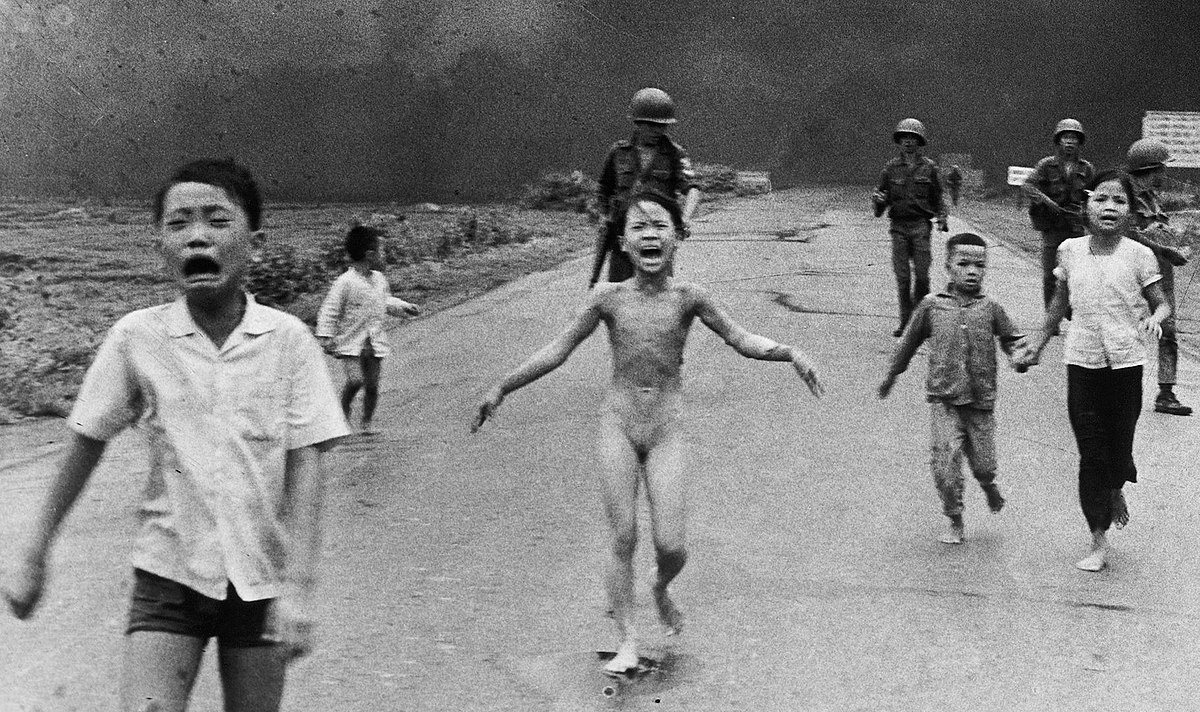
Instead, it was a "boom famine" caused by inflation, war profiteering, and British policy. The administration, under Winston Churchill, prioritized stockpiling food for soldiers and European civilians. They implemented a "Denial Policy," destroying boats and rice stocks in coastal Bengal to prevent them from falling into potential Japanese hands. This "scorched earth" policy scorched their own subjects.
Sen describes the "entitlement failure" where starving laborers, fishermen, and barbers died not because rice didn't exist, but because their wages could no longer buy it. They died in front of well-stocked shops. Meanwhile, Churchill, when informed of the death toll rising to three million, displayed the callousness of the imperial mindset. He prioritized Greek liberties over Indian lives and asked why, if food was so scarce, Gandhi hadn't died yet. The famine was a mechanism of the war effort, a calculated sacrifice of the "dispensable" colonial subject.
The Neoliberal Trap: From Colonialism to Corporate Feudalism
Direct colonial rule largely ended by the 1960s, but the structures of extraction remained. The flags changed, but the flow of resources did not. In the post-colonial period, the baton was passed from the Viceroy to the World Bank economist.
Upon gaining independence, many nations attempted to rebuild food sovereignty through subsidies and grain reserves—tactics the West used to build its own economies. However, the Debt Crisis of the 1980s provided the West with a lever to pry these markets open. The IMF and World Bank imposed "Structural Adjustment Programs" (SAPs). As Jason Hickel argues in *The Divide*, these programs were essentially a method of looting.
In exchange for loans to pay off odious debts often incurred by Western-backed dictators, developing nations were forced to slash subsidies for fertilizers and seeds. This made farming unaffordable for the poor. They were forced to sell off state grain reserves, the literal rainy-day funds of the nation. A striking example occurred in Malawi in 2002. The IMF instructed the government to sell its grain reserves to service its debt. When a drought hit shortly after, there was no buffer. Famine ensued, and the very institutions that caused the crisis then offered "aid" with more strings attached.
In Jamaica, as documented in the film *Life and Debt*, World Bank conditions forced the country to lower tariffs on imported powdered milk. Subsidized milk from the US and Europe flooded the Jamaican market, undercutting local dairy farmers who were forced to pour their fresh milk into the dirt. The local industry was destroyed, leaving Jamaica dependent on foreign imports. This is the paradox described by Raj Patel in *Stuffed and Starved*: a world where the people who grow the food cannot afford to eat it. We see an "hourglass" system where millions of farmers and consumers are held hostage by a handful of corporate intermediaries who control the price, the transport, and the processing.
The Violence of the Green Revolution
This structural violence was compounded by the so-called "Green Revolution." Often hailed as the savior of the starving world, Vandana Shiva has spent decades exposing it as a mechanism of corporate colonization. The introduction of high-yield monocultures in Punjab and beyond shifted agriculture from a biological process to a chemical one.
These new seeds were not "miracles." They were "high-response varieties" that only worked with massive inputs of water and petrochemical fertilizers sold by Western agribusiness. This trapped small farmers in a cycle of debt. To buy expensive seeds and chemicals, they borrowed money. When the harvest failed due to pests—which thrive in monocultures—or when global prices dropped, the debt remained. Shiva links this directly to the epidemic of farmer suicides in India, particularly in the cotton belt. Nearly 300,000 farmers have drunk pesticide to escape the humiliation of dispossession.
This is a form of auto-genocide driven by the market. The soil itself has been colonized, depleted of nutrients, and poisoned by chemicals, mirroring the exhaustion of the people who work it.
The Dumping Ground: Haiti
The "neoliberal food chain" destroys local markets through dumping. A prime example is Haiti. In the 1980s, Haiti was self-sufficient in rice. Under pressure from the US and the IMF, Haiti was forced to lower its tariffs on imported rice from 50% to 3%. Heavily subsidized American rice, specifically from Arkansas, flooded the market. This undercut Haitian farmers who could not compete with the US Treasury. The local industry collapsed. Peasant farmers flooded into the slums of Port-au-Prince to become cheap labor for sweatshops.
Haiti became dependent on food imports. When global prices spiked in 2008 due to speculation on Wall Street, Haitians were reduced to eating "mud cookies" made of clay, salt, and shortening. Former US President Bill Clinton later apologized for this policy, admitting it was a deal "good for some of my farmers in Arkansas" but a disaster for Haiti. It was not a mistake. It was the deliberate destruction of a sovereign food system to create a captive market for US surplus.
Siege Warfare: The Politics of Verticality
When economic coercion fails, or when a population resists, the velvet glove of the market is removed to reveal the iron fist of siege warfare. Eyal Weizman, in *Hollow Land*, describes the "politics of verticality" used in modern occupation—the control of the air above and the water below. Nowhere is this more evident than in the Middle East.
The sanctions on Iraq (1990–2003) provided a modern masterclass in administrative starvation. The US and UK blocked "dual-use" items, a category stretched to include chlorine for water purification and graphite for pencils. The water infrastructure collapsed, leading to epidemics of cholera and dysentery. UNICEF estimated that 500,000 children died as a direct result. When asked about this on *60 Minutes*, US Secretary of State Madeleine Albright infamously replied, "We think the price is worth it." The "price" was half a million Arab children, and the "purchase" was American geopolitical hegemony.
This logic continues in Yemen. A US-backed Saudi coalition imposed a blockade that turned the poorest country in the Arab world into a famine zone. They targeted fishing boats, port cranes, and water infrastructure. It was a systematic dismantling of the means of survival, proving that the strategic logic of empire has not changed: if you cannot defeat the fighter, you starve the child.
Gaza: The Diet of Occupation
Today, we witness the culmination of this logic in Gaza. Even before the devastation of 2023, Gaza was subject to a scientifically calculated starvation diet. In 2006, Israeli official Dov Weisglass joked, "The idea is to put the Palestinians on a diet, but not to make them die of hunger." This was state policy. The military calculated the precise number of calories required to prevent immediate mass death—roughly 2,279 calories per person—and limited food truck entries to match that bare minimum. They counted the calories of a population as if they were livestock, keeping them on the brink of collapse to ensure compliance.
In the current conflict, this "diet" has turned into total deprivation. We are witnessing the destruction of the very means of existence: the bombing of bakeries, the salting of agricultural land, the shooting of fishermen, and the blocking of flour. This is a return to the medieval siege, but upgraded with drone technology and diplomatic cover. It echoes the "Guns and Beans" policy in Guatemala (1982-1983), where the US-backed military offered food only to those who submitted to army control. It mirrors the Indonesian starvation of East Timor in the 1970s.
The visuals coming out of Gaza—children foraging for weeds, animal feed being ground into flour—are not accidents of war. They are the intended results of a policy that views the Palestinian body as a demographic threat to be neutralized.
New Geographies of Death
The narrative that the world is "getting better" is a falsehood that relies on income metrics while ignoring the fragility of life. In 2023, over 281 million people faced acute food insecurity. The geography of this hunger is not random. It maps perfectly onto the fault lines of imperialism.
In Kashmir, the Indian state has adopted settler-colonial strategies akin to those in Palestine. Neoliberal strategies are linked with settler-colonialism in the region. The push towards cash crops, like apples for the Indian market, over subsistence farming is a tool of economic subjugation. By making the region dependent on food imports from India, the state creates a lever of control: political dissent can mean economic strangulation.
Meanwhile, Sudan and South Sudan account for three of the four recognized famines in the last decade. Before its independence in 2011, South Sudan was part of the larger Sudan, which suffered civil wars fueled by colonial borders and oil interests. Today, warring factions are replicating the "flush out" tactics of the past. During the civil war that broke out in 2023, acts depriving millions of Sudanese people of objects indispensable to survival became commonplace. With nearly 12.4 million people displaced, the warring factions—armed by international powers seeking gold and influence—have turned the breadbasket of Africa into a graveyard. They are effectively clearing the land for resource extraction.
The Continuity of Exploitation
Famine is not a natural disaster. It is a structural weapon. From the British Viceroy watching trains of wheat leave a starving India, to the German General poisoning waterholes in the Namibian desert, to the World Bank economist demanding the end of grain subsidies in Malawi, to the military general calculating calorie limits for Gaza, there is a single, unified logic at play.
It is the logic that values the stability of the market and the security of the hegemon over the life of the "Other." The colonial ship is now a container ship, and the pith helmet has been replaced by the suit and tie, but the cargo is still stolen life. Neoliberalism is not the solution to famine. It is the modern delivery mechanism for it.