
Syed Muhammad Naquib al-Attas: A Scholar for the Modern Age
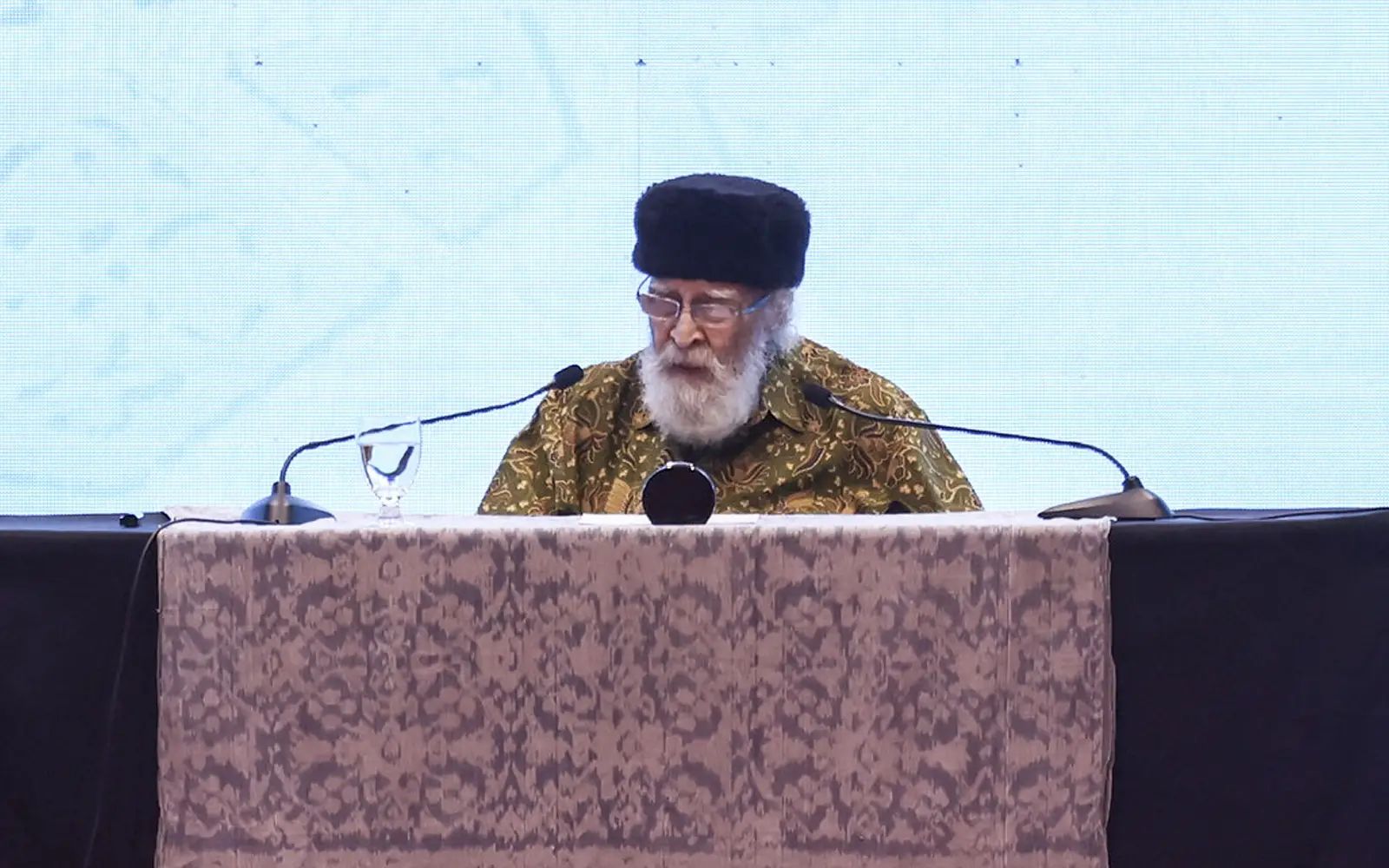
Syed Muhammad Naquib al-Attas is one of the most influential thinkers in the modern Muslim world. Born in 1931 in Java, Indonesia, he has spent his life bridging the gap between traditional Islamic knowledge and modern Western science. He is a philosopher, historian, and educator who has changed how people think about education and the "Islamization of Knowledge."
Early Life and Global Education
Al-Attas came from a family with deep roots in scholarship and spirituality. His education was truly global, which helped him understand both Eastern and Western perspectives.
Military Background: Interestingly, he served as an officer in the Royal Malay Regiment.
Academic Journey: He studied at the University of Malaya, then moved to Canada to study at McGill University, and finally earned his doctorate at the University of London.
The Core Pillars of His Philosophy
Syed Muhammad Naquib al-Attas is a towering personality in Islamic philosophy who dedicated his life to reclaiming the Islamic identity in the face of modern secularism. His life and work can be summarized through four main pillars:
Global Pedigree: He combined a deep ancestral connection to the Prophet’s family with a world-class education from both the East (Malaysia) and the West (Canada and the UK), allowing him to critique modern thought from the inside.
The Problem of Knowledge: He argued that the "crisis" of the modern world is actually a "loss of Adab" (right action/discipline) caused by the confusion of knowledge. He believed that when people forget the spiritual meaning of words and sciences, society falls into chaos.
The Solution: He pioneered the "Islamization of Knowledge," a process of cleaning modern sciences of secular prejudices and re-rooting them in an Islamic worldview.
Institutional Impact: By founding ISTAC (International Institute of Islamic Thought and Civilization), he proved that his ideas were not just theoretical; he created a physical and intellectual space where traditional faith and high-level academic research could live together.
The Concept of "Islamization of Knowledge"
Perhaps his most famous contribution is the idea that modern knowledge is not "neutral." He argued that much of the science and philosophy coming from the West is built on secularism—the idea that the world can be understood without God.
Al-Attas proposed that Muslims should not simply reject modern science, but rather "Islamize" it. This means:
*Identifying elements in modern knowledge that contradict Islamic values.
*Replacing them with concepts rooted in the Quran and the traditions of the Prophet.
*Ensuring that "Adab" (right action and discipline) is the foundation of learning.
The Founding of ISTAC
To put his ideas into practice, al-Attas founded the International Institute of Islamic Thought and Civilization (ISTAC) in Kuala Lumpur, Malaysia.
He didn't just design the curriculum; he also designed the building's architecture! He wanted the physical space to reflect the beauty and intellectual depth of Islamic history. ISTAC became a world-renowned center where scholars studied philosophy, science, and history in a way that respected both reason and faith.
Key Ideas on the Human Soul and Language
Al-Attas wrote deeply about the nature of the human being. He believed that the modern world suffers from "confusion" because people have lost the true meaning of words.
The Soul: He taught that the human soul has a "covenant" with God, and true happiness (Sa'adah) comes from fulfilling that spiritual bond, not just from material wealth.
Language: He argued that certain Islamic terms—like Din (religion), Ilm (knowledge), and Adab (morality)—have specific meanings that must be protected from being diluted by secular definitions.
Impact on the World Today
The work of Syed Muhammad Naquib al-Attas is more relevant than ever in 2026. As the world deals with rapid technological changes and a "post-truth" era, his focus on certainty and ordered knowledge provides a roadmap for many.
He showed that a person can be a master of modern academic methods while remaining deeply committed to their faith. His books, such as Islam and Secularism, are still studied in universities worldwide by people trying to understand how to live a meaningful life in a complex, globalized society.
Conclusion
Syed Muhammad Naquib al-Attas is more than just a writer; he is a visionary who sought to restore the "inner peace" of the human mind through correct education. By emphasizing the importance of spiritual roots in a scientific world, he has left a legacy that continues to inspire students and thinkers to seek knowledge that benefits both the body and the soul.