
From Tradition to Transformation: Ckk Maniyoor’s Educational Legacy
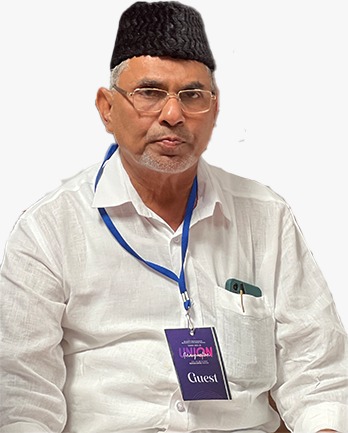
The intellectual and organizational history of Kerala’s Muslim community has been shaped by individuals whose lives were built on commitment, scholarship, and service. Among them, C.K.K. Maniyoor (C.K. Kamal Moulavi) occupies a distinguished place as a scholar, leader, and inspirational presence within the honourable Samastha Kerala Jam’iyyathul Ulama. His life was not merely a record of positions held or responsibilities fulfilled; rather, it was a continuous journey of dedication to knowledge, community, and institutional strength.
C.K.K. Maniyoor stands as a distinguished figure in the religious and socio-cultural landscape of Kerala, recognized for his profound contributions as an organizer, educator, and communal leader. His life’s work is characterized by a seamless integration of traditional scholarship and active social engagement, primarily within the framework of the Sunni Yuvajana Sangham (SYS). Maniyoor’s foundational values were deeply rooted in a scholarly and spiritually significant lineage. He was the son of Koolath Maamu Musliyar, a revered pedagogue who dedicated his lifetime to the spiritual and educational upbringing of the Paral masjid in Maniyoor. His maternal ancestry further connects him to the esteemed Naqshbandi Tariqa of North Malabar; his mother, Chittikkoth Zainaba, was a descendant of the prominent mystic Waliyullahi Palathumkara Ramadan Sheikh Thangal. This heritage provided him with an environment steeped in theological rigor and Sufi tradition.
Maniyoor’s academic journey reflects the traditional Dars system of Kerala, supplemented by formal institutional training. He pursued extensive religious studies across several historic centers of learning, including the Juma Masjids of Adoor, Mattool Madakkara, Edayannur, and Chembilode. To augment his scholarly credentials, he attended Irshadul Muslimeen Arabic College in Kodungallur and Jalaliya Arabic College in Kutchira, Kozhikode. Throughout this period, he was mentored by a cadre of eminent scholars. Beyond his father’s guidance, he studied under notable figures such as Abdurahiman Haji Thangal (Palathukkara Mulayil), C. Kutyali Musliyar (Maniyoor), Abdul Khader Musliyar (Chembilode Kaitherippoyil), and Habibulla Maulavi Irikkur. These mentors played a pivotal role in shaping his intellectual framework and preparing him for a life of public service.
Within the organizational framework of Samastha, C.K.K. Maniyoor emerged as a firm and dependable voice. His presence in public gatherings and meetings carried a unique authority shaped by knowledge and experience. Yet, what distinguished him was not merely his authority, but the depth of his emotional and intellectual connection to the organization. Whenever he spoke, his words carried echoes of history and reverence. He would not conclude without invoking the legacy of Shamsul Ulama and acknowledging the living guidance represented by Sayyidul Ulama. These references were not rhetorical habits but reflections of a worldview rooted in continuity, respect, and institutional memory. Even as a senior leader, he did not distance himself from grassroots activities. Instead, he engaged with the enthusiasm and sincerity of a committed worker. His close association with the SKSSF exemplified his belief that the strength of any movement lies in its youth and its active base. To him, participation was not dependent on formal invitations; it was a moral obligation shaped by love for the movement.
C.K.K. Maniyoor’s contribution to the educational landscape stands as one of the most enduring aspects of his legacy. His approach was characterized by a rare synthesis of visionary idealism and pragmatic execution, rooted in the belief that knowledge must serve as a tool for both individual empowerment and communal upliftment. The cornerstone of his institutional legacy is the Shamsul Ulama Memorial Busthanul Uloom Arabic College in Maniyoor. Crucially, this institution began its journey as an orphanage, reflecting Maniyoor’s initial focus on social welfare and the protection of the vulnerable. Under his stewardship, the institution evolved from a sanctuary for the displaced into a premier academic center. By transitioning the orphanage into a space where traditional Islamic scholarship coexists with contemporary educational requirements, he created a model for holistic development. This unwavering concern, maintained until the very end of his life, underscores a legacy deeply invested in the intellectual and moral advancement of society. Between 2000 and 2025, he served with distinction as the General Secretary, subsequently ascending to the office of President for the 2025–2026 term. Through his work, he transformed the concept of "charity" into "empowerment," ensuring that the students under his care were not just supported, but were equipped to lead.
One of the defining characteristics of C.K.K. Maniyoor was his balanced approach to leadership. He possessed the ability to be firm when circumstances demanded discipline, yet gentle and encouraging when dealing with people. This balance enabled him to guide the organization effectively without alienating those around him. He inspired workers not through authority alone, but through personal example. His accessibility, sincerity, and consistency made him a figure of trust and respect. Those who worked alongside him often experienced a sense of closeness that transcended formal hierarchies. He concluded his distinguished career of service while holding the esteemed position of Vice President of the State Sunni Yuvajana Sangham (SYS).
C.K.K. Maniyoor’s dedication was perhaps most visible during moments of personal difficulty. Even after facing an unexpected accident during the active phase of Samastha’s centenary activities, he did not withdraw from his responsibilities. Before fully recovering, he returned to organizational work, continuing to guide, inquire, and participate wherever needed. Such commitment illustrates a profound sense of duty—one that viewed service not as an occasional act but as a lifelong responsibility. In recognition of his immense contributions, he was selected to receive the Shamsul Ulama Award by the Kasargod district SKSSF. However, his sudden passing meant that he could not be present to receive this honor. This moment stands as a poignant reminder of the unpredictability of life and the enduring value of sincere service. His departure created a significant void within the religious, educational, and organizational spheres. Yet, his influence continues to live on through the institutions he strengthened, the values he upheld, and the countless individuals he inspired.
The life of C.K.K. Maniyoor represents a harmonious blend of scholarship, leadership, and humility. His deep-rooted connection to tradition, expressed through his journey alongside the legacies of the scholars of Samastha, his unwavering commitment to the organization, and his active engagement with the community define him as a transformative figure in Kerala’s Muslim intellectual history. More than a leader, he was a living embodiment of service. His legacy is not confined to memory alone; it continues to inspire future generations to pursue knowledge, uphold unity, and dedicate themselves to the collective good.