
Islam and Evolution: Exploring The Possibilities of A Convergent Reading
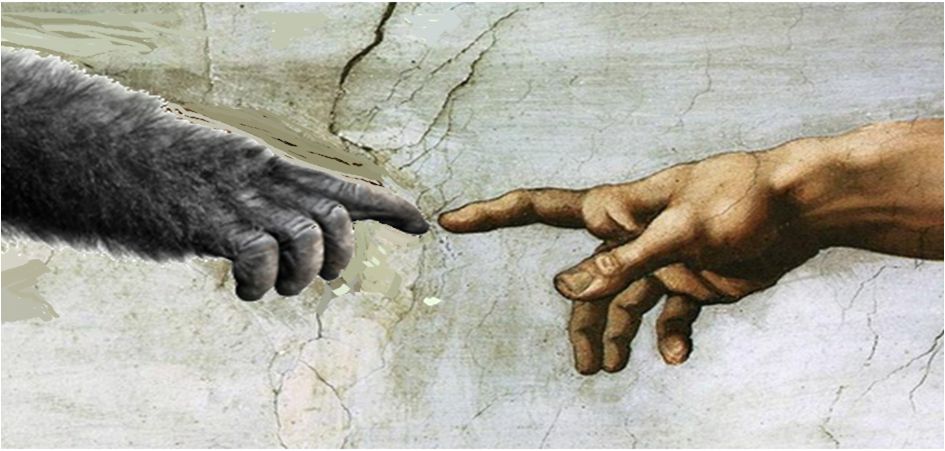
When we discuss the origin of humankind, it is essential to analyze the Holy Qur’an alongside scientific discoveries. The Qur’an encourages humankind to observe the natural world and to strive for understanding through thoughtful reflection on creation.
Many generations of humans, plants, and animals existed before us. Therefore, to understand the fate of past civilizations, we must travel through the earth—conducting explorations, studies, excavations, and archaeological investigations in the regions where those earlier peoples once lived.
What most intrigued Darwin in his studies was the fact that all living beings in this world appeared at different stages in time. He referred to the mechanism driving this phenomenon in nature as “natural selection.” According to Darwin, this process was the reason behind the diversity found among living species.
The Origin of Humanity and the Testimony of the Stars
As a human with a deep desire to understand the evolution of humankind in connection with the Holy Qur’an, one will be deeply influenced by these verses:
“By the sky and the night visitant (therein); And what will explain to thee what the night-visitant is? It is the star of piercing brightness. There is no soul but has a protector over it. Now let man but think from what he is created! He is created from a drop emitted.” (Quran 86:1–6)
These verses establish a beautiful connection between cosmic phenomena and human creation—urging thoughts on both the vastness of the universe and the humble beginnings of mankind.
Why does Allah swear by the stars? What is the connection between these two? The first entities to form in this universe were massive stars. After existing for a certain time, these stars exploded, and from the clouds of dust and particles released by those explosions, new stars were born.
The dust swirling through busy city streets, the iron we use, the high mountains, the soil we hold in our hands, the oxygen we breathe, and even the carbon within our bones—all were once formed inside the cores of stars and later dispersed into the universe.
In summary, our bodies are formed from the dust of stars. When Allah says that He created humankind from clay and then swears by the stars, we can grasp the profound connection between the two.
The Beginning of Life
This article distinguishes between established Islamic doctrine (ʿaqīdah), classical scholarly interpretation (tafsīr), and contemporary reflective engagement with scientific discourse. Where reflection goes beyond explicit textual evidence, it is presented as speculative rather than definitive.
One of the greatest mysteries of science is the beginning of life on Earth. To date, scientists cannot fully explain how life emerged. Two major theories exist on this matter:
- Life originated on Earth itself.
- Life came from beyond Earth.
According to the latter theory, life did not originate here, but elsewhere in the universe. Fragments of life—or its essential components—may have formed beyond Earth and traveled across space for millions of years, carried by meteors, comets, and cosmic dust, before eventually reaching our planet. Earth’s environment then became suitable for these life elements to awaken and develop. This theory is known as panspermia. Furthermore, science has discovered that water played a crucial role in the emergence of life.
As the Qur’an declares:
“And Allah has created every animal from water: Of them there are some that creep on their bellies; some that walk on two legs: And some that walk on four. Allah creates what He wills. For verily Allah has power over all things.” (Quran 24:45)
Adam (عليه السلام) - The First Human
Behold, thy Lord said to the angels, “I will create a vicegerent on earth.” They said: "Will thou place therein one who will make mischief therein and shed blood whilst we do celebrate thy praises and glorify thy holy (name)?” He said, “I know what you know not.” (Quran 2:30)
Why did the angels ask such a question? Could it be that before the creation of humankind, they had witnessed other beings inhabiting the Earth which caused chaos and bloodshed? Classical commentators such as al-Ṭabarī and Ibn Kathīr explain that the angels’ question was either based on their knowledge of previous earthly creatures or inferred from the nature of beings endowed with moral agency and free will.
Fossil evidence reveals the existence of species that hunted with their own hands, consumed the flesh of their prey, and lived both in isolation and in groups. These beings, who shared many similarities with humans, are known as hominids. Modern science studies these beings as part of the biological history related to humankind. Modern evolutionary biology studies the development of hominid species based on fossil and genetic evidence. Islamic belief, however, affirms Adam (عليه السلام) as the first human prophet, and the precise relationship between these scientific models and theological belief remains an area of reflection rather than doctrinal conclusion.
The Qur’anic description of Adam (عليه السلام) presents him as a created human being with natural needs, while simultaneously affirming his special selection and divine honor. After his creation, Allah commands Adam (عليه السلام) to enter Paradise, saying:
“There is therein (enough provision) for thee not to go hungry nor to go naked, nor to suffer from thirst, nor from the sun's heat." (Quran 20:118–119)
The primary source of the human body's energy is the food consumed and the oxygen breathed. This is stored as electrical energy within the body, which is why we feel warmth. In this context, Allah’s command to Adam (عليه السلام) to enter Paradise—where he would neither hunger nor be exposed—highlights a state of physical comfort and the complete fulfillment of human biological needs.
These verses indicate that Adam (عليه السلام) possessed human biological needs such as hunger, thirst, and the need for physical comfort. Classical Islamic scholarship understood this as affirming Adam’s created human nature, without negating his unique status as the first human prophet.
Within Islamic theology, Adam (عليه السلام) remains the first human prophet directly created by Allah. Scientific discussions of biological history are therefore engaged here as contextual reflection, not as reinterpretations of revealed doctrine.
The Qualities of Human Beings
There exist creatures far stronger than humans on this earth, some with ten times greater physical strength. Most of them lived on the planet long before the arrival of humankind. Yet, despite their power and endurance, it was human beings who ultimately prevailed, rising above all others to hold a unique position on Earth.
Humans have the ability to learn, observe, and convey knowledge to others. Allah granted them the gift of speech, and taught them to write with the pen. They were given the capacity to distinguish right from wrong, to feel remorse for their mistakes, and to learn from them. They were created with the power of reproduction.
The Descendants of Adam (عليه السلام)
O mankind! We created you from a single (pair) of a male and a female, and made you into nations and tribes, that ye may know each other (not that ye may despise each other). Verily the most honoured of you in the sight of Allah is (he who is) the most righteous of you. And Allah has full knowledge and is well acquainted (with all things). (Quran 49:13)
We, who live on this earth today, belong to the species Homo sapiens. However, it cannot be assumed that Homo sapiens were the only form of humans ever to exist on Earth. Even the ‘Ād people mentioned in the Qur’an were a community distinct from the humans of today.
If we collect the genetic information of people living across various parts of the world today, we find that their DNA contains traces of other extinct human species, along with the Homo sapiens genome. For example, the bodies of people living in Europe carry genetic elements from both Homo sapiens and Homo neanderthalensis. Similarly, in some other regions of the world, humans possess genetic traces from Homo sapiens as well as Homo denisova (Denisovans).
Since the beginning of human existence on Earth, groups of humans have migrated and settled in different regions over time. Depending on geography, climate, gravity, food availability, and other environmental factors, they gradually developed distinct physical and behavioral adaptations. These transformations eventually led to the differentiation of various human species. Some of these groups became isolated on islands, continuing their unique forms of life there.
Others made their homes in forests, deserts, mountains, and coastal regions. Among them, one of the most remarkable species was Homo neanderthalensis. Studies conducted on their fossils reveal several distinctive features: the occipital lobe, the rear part of their skull, was more developed than that of modern Homo sapiens, giving them clear vision even in low light. They were also skilled toolmakers. They crafted beautiful garments from animal skins and made musical instruments along with other essential tools for daily life. They maintained relationships with Homo sapiens, and over time, interbreeding between the two groups took place.
This led to the emergence of humans who carried genetic traits of both Homo sapiens and Homo neanderthalensis. Scientific research even suggests that, in many ways, the Neanderthals were more physically suited to survive on Earth than Homo sapiens. Yet, their extinction reminds us that the decree of Allah is absolute and beyond human comprehension.
KEYWORDS: Natural selection, Occipital lobe, Homo denisova, Evolution, Human Origins
REFERENCES
- Ibn Kathīr. Tafsīr al-Qur’ān al-ʿAẓīm. Beirut: Dār al-Fikr
- Al-Ṭabarī, Muḥammad ibn Jarīr. Jāmiʿ al-Bayān ʿan Taʾwīl Āy al-Qur’ān. Cairo: Dār al-Maʿārif
- Al-Ghazālī, Abū Ḥāmid. Iḥyāʾ ʿUlūm al-Dīn. Cairo: Dār al-Ḥadīth
- Fakhr al-Dīn al-Rāzī. Mafātīḥ al-Ghayb (al-Tafsīr al-Kabīr). Beirut: Dār Iḥyāʾ al-Turāth al-ʿArabī
- Ali, Abdullah Yusuf. The Holy Qur’an: Text, Translation and Commentary. Brentwood, MD: Amana Publications, 1989.
- Nasr, Seyyed Hossein. Religion and the Order of Nature. New York: Oxford University Press, 1996.
- Harari, Yuval Noah. Sapiens: A Brief History of Humankind. London: Harvill Secker, 2011.
- Saeed, Abdullah. Interpreting the Qur’an: Towards a Contemporary Approach. London: Routledge, 2005.
- Malik, Shoaib Ahmed. Islam and Evolution: Al-Ghazālī and the Modern Evolutionary Paradigm. London: Routledge, 2021.
- Moosa, Ebrahim. “What Is a Human? On the Ethics of Human Origins.” Journal of the American Academy of Religion 85, no. 4 (2017): 1–25.
- Hasan, Usama. Human Evolution: An Islamic Perspective. London: Quilliam Foundation, 2009.