
Is AI Destroying the Classroom, or Is the Classroom Finally Catching Up?
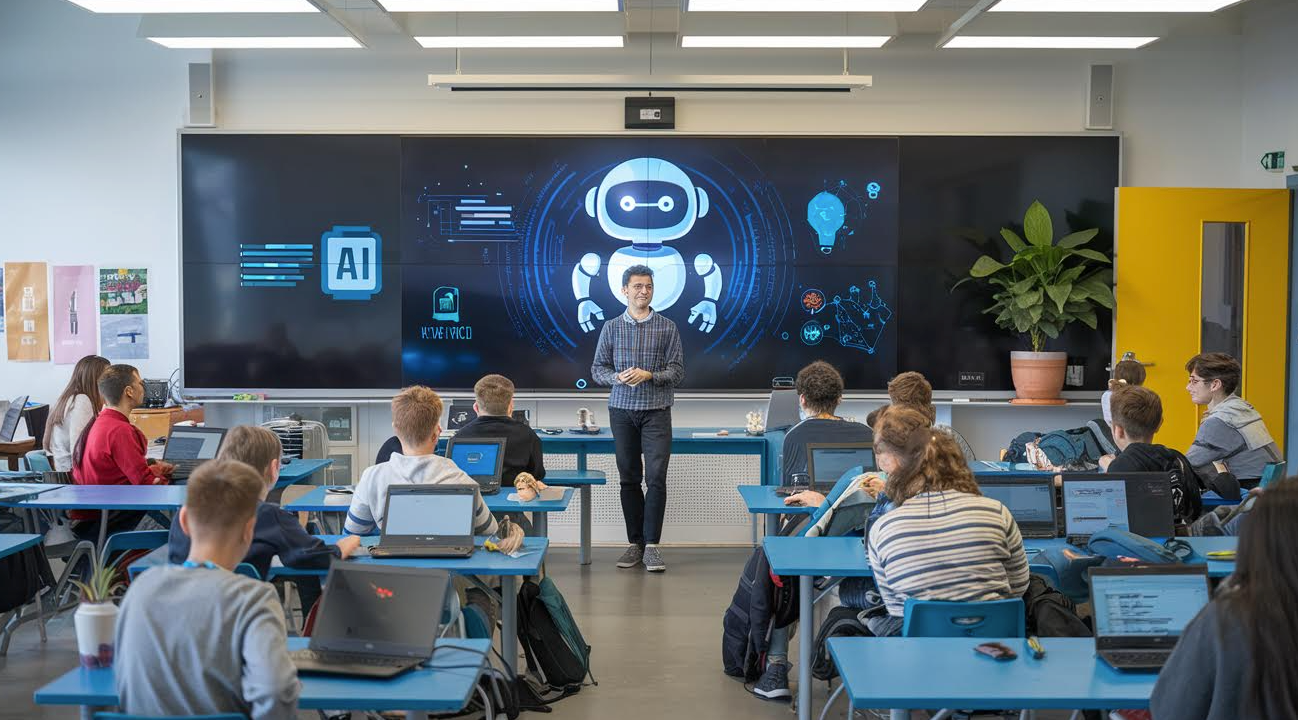
When Professor Anjali Sharma, a literature instructor at a Delhi University college, first encountered ChatGPT, her reaction was visceral panic. Anjali had assigned a classic essay on post-colonial theory, only to receive a dozen submissions that were impeccably structured, devoid of grammatical errors, and completely lacking in human insight. "It felt like a tidal wave had wiped out the very foundation of my job," she recalls, sinking into her office chair. Her initial response, mirrored by countless institutions globally, was a knee-jerk ban, quickly followed by the deployment of expensive, often unreliable AI detection software. Yet, as the academic term progressed, the futility of this war became clear. The question was no longer if students were using AI, but how the education system was going to adapt to an intelligence that learns faster than any human.
The Shift: From Cheat Sheet to Future-Proof Skill
As it turned out, the panic was not just misplaced but misdirected. In fact, many administrators with creativity and vision are already concluding that stopping the development of the technology is just as non-reasonable as banning the internet or the calculator. The new viewpoint casts AI in the role of a future-proof skill instead of a cheat sheet. Dr. Rohan Verma, who led an AI integration pilot project at a major engineering college in Bengaluru, posits that the real advantage lies in personalized learning rather than mere efficiency.
“The traditional way of looking at students as one large homogenous group went on for centuries,” Dr. Verma points out. “An AI tutor can now provide mastery-based instruction to every student, all day, every day. It takes care of the memorization and basic fact-finding, thus allowing the human teacher to concentrate on high-level thinking.”
Indeed, one major outcome of the change is the teacher's transition from a mere lecturer to a philosopher, mentor, and architect of complex ideas, with AI co-operating in terms of automating the administrative grunt work such as creating customized quizzes or modifying lesson scripts.
Ethical Warnings and Academic Integrity
On the one hand, AI offers power, but this comes with intellectual disaster warnings. The main issue that has triggered alarm among Professor Sharma and the humanists in general is the possibility of students ceding essential intellectual qualities—critical thinking, analysis, and original argumentation. For them, AI is not just a great evil, but a hidden challenge to the human intellectual world, which must continue its battle against algorithms that are good only for handling data but not for deep, original thought.
Besides the intellectual risk, the technology raises ethical issues. The more data AI is fed to become 'intelligent,' the more biased it might get, resulting in the use of tools that are unfair and discriminatory. This could lead to students from minority backgrounds being disproportionately affected by the use of, for example, biased proctoring software.
One of the most serious impacts of AI is the inevitable conflict over academic integrity. The days of simple plagiarism detection are numbered. Colleges and universities will have to teach students how to manage AI as if it were a colleague. The basic skills will be:
- How to ask the right question (prompt engineering).
- How to evaluate the answer (because sometimes the AI “hallucinates” or makes up sources).
- Most importantly, how to give credit to one's digital co-worker.
Transformation in Evaluation Procedures
Nonetheless, the road ahead is being made easier by a significant transformation in evaluation procedures. The current situation requires educational institutions to get rid of assignments that can easily be done using ChatGPT—such as summaries, basic reports, or simple fact-question answering—and switch over to tasks that only humans can do.
Teachers have started to prepare tasks that require students to put their knowledge into practice in different ways, which are sometimes located very close to the students’ environment or are very difficult to decide what is right or wrong. The spotlight now moves from demonstrating knowledge to demonstrating creativity with that knowledge, often using the AI tool as a strategic partner, followed by a human defense or oral examination of the AI-assisted work.
Ultimately, the destiny of the classroom is not one of destruction, but of fundamental transformation. AI will not destroy education; it will destroy the outdated models of education that prioritized memorization and repetition. As Professor Sharma concedes, after completing a course on prompt engineering: "I realized the system, not the students, needed an upgrade. Our job is now to teach wisdom, not facts. We must equip them not just to use the tool, but to manage its moral weight. That is a human endeavor that no algorithm can ever replace." The classroom, in catching up, is perhaps becoming more authentically human than it ever was before.