
Decolonization of Historiography and Islamic World Order
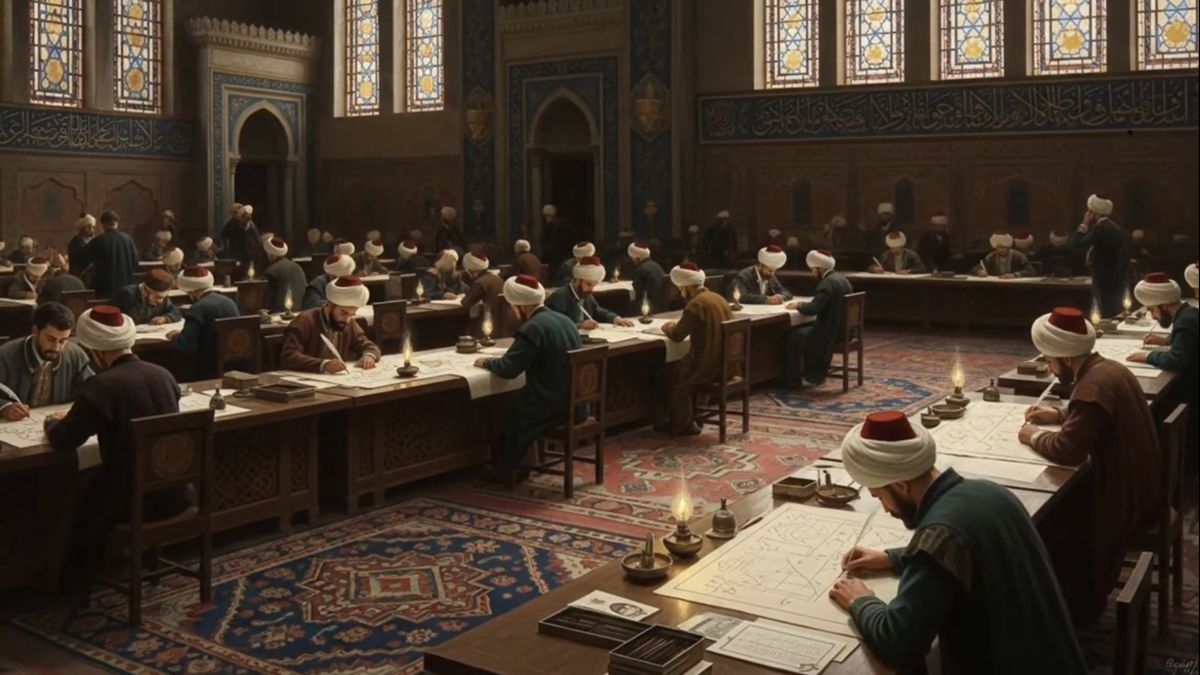
Imagine trying to build a home for your family, but you are forced to use blueprints drawn by a stranger who has never met you. He decides where the kitchen goes, he decides that "prayer rooms" are unnecessary, and he insists that the foundation must be built on his specific type of concrete. If you try to change anything, he calls you "backward" or "illogical."
For the last century, this has been the reality of the Muslim world. We have been trying to build an Islamic future using Western blueprints.
The project of Decolonizing Historiography is simply the act of tearing up those foreign blueprints and drawing our own again. It is a collective effort to stop seeing ourselves through the eyes of the colonizer and start seeing ourselves through the eyes of our own tradition.
To do this, we must first fix our definition of the past. As Talal Asad reminds us, the West taught us that "religion" is a private hobby, separate from the "real world" of politics. But in Islamic history, faith was never just a feeling in the heart; it was a public discipline—a way of organizing society, markets, and justice. When we accept the separation of "Church and State," we accept a lie about our own history. We cannot split the cheese from the pizza; we cannot separate the Din from the Dunya.
Once we accept that Islam is a public system, we face the critique of Wael Hallaq. He warns us against the trap of judging our history by the standards of the Modern State. The modern state is a "Banker"—obsessed with profit, control, and efficiency. The Sharia was a "Poet"—obsessed with morality, community, and mercy. If we write history asking, "Why didn't Muslims build a strong state like Europe?", we are judging the Poet for failing to be a Banker. We must stop apologizing for not being Europe.
But do we have the intellectual tools to rebuild? Muhammad U. Faruque and Sajjad Rizvi argue that we do, but we are suffering from memory loss. The colonial narrative claims the Muslim mind "went to sleep" after the 12th century. This is a myth. Our library—filled with the works of the Ottomans, Safavids, and Mughals—is massive and brilliant. We simply stopped reading it because we were told that only Western science (Scientism) constitutes "real" truth. Decolonization means realizing that a tree is not just biological matter; it is a Sign (Ayah) of God. It means reclaiming our own definition of Reality.
Finally, how does this look in the future? S. Sayyid argues that we need a political roof to protect this new house. He reframes the "Caliphate" not as a scary medieval empire, but as a modern political bloc—a "Muslim European Union." It is about having a global voice. It is about moving from being the victims of history to being the protagonists of it.
Decolonization is not about hating the West. It is about loving ourselves enough to stop copying them. It is the shift from asking, "Am I modern enough for the world?" to asking, "Is the world just enough for Islam?"