
Beyond the Peacock Dance: Hungary’s Transition to the Third Way
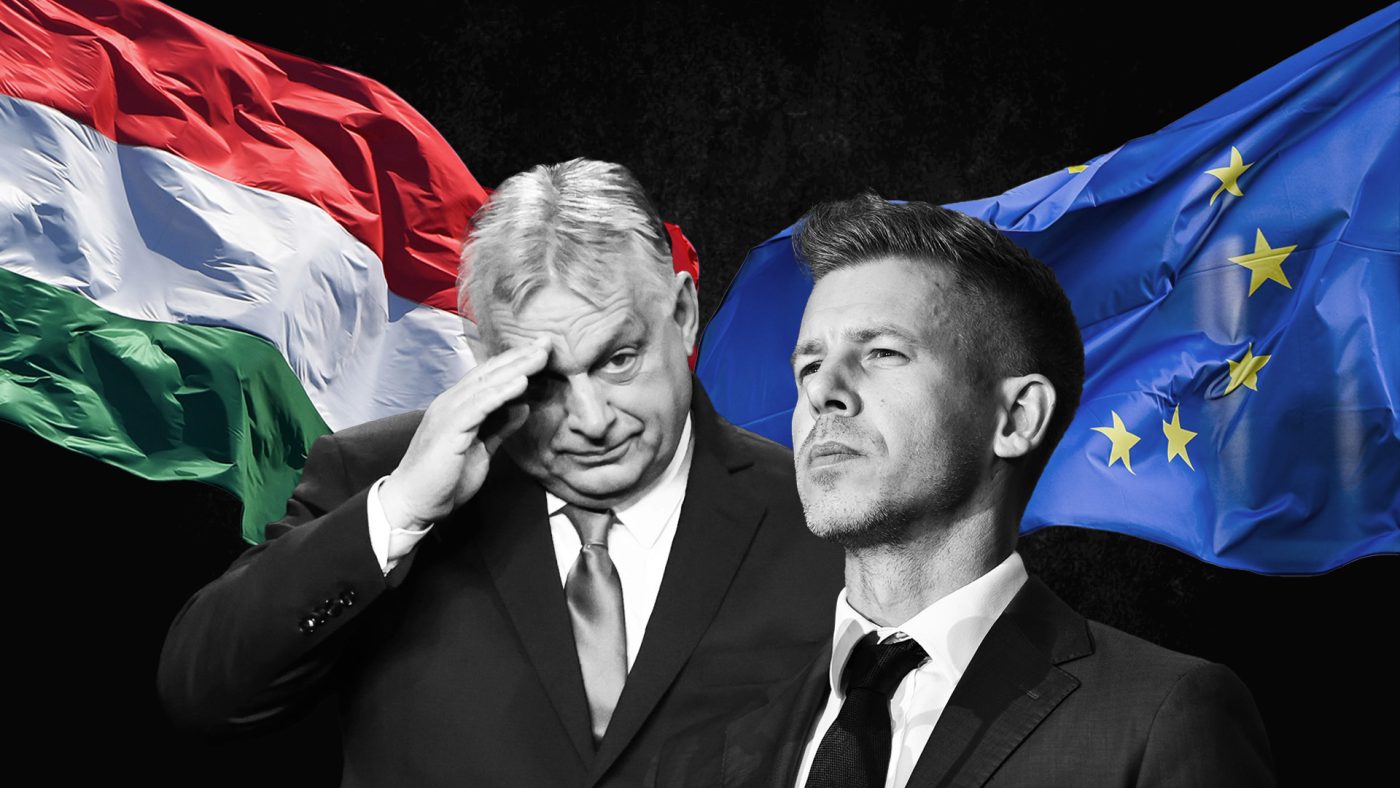
After sixteen years of Horthyite Orbánism, Hungary’s April elections mark a paradigm shift in politics—substantially a regime change that turns the precedents of anti-establishment and illiberal democratic rhetoric into Magyarian liberal-conservative constructs. Ousted by the Tisza Party in a landslide defeat, the political invincibility narrative broke, influenced by several triggers. This paramount change now loads a repertoire of eye-popping questions: How will Magyar’s governance resolve the bilateral ties between the EU and Hungary following Orbán’s drama of Brussels bureaucracy? In terms of political stance, will critical pro-Europeanism stabilize the once-corrupted economy taken down by the mafia of oligarchs?
To understand Orbán is to discern the political blueprints of right-wing populism. As a central figure, the policies he adopted pertaining to the "illiberalization of democracy" drew lines in various spectral facets, from foisting state-controlled media by transforming outlets into pro-government megaphones to showing ambivalence in the protection of minorities and endorsing a Christian nationalist identity. Often portraying himself as the ultimate protector of Hungarian culture, he stood against the EU, implying it was forcing foreign values on Hungary.
When it came to the Brussels bureaucracy issue, he mastered the EFC tactics of staging the "peacock dance": Provoke by passing laws that upset Brussels, Feud by engaging in public dialogue against the European Commission, and Compromise by bringing tiny legal tweaks to meet sensitization needs while keeping his power intact. "We didn't swap Moscow for Brussels," as he famously said, highlighting the view of the EU as a liberal superstate that imposes hectored policies against Hungary. This contradicted Brussels’ view of the EU as a club of rules, which mandated the perspective that illiberal democracy is incompatible with EU standards for a functioning member.
Following this, Brussels froze over €20 billion meant for the funding of Hungary, emphasizing that a nation without anti-corruption safeguards or independent courts risks money being stolen and transferred between Orbán’s friends. Orbán’s counter was the veto power, pursuing it as a means of leverage while condemning the EU's act as "financial blackmail."
For Magyar to get into the frontline, he needs to eliminate the stumbling blocks laid by his predecessor. The relationship between Hungary and the EU requires a shift from confrontational to cooperative, focusing on unfreezing funds and bridging diplomatic gaps. For this to transpire accordingly, the state apparatus of media control must be dismantled to restore press freedom. In the hindsight of foreign policy, Magyar’s approach is bound by pragmatic centrism. He has pledged to end the "Putin bromance"—the cozy relationship with the Kremlin—by adopting an opt-out strategy regarding direct military involvement.
Magyar’s most powerful political tool is his anti-corruption policy, specifically the pledge to join the EPPO (European Public Prosecutor’s Office), allowing the bureau to investigate the misuse of funds within the country. The introduction of a two-term limit for the PM is also regarded as a "Clean Hands" policy. The duality of Magyar—his center-activist and right-wing sides—proves his "Third Way" approach; as he says, one can be a patriot (traditionally referring to the right wing) while not being corrupt. As of now, the geopolitical trajectory awaits a residual phenomenon: the prospects of Magyarian governance or the survival of Orbánism.