
Beyond the Desert: African Pilgrims and the Spiritual Geography of Hajj
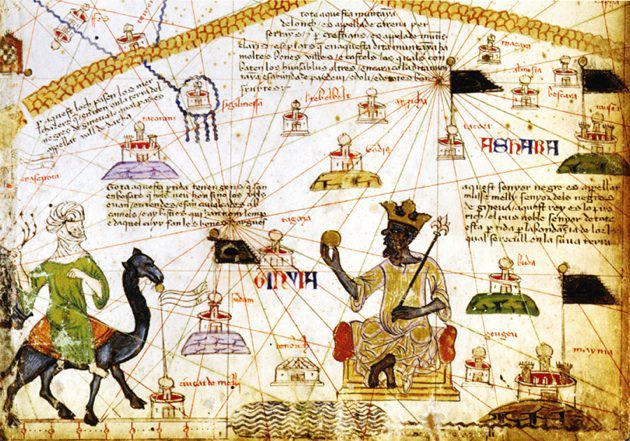
For centuries, African Muslims undertook some of the most demanding pilgrimage journeys in Islamic history. Long before the emergence of steamships, railways, and air travel, pilgrims from regions such as Mali, Songhai, Hausaland, and Kanem-Bornu crossed vast deserts, uncertain political frontiers, and dangerous caravan routes in order to reach the holy city of Makkah to attend the Hajj. These journeys often lasted months or even years, demanding immense physical endurance, financial sacrifice, and spiritual determination. Yet the African pilgrimage to Makkah was far more than a religious obligation fulfilled through travel. The journey itself became a transformative spiritual experience through which geography acquired sacred meaning. Through caravan routes extending from Timbuktu and Kano to Cairo and the Hijaz, African Muslims transformed enormous geographical distance into spiritual proximity to the heart of the Islamic world. This study explores the historical Hajj journeys of African Muslims, producing what may be described as a "spiritual geography" a sacred relationship between movement, devotion, and belonging. Through pilgrimage, African Muslims not only fulfilled a religious duty but also integrated themselves into wider transcendent, intellectual, and civilisational networks of Islam. The stories of these pilgrims reveal how movement across deserts became a journey toward sacred belonging within the global ummah.
Distance, Hardship, and Sacred Longing
The significance of the African pilgrimage experience cannot be understood without recognising the immense geographical distance separating West Africa from Makkah. Before modern transportation, pilgrims crossing the Sahara encountered some of the harshest environmental conditions. Extreme heat, scarcity of water, sandstorms, disease, exhaustion, and attacks by bandits were constant dangers throughout the journey. Many pilgrims died before reaching the holy cities, while others never returned to their homes. Despite these hardships, generations of African Muslims continued to undertake the pilgrimage with remarkable devotion. The willingness to endure suffering for the sake of reaching the holy city reflects the deep metaphysical importance that Hajj occupied within African Muslim societies.
The famous Moroccan traveller Ibn Battuta, who journeyed through many parts of the Islamic world during the fourteenth century, described the emotional difficulty of beginning his pilgrimage journey in 1325. Leaving Tangier for Makkah, he wrote that he departed "with neither companion to cheer me nor caravan whose party I might join." His statement reflects not only physical travel but also the emotional and spiritual isolation experienced by many pilgrims before organised transportation systems emerged. For African pilgrims, Makkah was geographically distant yet spiritually central. The Ka'bah represented the symbolic heart of the Muslim world, toward which Muslims directed their prayers daily. Although separated from West Africa by deserts and continents, the holy city remained deeply present within religious consciousness. Thus, the pilgrimage became more than a movement across physical space. The road itself acquired spiritual meaning. Hardship, patience, and sacrifice were understood as part of the pilgrim's inner transformation. In this sense, the trans-Saharan routes functioned not merely as commercial pathways but as sacred roads shaped by longing, devotion, and religious aspiration.
Caravan Routes and the Making of Sacred Space
The pilgrimage routes connecting West Africa to Makkah formed one of the most remarkable networks of sacred mobility in premodern Islamic history. Pilgrims travelled collectively in large caravans linking cities such as Timbuktu, Walata, Agadez, Kano, Cairo, and eventually the Hijāz. Historical chronicles describe caravans consisting of hundreds of camels carrying water, food supplies, manuscripts, textiles, and gold. Pilgrims often depended upon experienced desert guides familiar with wells and seasonal routes across the Sahara Desert. Entire communities gathered to farewell departing pilgrims, aware that many travellers might never return. These caravan routes gradually acquired sacred associations within African Muslim memory. Repeated journeys across generations transformed deserts, resting stations, wells, and caravan towns into spiritually meaningful landscapes connected to the pilgrimage experience. The communal nature of caravan travel also strengthened the spiritual dimension of the journey. Pilgrims prayed together, recited the Qur'an, exchanged stories, and studied religious texts during travel. Caravan stations became temporary religious communities where scholars, Şüfi travellers, and ordinary believers interacted within a shared spiritual environment.
Mansa Musa and the spiritual Visibility of African Islam
Among the most famous pilgrimage journeys in Islamic history was the Hajj of Mansa Musa in 1324. His pilgrimage became legendary throughout both the Islamic world and Europe, transforming global perceptions of West Africa. According to historical reports, Mansa Musa travelled with thousands of attendants, servants, soldiers, and camels carrying enormous quantities of gold. When his caravan passed through Cairo on its way to Makkah, contemporary observers were astonished by the scale of his wealth and generosity, as his visit affected local gold markets for years afterwards. Yet Mansa Musa's Hajj was far more than a royal expedition. It was a powerful expression of sacred belonging through which African Muslims affirmed their place within the spiritual landscape of the Islamic world. His journey symbolised the intense spiritual attachment that West African Muslims had developed toward Makkah, despite the immense geographical distance separating them from the holy city. The pilgrimage reflected a profound desire to draw spiritually closer to the sacred centre of Islam, even at the cost of enormous hardship and long-distance travel across the Sahara. Through Hajj, Mansa Musa publicly situated Mali within the sacred geography of the Muslim world. His arrival in Makkah represented more than the movement of a ruler toward a holy destination; it symbolised the spiritual presence of West African Islam within the wider ummah. The pilgrimage demonstrated that devotion to the Ka'bah and attachment to the holy cities were not confined to the Arab heartlands but deeply rooted across distant African Muslim societies. The journey also strengthened intellectual and devotional ties between West Africa and major centres of Islamic learning in Cairo and the Hijāz, as Mansa Musa later brought scholars, jurists, and architects back to Mali, contributing to the expansion of Islamic institutions and centres of learning in cities such as Timbuktu. In this sense, the pilgrimage became not only an act of worship but also a means of spiritually and intellectually integrating West Africa into the broader civilisation of Islam.
Colonialism, Modernity, and the Transformation of Pilgrimage
During the colonial period, the pilgrimage routes connecting Africa to Makkah came under increasing surveillance by European powers. Colonial authorities in African regions controlled by the British and French viewed the Hajj not merely as a religious journey but also as a potential source of political consciousness and transnational Muslim solidarity. The movement of thousands of pilgrims across borders, deserts, and port cities created networks through which religious ideas, reformist movements, and anti-colonial sentiments could circulate beyond colonial control. In particular, European administrators feared that returning pilgrims might carry with them forms of pan-Islamic consciousness that would challenge colonial authority. As a result, many colonial governments introduced regulations, travel permits, and maritime restrictions aimed at monitoring Muslim mobility. Pilgrims travelling from West Africa often faced many obstacles, such as financial burdens and strict bureaucratic surveillance, before being permitted to continue their journey toward the Hijāz. Yet despite these restrictions, the desire to reach Makkah remained deeply rooted within African Muslim societies. For many Muslims living under colonial domination, the pilgrimage acquired an even deeper symbolic significance. Hajj represented spiritual freedom beyond colonial borders and a reaffirmation of religious dignity and sacred identity in the face of political subjugation. The persistence of pilgrimage during this period demonstrated the enduring power of sacred geography within Muslim consciousness. Even when colonial powers attempted to regulate movement, they could not sever the emotional and spiritual attachment African Muslims maintained toward the holy cities.
At the same time, the modern age gradually transformed the nature of pilgrimage itself. The emergence of new means of travel in the twentieth century dramatically altered the experience of Hajj. Journeys that once required months or years across deserts and seas could now be completed within days or even hours. Modern transportation made pilgrimage accessible to millions of Muslims who previously lacked the physical or financial ability to undertake such difficult travel. However, this transformation also changed the experiential and spiritual dimensions of the journey. Historically, pilgrimage involved a gradual movement away from ordinary life. The long caravan routes created extended periods of reflection, hardship, anticipation, and communal dependence. Pilgrims slowly entered into a spiritual state shaped by desert travel, collective prayer, uncertainty, and physical endurance. The journey itself became part of the spiritual purification associated with Hajj. Modern transportation has preserved the ritual obligations of pilgrimage while compressing much of its traditional experiential character. But the rapid travel reduced the prolonged emotional preparation that once accompanied the approach to Makkah. While modernity increased accessibility and safety, it also transformed the relationship between distance and sacred experience. In this sense, modern pilgrimage exists in continuity with the past while simultaneously differing from it. The sacred destination remains unchanged, but the experience of travelling toward it has been profoundly transformed by colonial history, technological modernity, and the changing nature of human mobility.
Nevertheless, the memory of earlier African pilgrims continues to occupy an important place in Islamic historical consciousness. Their journeys remain symbols of perseverance, devotion, and sacred longing. The stories of those who crossed the Sahara with little certainty except faith continue to reflect a spirituality deeply connected to movement, endurance, and attachment to sacred space. This is why the history of African pilgrims to Makkah demonstrates that Hajj was far more than a ritual obligation fulfilled through travel. For centuries, African Muslims transformed the pilgrimage into a profound spiritual experience through which geography itself acquired sacred meaning. Through trans-Saharan caravan routes, African Muslim societies forged enduring connections with the wider community and integrated themselves into the intellectual and spiritual networks of Islamic civilisation. The roads linking West Africa to Makkah became sacred pathways shaped by hardship, devotion, memory, and longing. The journeys of pilgrims such as Mansa Musa further revealed that African Muslims were not peripheral participants in Islamic history but active contributors to its civilisational and spiritual landscape. Through Hajj, they publicly asserted their place within the sacred geography of the Muslim world.
In an age where modern transportation has transformed the experience of pilgrimage, the stories of historical African pilgrims continue to remind us that the journey to Makkah was once not merely about arrival at a destination, but about spiritual transformation through movement itself.
- The Travels of Ibn Battuta, trans. H.A.R. Gibb (London: Hakluyt Society, 1958), 9.
- Nehemia Levtzion and J.F.P. Hopkins, Corpus of Early Arabic Sources for West African History (Princeton: Markus Wiener Publishers, 2000), 267-269.
- Michael Gomez, African Dominion: A New History of Empire in Early and Medieval West Africa (Princeton University Press, 2018), 143-150.
- Rudolph T. Ware, The Walking Qur'an (Chapel Hill: University of North Carolina Press, 2014), 84-96.
- Qur'an 3:97.