
Ali Khamenei: Power, Piety, and the Politics of Revolution
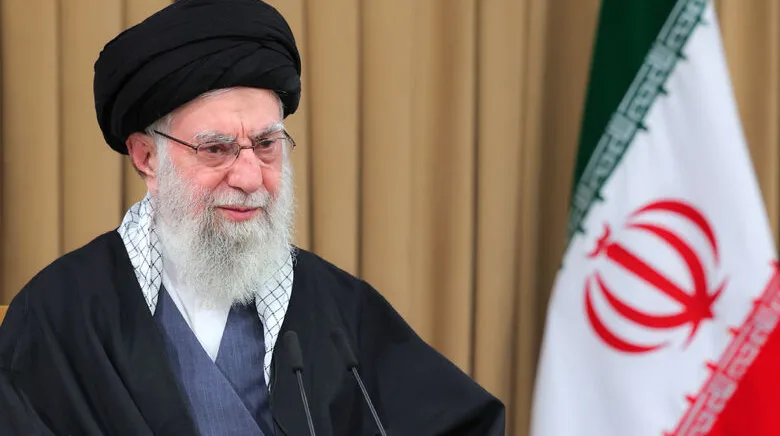
Ali Khamenei, formally known as Ayatollah Ali Khamenei, was a prominent Iranian cleric, influential strategist, and a central figure in the transformation of the Islamic Republic of Iran. Over several decades of leadership, he emerged as one of the most powerful political authorities in the Middle East. His tenure as Supreme Leader profoundly shaped Iran's political institutions, ideological orientation, and foreign policy strategies. Furthermore, his leadership extended beyond domestic governance, influencing regional alliances and geopolitical dynamics across the broader Middle East. Khamenei's rule is consequently regarded as a defining chapter in the history of the Islamic Republic. His death in 2026 marked a significant turning point in Iranian political affairs and prompted widespread international reactions.
Early Life and Intellectual Formation
To understand his political influence, it is essential to examine his early life and intellectual formation. Ali Khamenei was born on 17 July 1939 in the city of Mashhad, in the Khorasan region of northeastern Iran. At the time of his birth, Iran was undergoing significant political transformation under the Pahlavi monarchy. His father, Javad Khamenei, was a respected Shia cleric of Iranian Azerbaijani origin, while his mother, Khadija Mirdamadi, came from a religious family with strong scholarly traditions. Raised in a modest yet intellectually active household, Khamenei was exposed to Islamic scholarship from an early age. His childhood environment strongly fostered religious discipline, rigorous education, and devotion to theological inquiry.
Khamenei's early education was deeply rooted in Islamic religious institutions. During the mid-1950s, he commenced formal training in Islamic scholarship under several prominent clerics in Mashhad, including Ayatollah Sheikh Hashem Qazvani. Mashhad held immense religious significance, as it is home to the shrine of Imam Ali ibn Musa al-Ridha, the eighth Imam in Twelver Shia Islam.
The city consequently attracted numerous scholars, theologians, and students of Islamic jurisprudence. Studying in such an environment allowed Khamenei to immerse himself in classical religious teachings while simultaneously observing the complex interplay between religious authority and political power.
In addition to his studies in Mashhad, Khamenei later traveled to the city of Najaf in Iraq — one of the holiest cities in Shia Islam and the burial site of Ali ibn Abi Talib. Following a brief period of study there, he returned to Iran and continued his education in the religious center of Qom. It was in Qom that he encountered one of the most consequential figures in modern Iranian history, Ayatollah Ruhollah Khomeini. At that time, Khomeini had already begun openly criticizing the policies of the Shah's government.
His lectures attracted a generation of young students passionate about political reform and Islamic governance. Through these formative interactions, Khamenei gradually developed his own political consciousness and ideological convictions.
Political Awakening and Revolutionary Activism
The pivotal turning point in Khamenei's political life came during the upheaval of 1963. That year, the Shah introduced a series of modernization reforms aimed at strengthening Iran's economy and deepening cooperation with Western powers. These reforms, collectively associated with the "White Revolution," sought to modernize Iranian society through land redistribution, industrial development, and social change.
Many religious leaders, however, argued that these policies threatened traditional Islamic values and undermined Iran's cultural identity. Ayatollah Khomeini emerged as one of the most vocal critics of the Shah's agenda. Widespread protests and demonstrations erupted across the country. When Khomeini was arrested by authorities, the unrest intensified. The Shah ultimately forced Khomeini into exile — first to Turkey, then Iraq, and finally France.
Although Khamenei supported Khomeini's ideological position, he did not immediately assume a prominent role in revolutionary politics. Instead, he returned to Mashhad to care for his ailing father, who had lost his sight. His academic progress in Qom was consequently interrupted. Nevertheless, his intellectual engagement with political ideas persisted through reading, translation, and religious preaching.
During this period, Khamenei translated Sayyid Qutb's influential work The Future in Islamic Lands from Arabic into Persian. Qutb's writings had left a considerable mark on Islamic political thought, inspiring debates about the relationship between religion and governance. These intellectual encounters significantly contributed to the development of Khamenei's political ideology.
Over the following years, Khamenei became increasingly committed to revolutionary activism. Throughout the 1960s and 1970s, he delivered sermons openly criticizing the Shah's government and advocating for Islamic governance. He was arrested on several occasions and subjected to extended periods of detention. Despite these hardships, he continued to travel across Iran, disseminating revolutionary ideas among religious students and political activists. His family endured modest living conditions marked by economic hardship and political uncertainty. These trials, however, only deepened his resolve and strengthened his commitment to the revolutionary cause.
The Iranian Revolution and Rise to Power
The Iranian Revolution of 1979 fundamentally transformed the country's political structure. Mass protests erupted against the Shah's rule, driven by economic grievances, political repression, and widespread ideological opposition. As the crisis intensified and his health deteriorated, the Shah departed Iran on 16 January 1979. Shortly thereafter, an Islamic Revolutionary Council was established to oversee the transition of power. Within weeks, Ruhollah Khomeini returned from exile in France and was recognized as the first Supreme Leader of the newly established Islamic Republic.
In this transformed political landscape, Khamenei rapidly gained prominence and assumed several key governmental positions.
The early years of the Islamic Republic, however, were marked by instability and internal conflict. In 1981, Khamenei survived an assassination attempt when a bomb concealed inside a tape recorder detonated during an interview. Despite sustaining severe injuries, he survived and continued his political career.
Later that same year, he was elected President of Iran. His presidency coincided with the devastating Iran-Iraq War, launched by Iraqi leader Saddam Hussein. The conflict lasted eight years and inflicted enormous human and economic losses on both nations. A United Nations-mediated ceasefire finally brought the war to an end in 1988.
Supreme Leadership: Regional Strategy and Nuclear Policy
Following the death of Ruhollah Khomeini in 1989, the Assembly of Experts elected Ali Khamenei as the second Supreme Leader of Iran. His leadership began during a period of significant geopolitical change. The Soviet Union was in the process of collapse, and a number of new independent states were emerging across Central Asia. Meanwhile, conflicts continued across the Middle East, including the Lebanese Civil War and growing tensions in Afghanistan. In response, Khamenei moved to strengthen Iran's military institutions and expand the role of the Islamic Revolutionary Guard Corps as a pillar of state power.
Khamenei also pursued an assertive regional strategy centered on supporting allied movements across the Middle East. Iran provided financial, political, and military assistance to groups such as Hezbollah in Lebanon and Hamas in the Palestinian territories. These alliances were designed to extend Iran's regional influence and counterbalance the power of rival states. However, these policies attracted sharp criticism from Western governments and regional adversaries alike.
Khamenei's leadership was equally defined by staunch resistance to Western political influence. During the early twenty-first century, Iran invested heavily in nuclear technology and scientific development. While Iranian authorities maintained that these programs were peaceful and essential for national progress, Western governments expressed serious concerns about potential military dimensions. Iran consequently became the focal point of international negotiations, economic sanctions, and sustained diplomatic pressure.
Legacy and Historical Assessment
Despite persistent controversies, Khamenei remained the dominant force in Iranian politics for nearly four decades. His supporters regarded him as a steadfast defender of Islamic governance, national sovereignty, and resistance to foreign intervention. His critics, by contrast, accused his administration of authoritarianism, systematic political repression, and severe restrictions on civil liberties. His leadership thus remained one of the most contested subjects in contemporary Middle Eastern political discourse.
Ultimately, Ali Khamenei's political career left an indelible mark on the Islamic Republic of Iran. His decades-long stewardship shaped the country's ideological foundations, political institutions, and regional posture. His policies fundamentally influenced Iran's relationships with global powers and neighboring states. His death in 2026 — during military strikes in Tehran — brought an end to a long and complex era in Iranian political history. Yet the legacy of his leadership continues to shape Iran's political trajectory and its standing in international affairs.