
Addressing FOMO as a Darul Huda Student
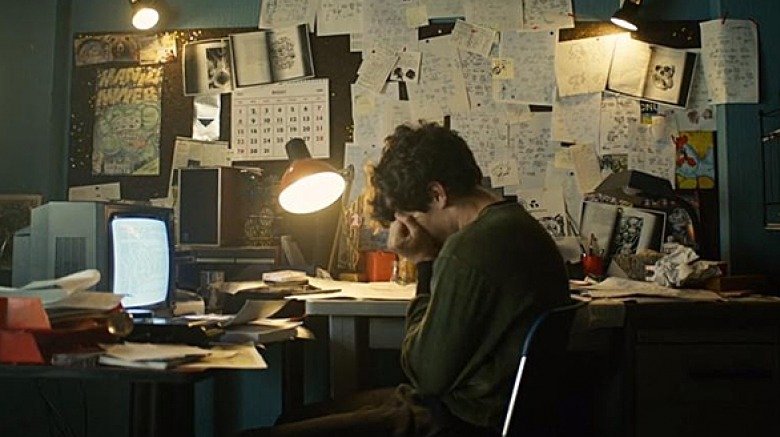
We often experience FOMO (Fear of Missing Out) in our daily lives through a myriad of situations filled with unease. When consumed by a perceived lack, we struggle to stick with our original choices, becoming confused and fearing that whatever we settle on will inevitably lack the benefits of the alternative. But what are we literally afraid of when we experience FOMO? Is it the inability to straddle both choices? Or is it the fear that by gaining one thing, we lose another and face exclusion? Why does this feeling persist, often overpowering our rational awareness? Perhaps the answer lies not just in psychology, but in something deeper — in how firmly we are anchored to our own purpose.
I am a student at Darul Hasanath Islamic College, affiliated with DHIU Chemmad, an institution that since 1991 has joyfully celebrated its academic integrity and the outstanding intersection of Islamic and non-Islamic knowledge. Honestly, in spite of this elegant system and strict surveillance, I have experienced FOMO numerous times. Is it the system itself that fosters this psychological insecurity, or am I the one subjecting myself to this mental distress? Looking back, I have a repertoire of different situations in my life at Hasanath where the fear of missing out and being excluded took hold of me.
Peer Exclusion and FOMO
I am a humble member of a close-knit trio. Our main dynamic involves mocking, scorning, and teasing one another. However, sometimes the other two whisper something out of earshot, sharing a secret and keeping me at bay so I cannot interfere. How does this make me feel? What goes through my mind? The realization that they are excluding me to share a secret triggers an immediate fear for our friendship. Am I losing the cohesive intimacy between us? Am I losing the days of fun and the moments of shared laughter and conversation? That is what I feel I am missing: the exhilarating, cherished times that seem to vanish when they part from me in those moments. I fear exclusion and the loss of those shared memories. Similarly, in broader contexts, we are often overtaken by this sinking feeling, rendering us unable to feel secure in our position.
Hidden Pitfalls Lurk Behind the Scenes
Moving from friendship dynamics to the classroom, FOMO again knocks on the doors of my mind. The last period on Thursday is often free; no teacher comes to give lessons, as many leave for home before noon. There is no need to over-describe the resulting classroom atmosphere: the last two benches usually host a large crowd engaged in singing battles, screeching, drumming on desks, hopping around, and belting out pop songs. They are incredibly vibrant, throwing their hands up and shouting along to the music.
Meanwhile, I am usually focused on my duties, such as reading or completing exercises. Yet, my mind inevitably wanders. I fear falling behind on my work if I join the back-benchers to have fun, but I equally fear missing out on the entertainment if I stubbornly stick to my exercises. Anyone can relate to this: getting stuck between two choices, unable to fully commit to either.
In such situations, how can I choose one path and carry on peacefully? What exactly makes me feel uncomfortable? Is it the distinguished educational system I study in that induces this anxiety? Or am I the one bringing this sense of exclusion upon myself? Upon keen observation, it becomes explicitly clear that I am the root of the problem. How could the system be blamed for my mental fatigue? The system stands neutral; its impact depends entirely on how we engage with and utilise it. Therefore, my own mindset is responsible for the fatigue and the feeling of exclusion.
The object of FOMO is the experience we imagine is absent from our lives. I think to myself: If I focus on completing my exercises, I miss out on their entertainment. But what is truly bad about missing out on unnecessary screeching? Isn't focusing on the curriculum more important than participating in pointless fun? This is precisely where the Islamic concept of qana'ah — contentment with what one has chosen — becomes relevant. When we are content with our path, we stop measuring our experience against everyone else's. The student who has internalised qana'ah does not feel excluded by the back-bench chaos; he feels settled because he has made peace with his own choice. FOMO, at its core, is the absence of this contentment. It is what happens when we have not yet accepted that our portion is enough.
Ultimately, FOMO stems from the fear that exclusion will harm one's social network and mutual connections. It is the dread that non-participation now will make it harder to be included later, which overrides the rational awareness that wasting time instead of completing exercises will negatively affect my studies.
However, the role the environment plays in triggering FOMO should not be entirely neglected. Even if I am the one tempted to overindulge in fun, the system indirectly incites this impulsiveness by allowing the unstructured singing, drumming, and shouting that distracts others. This environment can make students feel left out and tempt them to abandon their work. Thus, when we are subjected to FOMO, we must recognise that our own psychology, our peers, and our systemic environments all play a part.
Can FOMO be a Boon?
Although FOMO causes mental and emotional strain, decision fatigue, and impulsive behaviour driven by social judgment, it can also serve a great academic and personal purpose. I have a close friend who is incredibly smart and has performed on state-level and international stages. Furthermore, he participated in a state-level "Best Orator" competition just two weeks into the academic year. He consistently submits abstracts and audition videos for programs as soon as he can.
Meanwhile, I often find myself sidetracked by minor tasks like writing or engaging in unnecessary fun. Yet, when I see him practising and training, I feel a pang of jealousy. Ultimately, I become obsessed with a productive thought process: Why am I not making an attempt? Why am I not writing an abstract or sending a video clip? I fear squandering my opportunities. I dislike the idea of being left out — wandering aimlessly around the campus while he performs on an elite podium.
But where does this anxiety actually lead me? It grounds me in reality. It confronts me with the fact that I have not tried my best, pushing me to strive harder and make the most of my opportunities in ways I haven't before. This is where hikmah — wisdom — enters the picture. A person guided by hikmah does not simply react to FOMO with blind urgency; he pauses, reflects on what truly matters, and then acts with direction. The difference between productive FOMO and destructive FOMO is exactly this: whether wisdom governs the anxiety or the anxiety governs us. When I channel the unease of seeing my friend succeed into deliberate effort rather than desperate scrambling, that is hikmah at work. Therefore, while continuous comparisons cause stress and anxiety, they also foster the realisation that there is much more to conquer and ample room to improve.
Conclusion
In conclusion, FOMO acts as a double-edged sword in our lives. While it generates anxiety, stress, and impulsive behaviour, it also plays a key role in our academic and personal growth by highlighting our incomplete potential and motivating us to do more. An awareness of these dual features of FOMO is important, but awareness alone is not enough. What truly resolves the tension is tawakkul — placing genuine trust in God's plan while doing one's honest best. A student grounded in tawakkul does not spiral into exclusion anxiety, because he understands that what is meant for him will not pass him by, and what is not meant for him is not worth the anguish. This is the concrete principle that cuts through the noise: commit fully to your chosen path, act with the wisdom to distinguish between meaningful opportunities and momentary distractions, and then surrender the outcome. That surrender is not weakness — it is the most rational response to a world where we simply cannot be in two places at once.